Booking a Visit
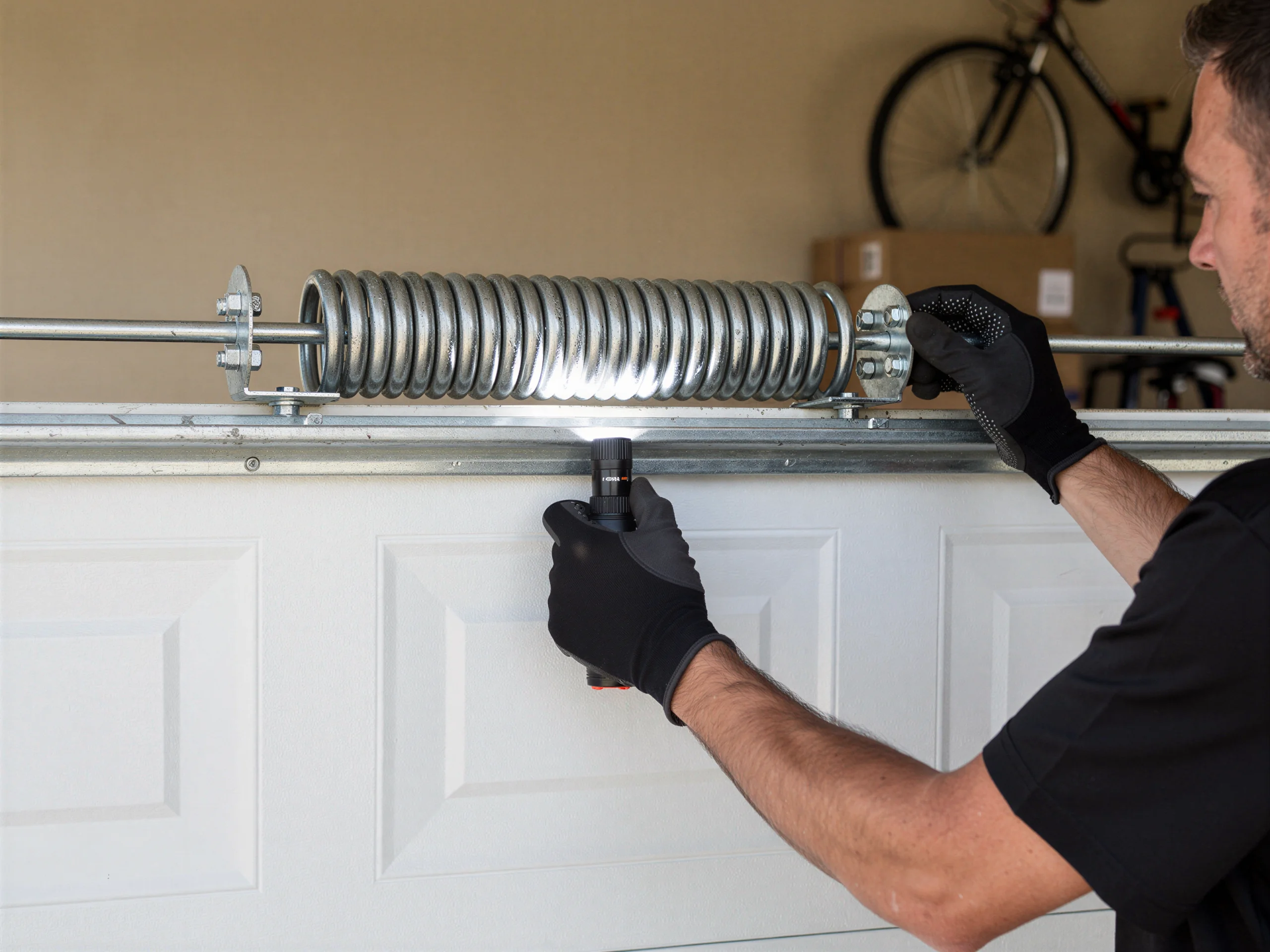
DeWitt sits about 18 miles out from our Bettendorf base, so a spring call here isn't a same-block job - it's a scheduled run, and we ask for a description of the door (torsion bar up top, or a pair of extension springs along the tracks) before we load the truck.
Spring stock by year
That one detail decides which spring stock comes with us. Median year built in DeWitt runs around 1975, two years past the 1973 median we see across the wider service area, which sounds like a small gap until you're standing in front of the opener bracket.
Factory torsion setups
A door from that stretch usually came with a factory torsion setup rather than the older side-mounted extension springs still common on the oldest houses nearer Bettendorf. We'll ask the make and rough age of the opener on the phone, since that tells us more than the house's build year alone.
Waiting on odd sizes
If the spring is an odd wire gauge or a discontinued torsion size, we may need a day to source it rather than carry it as standard stock - we won't pretend otherwise just to get a visit booked faster.
The DIY Question
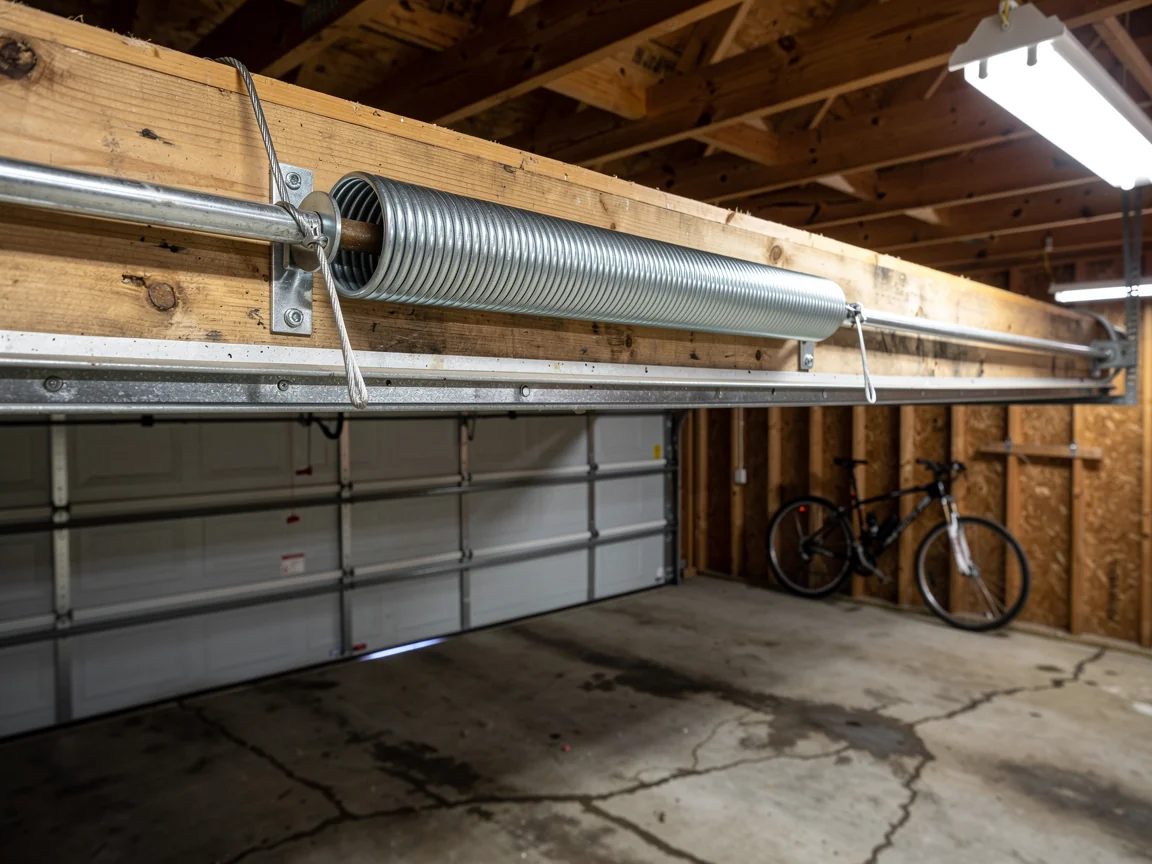
A torsion spring holds enough stored tension to break a hand or worse if the winding bars slip, and that doesn't change because the house is in DeWitt instead of anywhere else. What you can safely check yourself: whether the door is a torsion-bar or dual-extension-spring setup (look above the door versus along the horizontal tracks), whether the spring itself is visibly gapped or rusted through, and whether the door drops suddenly when you pull the emergency release cord with the door closed - that's a dead giveaway. Past that, winding or unwinding the spring is not a homeowner job, full stop. We'll also say plainly: if your opener is pulling a dead spring to lift the door, you're burning out the opener motor at the same time, and that's a second repair bill that a spring job alone won't fix. Tell us if that's happening when you call.
What the Fix Involves
We start by sizing the door - weight, width, and whether it's a single torsion spring or a pair - against the wire gauge and wind of what's currently installed.
Straight spring swap
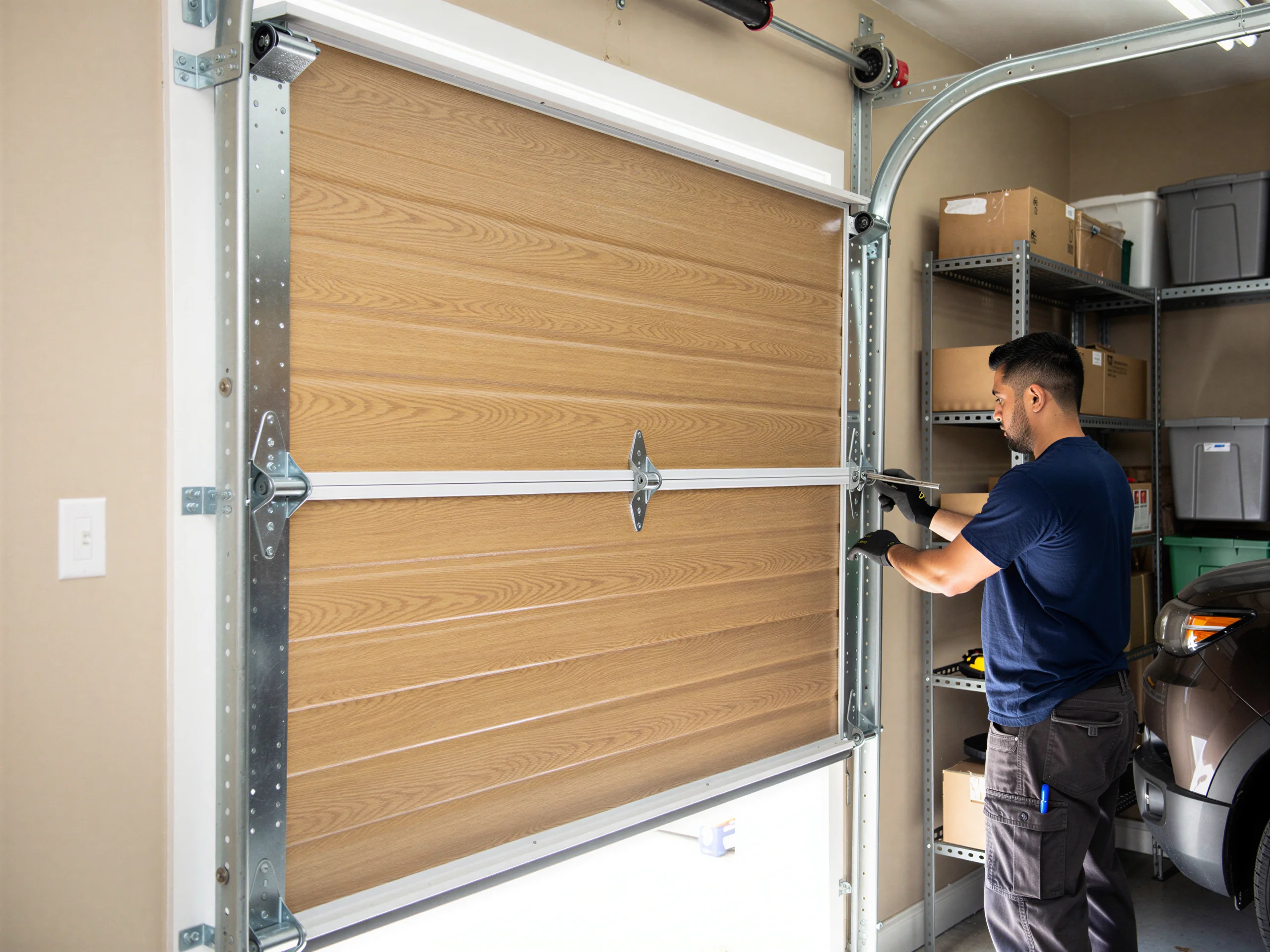
DeWitt's 1975-era housing mostly runs sectional steel doors on torsion hardware, which means the job is usually a straight spring swap on the existing torsion bar rather than a full hardware conversion.
Winding bar technique
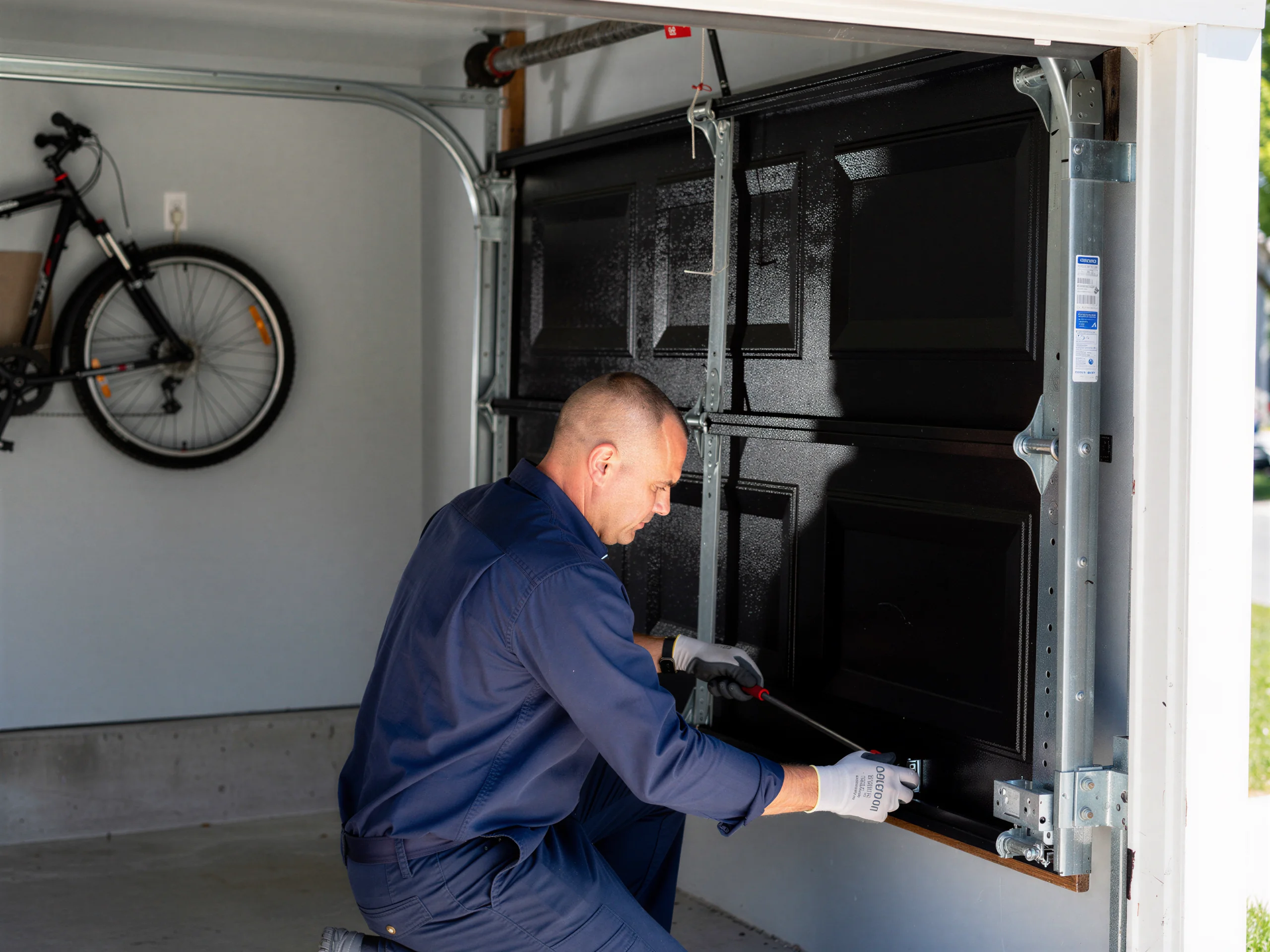
We back off the old spring with winding bars, pull it from the bar, slide the replacement on, and wind it to the cycle count and door weight, not just to match what was there.
Bearing plate wear
We check the cable drums and bearing plates while the bar is exposed, since a worn bearing plate will chew through a brand-new spring in a season. If the torsion bar itself is bent or the drums are mismatched, that's a longer job than a spring swap, and we'll tell you before we start rather than after.
What Causes It Around Here
This area sits in a cold-moderate climate band, and steel torsion springs fatigue faster through repeated freeze-thaw cycling than they do in a flat, mild climate - the metal contracts, the coil tension shifts slightly, and that adds stress to every open-close cycle over the winter. A door built around 1975, now closing in on fifty years of cycles, is well past the point where a factory spring was ever expected to last. With roughly 2,142 households in DeWitt against a household median income near $84,474, most of what we see here is owner-occupied homes where the door has had one or two spring replacements since the original - not brand-new builds, not torn-down originals either. Across the wider service area there are 6,807 owner-occupied houses among 11,334 households, and DeWitt's stock tracks close to that pattern: not identical to Bettendorf's oldest blocks, but old enough that a spring failure is a matter of when, not if.
Talk to a local pro
Garage door service in Bettendorf?
Same-day service with honest, upfront quotes.