
Garage Doors Built for an Older Bettendorf House
Bettendorf homes mostly went up between 1948 and 2001, median 1973.
Read moreBlogBettendorf, IA · 4 min read
A guide for Bettendorf homeowners on what grinding, popping, and slamming garage door sounds mean for houses built mostly between 1948 and 2001.
Local detail
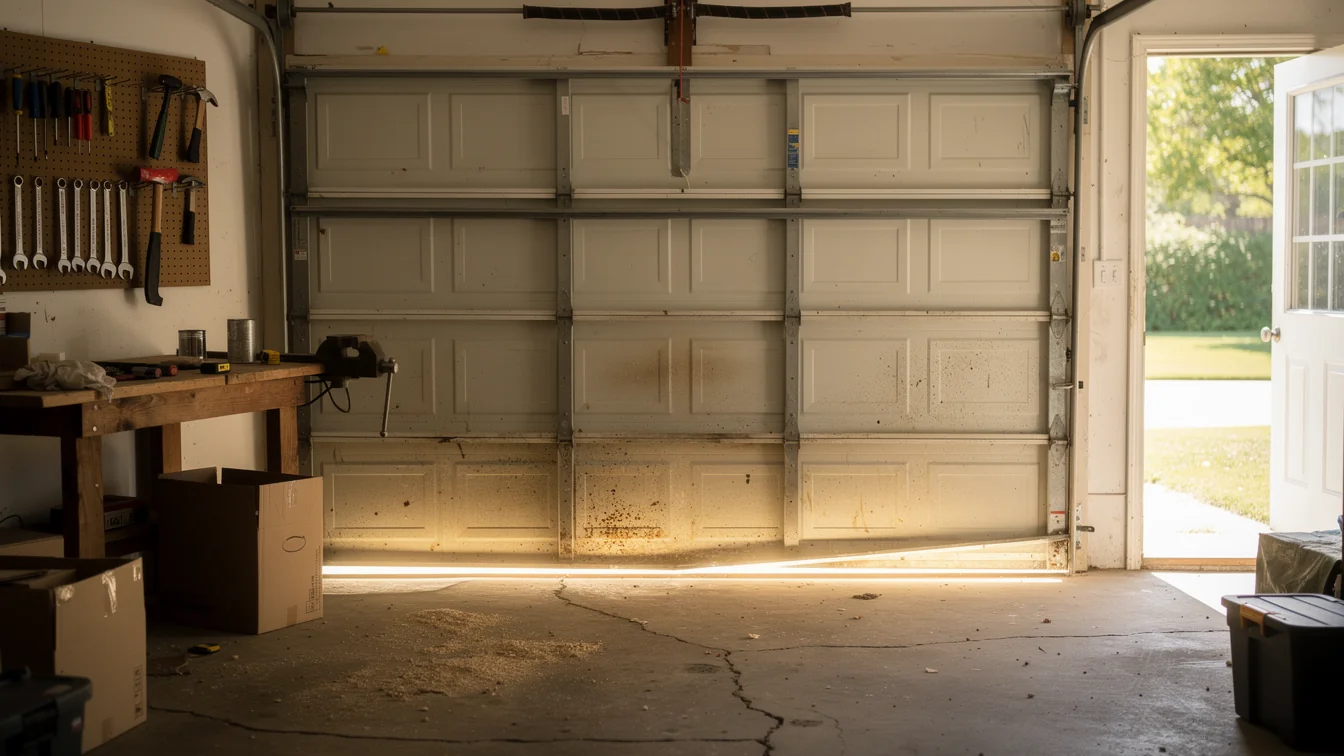
Most houses on this side of the river went up between 1948 and 2001, with the typical build year sitting around 1973, and the bulk of the stock dating to the 1960s and 70s. That matters because a door making noise today is often running on hardware installed, or replaced once, during that same window. A grinding sound usually means a roller that's worn flat from thirty-plus years of rolling in the same groove. A sharp bang on opening is almost always a cable jumping its drum, which happens more on older torsion setups where the drum and cable were never matched to the door's current weight after a panel swap. A rhythmic thump every few seconds points at a bent track, which on houses from this era is often original and never squared off after the first time someone backed into it. None of these noises are random. Each one points at a specific part wearing out on a specific kind of hardware, and the age of the housing stock here tells you which part is the likely suspect before a truck ever shows up.
The area
What a repair runs depends on what's actually making the noise, and on a door from the 1960s or 70s that's often not a simple swap. Original torsion springs from that era were sized for lighter wood panels; if the door's been replaced with a heavier insulated steel panel since, the spring and the door are now mismatched, and that's usually a bigger job than a single spring replacement. Track and roller work is more straightforward, but a bent track on an older jamb sometimes reveals that the jamb itself has shifted, which is a carpentry problem, not a garage door one. We don't carry every obsolete drum size for hardware that old, and sometimes the honest answer is to replace the operating hardware rather than hunt down a part that matches a forty-year-old spec. With median household income in this area at $84,380, most owners here can weigh a full hardware upgrade against another round of patch repairs, and for a door already showing its third or fourth symptom, the upgrade is usually the better use of the money.
What we find
A noise you ignore on a door this age doesn't stay the same noise. A roller that's grinding will eventually seize or shed enough material that the door binds in the track, and a binding door puts extra load on the opener's drive gear, which is plastic on most residential units and not built to push against resistance. A cable that's started jumping its drum will eventually come off entirely, and when that happens under a loaded torsion spring, the door can drop hard and fast. Across the roughly 11,334 households in this service area, with about 6,807 of those owner-occupied houses built mostly during that same 1960s-70s run, a lot of garages are carrying original or near-original hardware that's simply aged out. The honest limitation here: once a spring or cable has visibly frayed or a track is visibly bent, there's no lubricant or adjustment that fixes it. At that point the part needs replacing, and waiting just moves the failure from a quiet morning to whenever the spring happens to let go.
How we work
This area sits in a cold, moderate climate band, and that swing matters for steel hardware more than people expect. Torsion springs lose a little tension as temperatures drop, which means a door that opened fine in August can feel heavier and noisier by January, not because anything broke but because cold steel behaves differently under load. Grease that's fine in summer can stiffen in a cold garage, which is part of why a chain or screw-drive opener starts grinding in winter even with no other change. Houses here run from Riverdale, two miles off, out through Le Claire, Eldridge, and the rest of this stretch toward Grand Mound twenty miles out, and the same freeze-thaw cycle works on steel the same way whether the garage sits two miles from Le Claire or twenty from Grand Mound. What changes house to house is the hardware's age, not the weather, which is why a seasonal noise on a 1973-era door is worth checking before it becomes a January morning with a door that won't move at all.
Questions
Cold steel loses a bit of tension and grease stiffens, so a torsion spring or chain drive that's fine in summer can sound rougher once temperatures drop. If the noise is new only in cold weather, it's often the climate working on aging hardware rather than a sudden part failure.
Sometimes a track can be loosened and tapped back into alignment, but if the bend came with a shifted jamb, which happens on some older houses here, straightening the track alone won't hold. Worth having it looked at before forcing the door through a misaligned track.
If the hardware is matched to a lighter original panel and the panel's since been swapped for something heavier, patching individual parts usually just delays the same problem. A full hardware match is often the more durable fix once a door's shown more than one symptom.
Recommendation
More garage door guides for Bettendorf homeowners.
Bettendorf homes mostly went up between 1948 and 2001, median 1973.
Read more
Bettendorf homes built between 1948 and 2001 often pair older openers with cold-climate power cuts.
Read more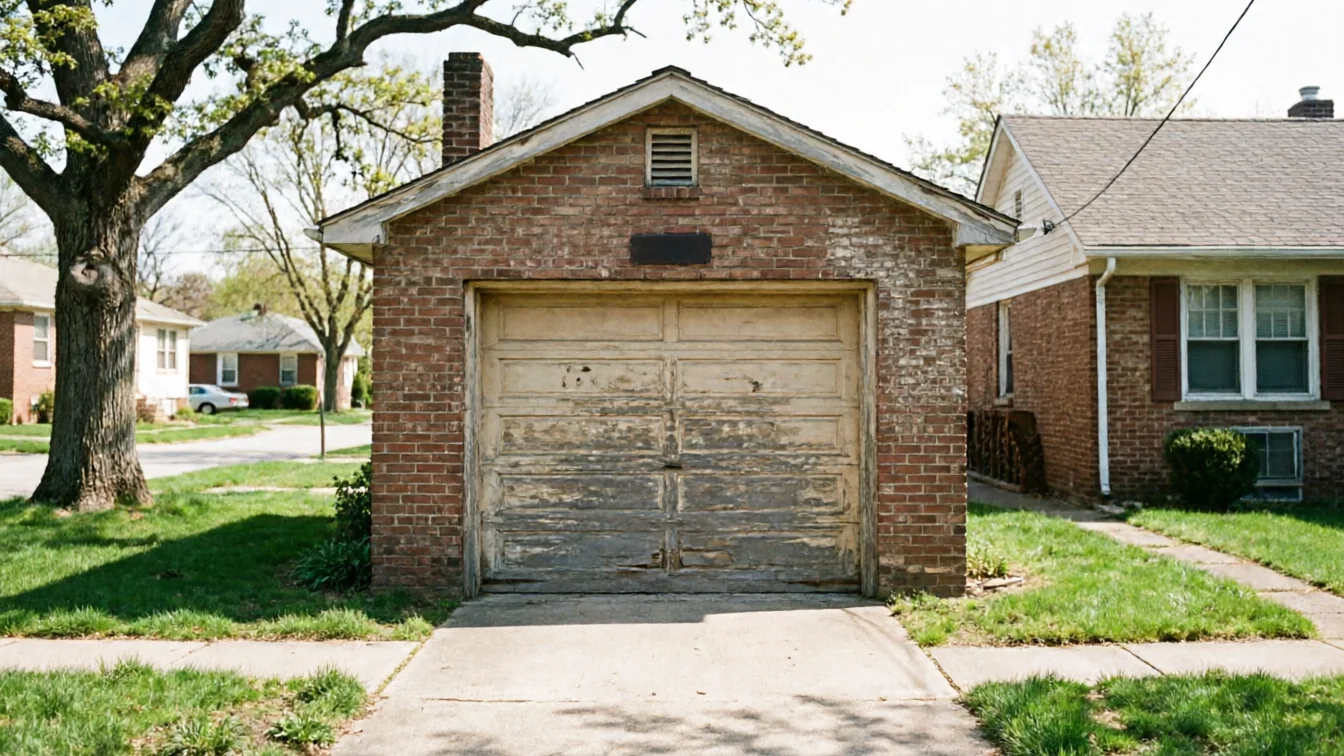
Bettendorf homes mostly date 1960s-70s with a 1973 median build year.
Read moreReady when you are
Bettendorf Garage Door Pros repairs and installs garage doors, springs and openers in Bettendorf, IA and the surrounding area.