
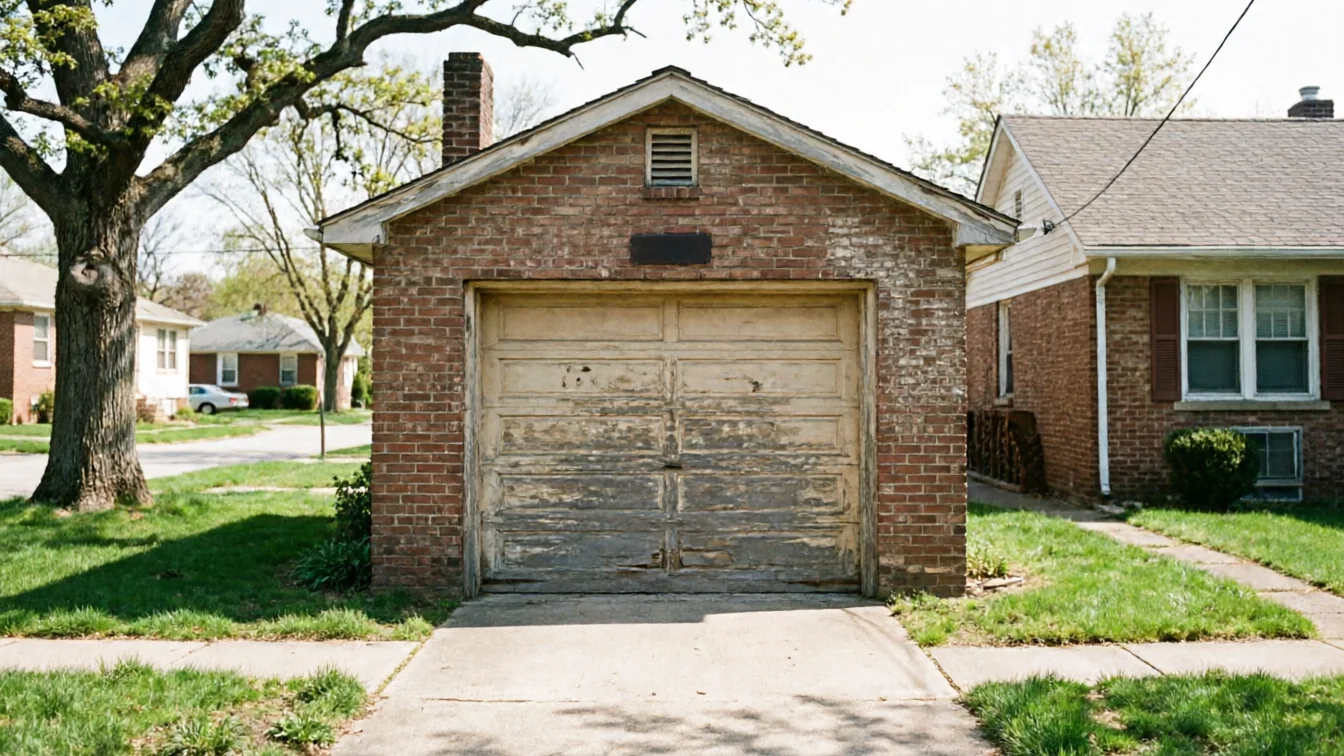
Is Your Old Garage Door Worth Fixing or Replacing
Bettendorf homes mostly date 1960s-70s with a 1973 median build year.
Read moreBlogBettendorf, IA · 4 min read
Bettendorf homes mostly went up between 1948 and 2001, median 1973. That building era shapes which door problems show up and what fixing them actually involves here.
Local detail
Most of the houses on this side of the river, across Bettendorf and the nearby towns of Riverdale, Le Claire, Eldridge, Princeton, Blue Grass, Walcott, Buffalo, DeWitt, Camanche, and Grand Mound, were built between 1948 and 2001, with the median landing around 1973. That puts a lot of garage doors on the far side of insulation requirements that came later. A single-layer steel door with no thermal break is normal here, not an oddity, and so are torsion springs sized for a lighter door than what some owners swapped in later without upgrading the hardware underneath it.
The practical problem is mismatch. A 1973-era track and a replacement door bought off the shelf in 2015 don't always agree with each other on headroom, spring tension, or roller type. We see openers bolted onto brackets that were never meant to carry that motor's pull, because the bracket is original to the house and the opener is not. None of that is unusual for housing this age. It's just what you get when a neighborhood's doors span five decades of different standards.
The area
We don't have a price list to quote here, so this section stays on what drives the cost up or down rather than a number. With 6,807 owner-occupied houses across roughly 11,334 households in this service area, and a median household income of $84,380, most jobs land somewhere between a straightforward spring swap and a full door-and-opener replacement, and the age of the house is usually what tips it one way or the other.
An original 1960s or 70s door with intact tracks is often cheaper to keep running than to replace, since the structure is usually sound even if the insulation isn't. Where it gets expensive is when the opener, the springs, and the panel all need attention at once, which happens more often on houses that never had any of the three touched since they were installed. If the track is bent and the steel is original to a house from that era, patching it piece by piece usually costs more over a few years than doing the job once.
What we find
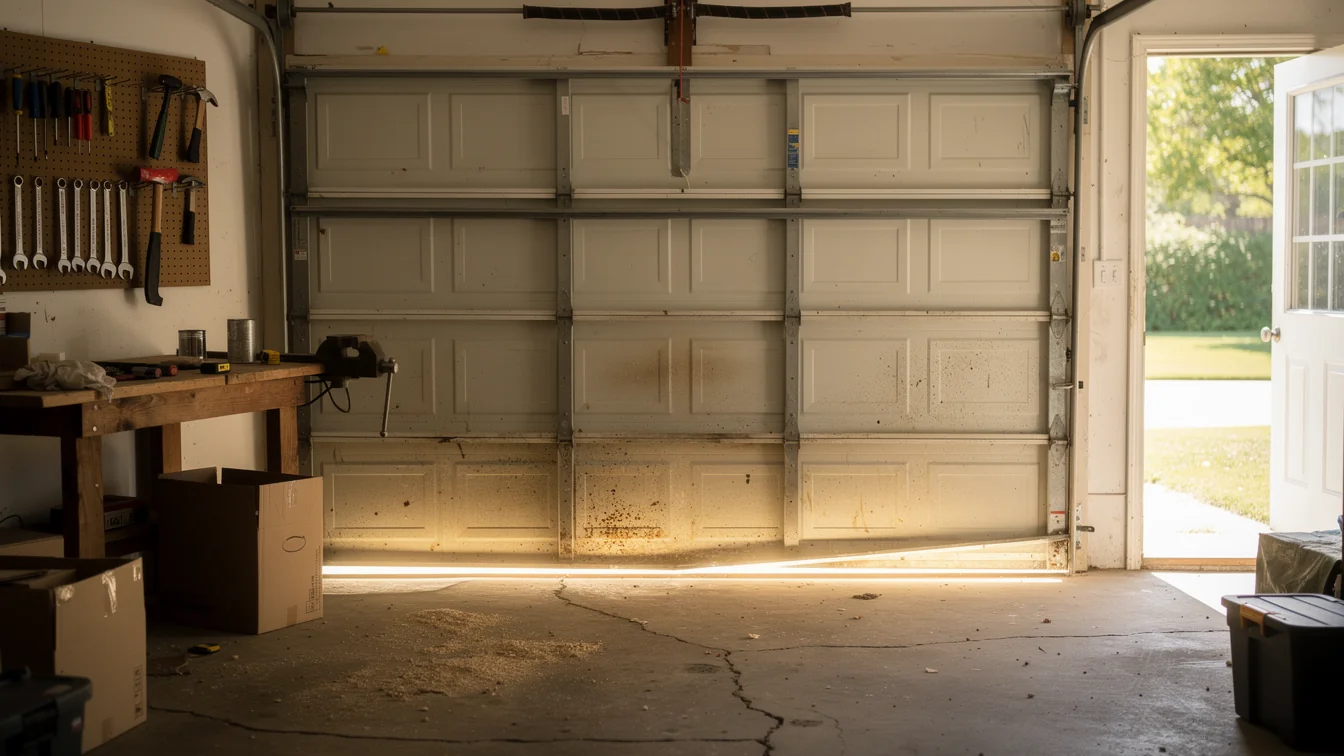
This area sits in a cold moderate climate band, and that matters more for a garage door than people expect. Cold steel contracts. A torsion spring that's already fatigued from forty-plus years of cycling is more likely to snap on a sub-freezing morning than in July, and when it goes on a door that's never been serviced, it tends to take a cable or a bottom bracket with it.
Left alone, a door from the 1948-2001 build era doesn't fail gracefully. Rollers worn smooth stop tracking cleanly through winter condensation and ice at the base of the track. An opener pulling against a door that's binding will burn out its drive gear faster than one working with a door that moves freely. None of this is an emergency until the week it is, and the week it usually is tends to be the coldest one of the year, which is exactly when a stuck or broken door is hardest to live without.
How we work
Put the housing stock and the climate together and you get a specific, local problem, not a generic one. A door built or installed anywhere from 1948 through the early 2000s, in a climate band that swings cold enough to stiffen hardware and crack old weatherseal, ages differently than the same door would in a milder or newer-built area.
The weatherseal on the bottom of an original-era door dries out and cracks faster here through repeated freeze-thaw cycles, which lets cold air into an attached garage and, on a lot of these older floor plans, into the room above it. Springs cycle through more temperature swings per winter than they would somewhere milder, which shortens their working life regardless of how many times the door opens and closes. None of this means every old door needs replacing. It means a door that's original to a house built in this stretch of decades is worth an honest look before winter, not after something breaks.
Questions
Not automatically. Plenty of original 1960s-70s hardware still runs fine if it's been maintained. The issue shows up when the opener's drive gear or capacitor is near the end of its life and nobody's checked it in years. Worth having it looked at before it fails on a cold morning rather than after.
Cold makes steel more brittle, and a spring that's already cycled tens of thousands of times over decades is closer to its limit than it looks. In this climate band, the coldest stretches of winter are when fatigued springs tend to finally give out.
Depends on the door. If the track is bent and the panels are original steel from a house built in the 1960s or 70s, repeated patching usually costs more over a few years than replacing it once. If the structure's sound and it's just a spring or roller issue, repair is usually the better call.
Recommendation
More garage door guides for Bettendorf homeowners.
Bettendorf homes mostly date 1960s-70s with a 1973 median build year.
Read more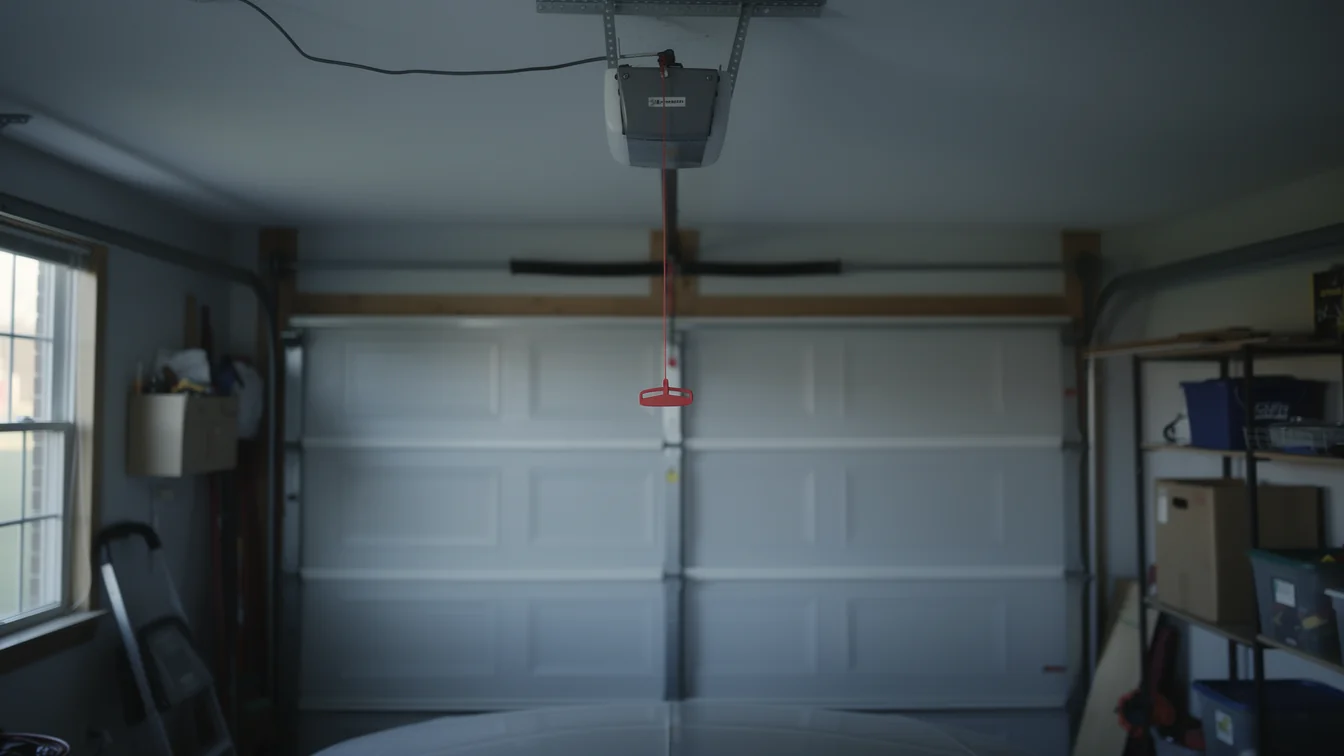
Bettendorf homes built between 1948 and 2001 often pair older openers with cold-climate power cuts.
Read more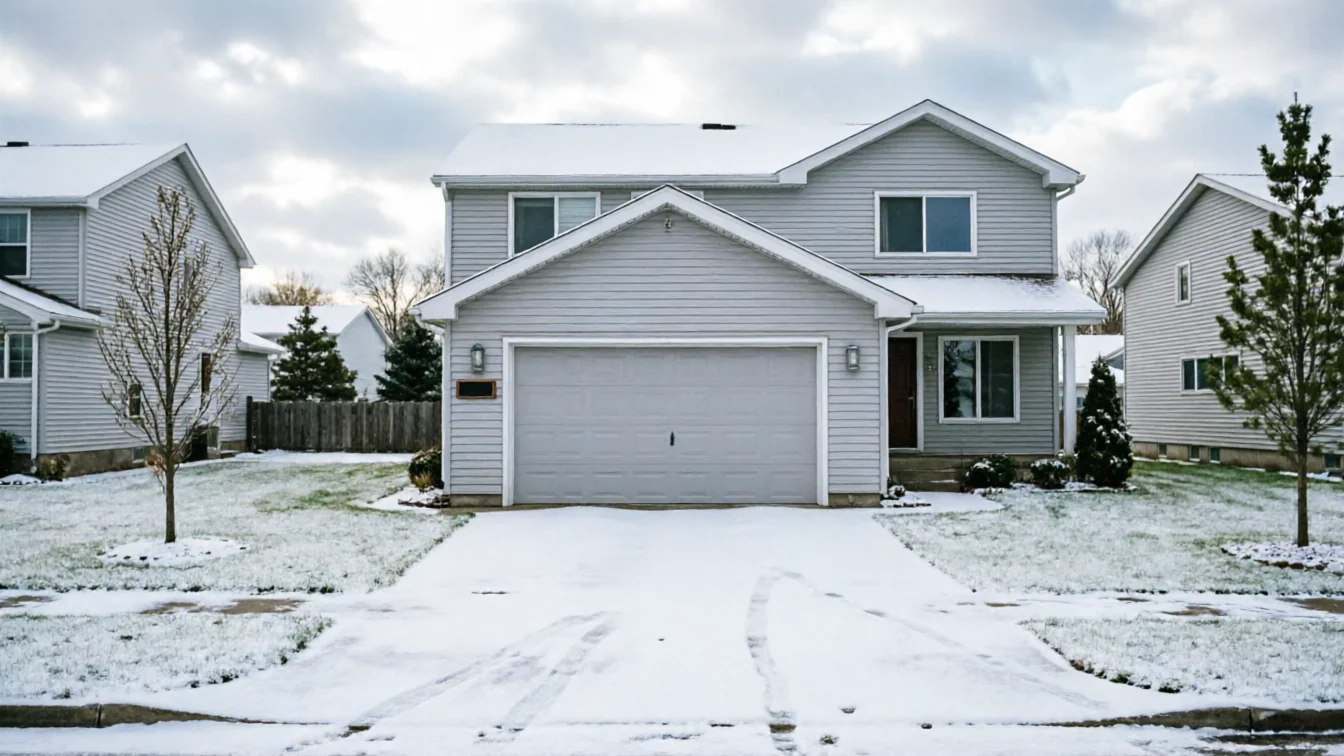
Why torsion springs on Bettendorf's older houses give out when temperatures drop, what a repair or replacement actually involves, and what the cold does to steel and hardware here.
Read moreReady when you are
Bettendorf Garage Door Pros repairs and installs garage doors, springs and openers in Bettendorf, IA and the surrounding area.