
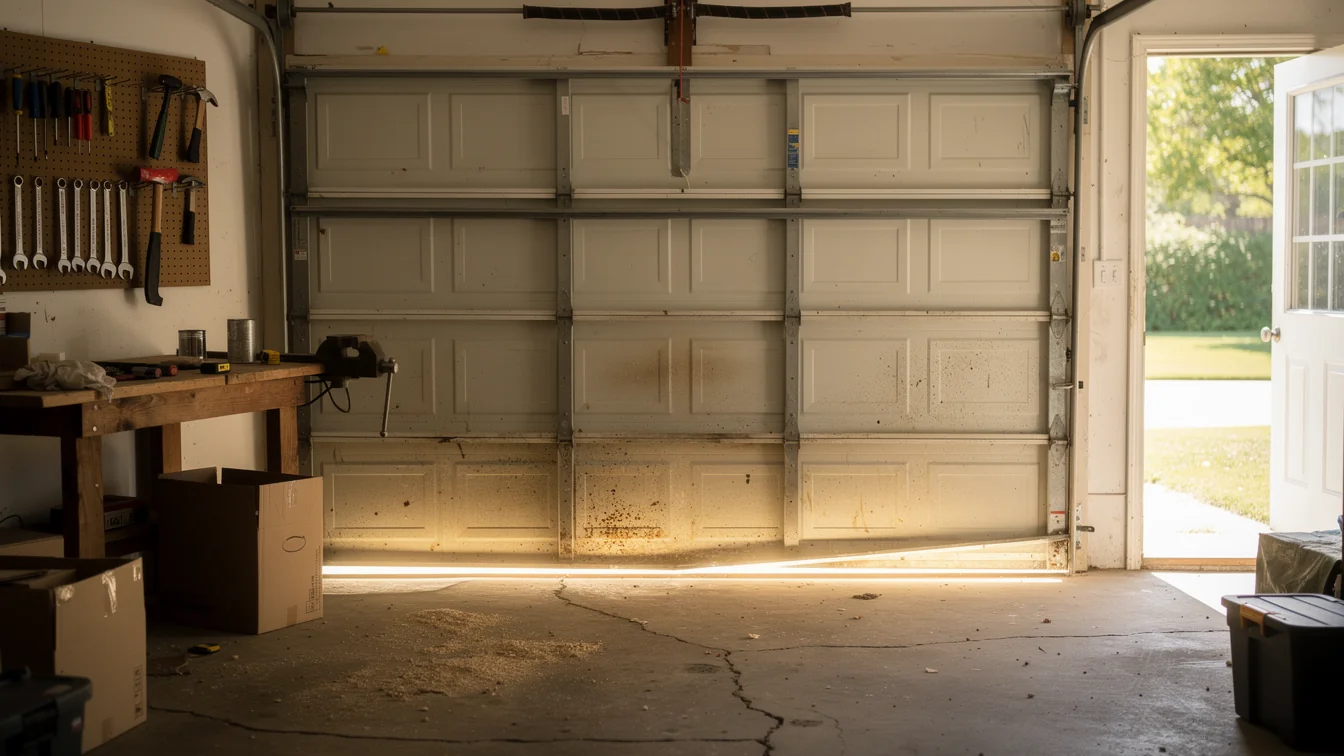
Garage Doors Built for an Older Bettendorf House
Bettendorf homes mostly went up between 1948 and 2001, median 1973.
Read moreBlogBettendorf, IA · 4 min read
Bettendorf homes built between 1948 and 2001 often pair older openers with cold-climate power cuts. See what that combo means for your garage door system.
Local detail
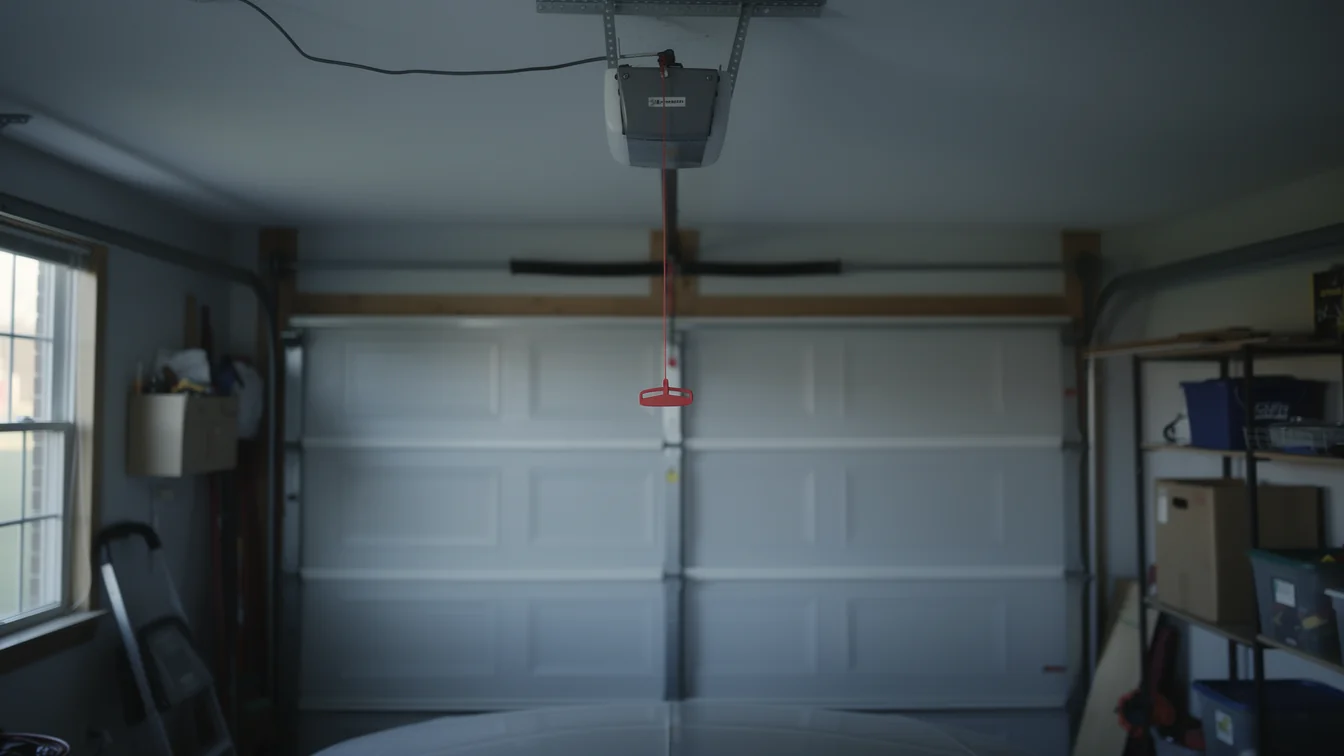
A lot of the openers still running in Bettendorf went in during the 1970s and 80s, back when "battery backup" wasn't even an option on the shelf. Housing in this service area went up mostly between 1948 and 2001, with a median build year of 1973, and across the ten neighborhoods we work in the stock skews 1960s and 70s. That means a huge share of openers either came with the house or got swapped on a like-for-like basis decades ago, without anyone thinking about what happens when the power drops mid-cycle. Add a cold-weather grid that takes hits during ice storms and heavy snow loads, and you get a specific failure: the door stops halfway, the trolley won't release by hand because nobody's touched the manual cord since move-in, and the car's stuck in the garage until someone climbs up and figures out the release mechanism on a chain-drive unit that's older than the household's youngest kid. This isn't a hypothetical. It's what we get called out for every time a winter storm knocks the power out for more than a few hours in a neighborhood full of houses from that 1948-2001 build window.
The area
We can't give you a number here without a fact to back it, so we won't pretend to. What we can tell you is what drives the bill up or down. A straight opener swap is one job. Adding battery backup to an existing unit, or replacing an opener that's seized because it sat through a power cut mid-travel and the gears took the strain, is a different job entirely. With median household income in the service area at $84,380, most owners we talk to can absorb a battery-backup upgrade as a planned expense rather than an emergency one, which is the cheaper way to do it. Doing it after a 2 a.m. power cut, with the car trapped and someone late for work, costs more than doing it on a Tuesday afternoon before the next storm. That's the real cost conversation: timing, not just parts.
What we find
If you skip this, nothing happens until the power goes out while the door's partway open or closed. Then it's a manual release you've probably never used, on a trolley that's been painted over or stiff with age if the house is one of the older ones from the 1948-2001 stock. People find out the hard way that the release cord is seized, or that nobody in the house knows which direction to pull it. Worse case, someone forces it and bends the trolley arm or the track bracket, turning a five-minute inconvenience into a repair. None of this is urgent in the way a snapped cable is. But across 6,807 owner-occupied houses in this service area, a good number of them riding original or near-original opener wiring from that same era, it's not a rare event either. It's the kind of thing that sits quiet for years and then picks the worst possible morning to show up.
How we work
Cold does two things to an opener system here that it wouldn't do somewhere warmer. First, it thickens the grease on the rail and chain, which makes an already weak opener motor work harder right when the grid is most likely to flicker during a winter storm. Second, it makes a power cut mid-cycle more consequential, because the door is heavier to move by hand in freezing temperatures than most people expect, especially on the older, heavier doors that came standard in the 1960s and 70s houses across this area. A battery backup doesn't fix the cold, but it buys you the one or two cycles you need to get the car out before the storm really sets in. One honest limit: a battery backup unit isn't built to run your opener all night or through a multi-day outage. It's there to get you through a cycle or two, not replace the grid.
Questions
No. It's built to give you a cycle or two, enough to get the car in or out, not to run the opener for hours or through an overnight outage. If you need power longer than that, you're looking at a generator setup, which is a different job than an opener upgrade.
Not on its own, but houses in this service area built in that 1948-2001 window, especially the 1960s-70s stock, often have openers wired without any backup power path. Combined with a cold-weather power cut, that's when the door stops mid-travel and the manual release becomes your only option.
Cold stiffens the grease on the track and the chain, and the springs themselves lose a little tension in low temperatures. On older, heavier doors common in houses from this area's build era, that difference is noticeable enough that a manual lift during a power cut takes real effort.
Recommendation
More garage door guides for Bettendorf homeowners.
Bettendorf homes mostly went up between 1948 and 2001, median 1973.
Read more
A guide for Bettendorf homeowners on what grinding, popping, and slamming garage door sounds mean for houses built mostly between 1948 and 2001.
Read more
A look at what a garage door service call covers in Bettendorf, tied to this area's 1960s-70s housing stock and cold-climate wear on springs and tracks.
Read moreReady when you are
Bettendorf Garage Door Pros repairs and installs garage doors, springs and openers in Bettendorf, IA and the surrounding area.