The Symptom
The door won't lift, or it lifts a few inches and stops. Sometimes you hear a bang from the garage overnight and in the morning the door is dead weight - the opener hums but the door doesn't move, or it moves and one side hangs lower than the other.
Daily winding wear
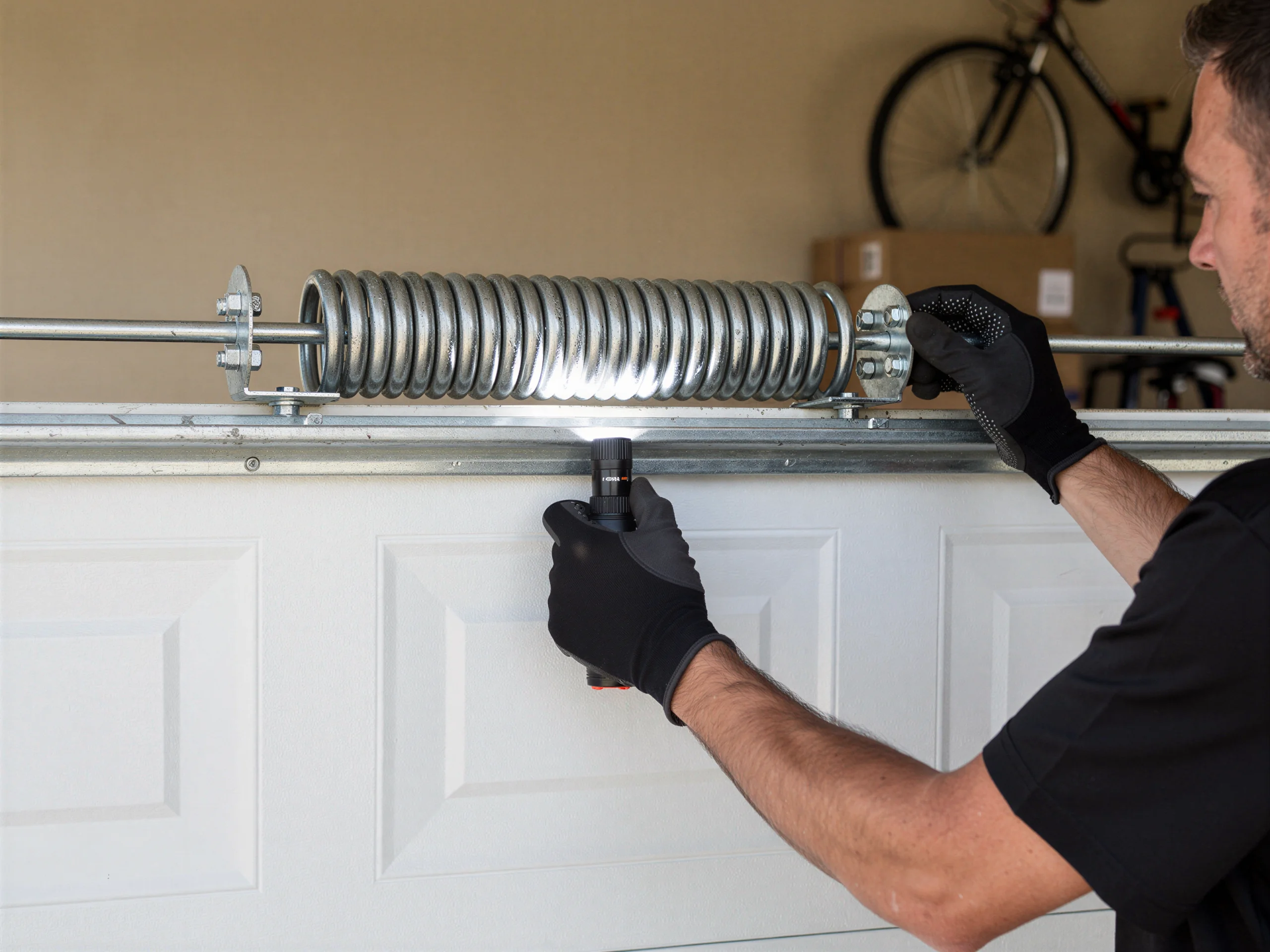
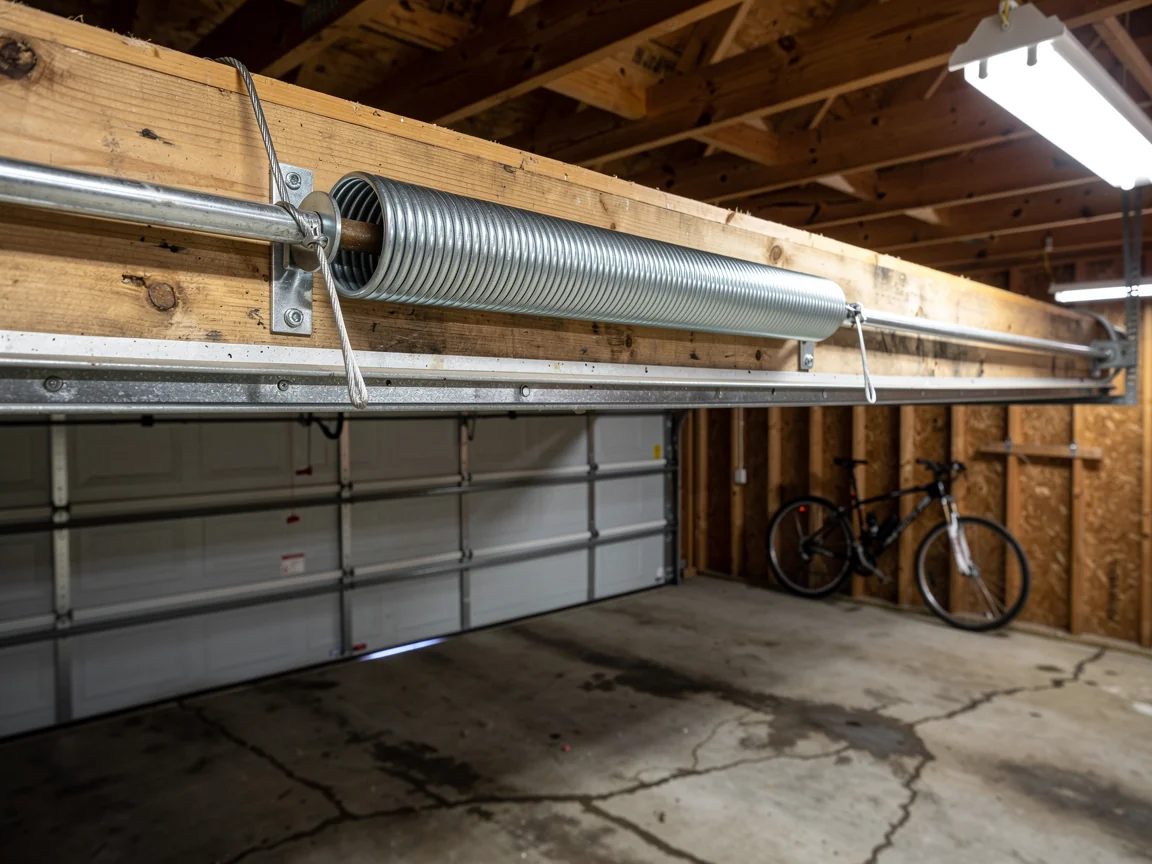
This is almost always a broken torsion spring, and in a house built before 1980 it's often the original spring, the one that's been winding and unwinding every single day since the house went up.
Opener strain, same failure
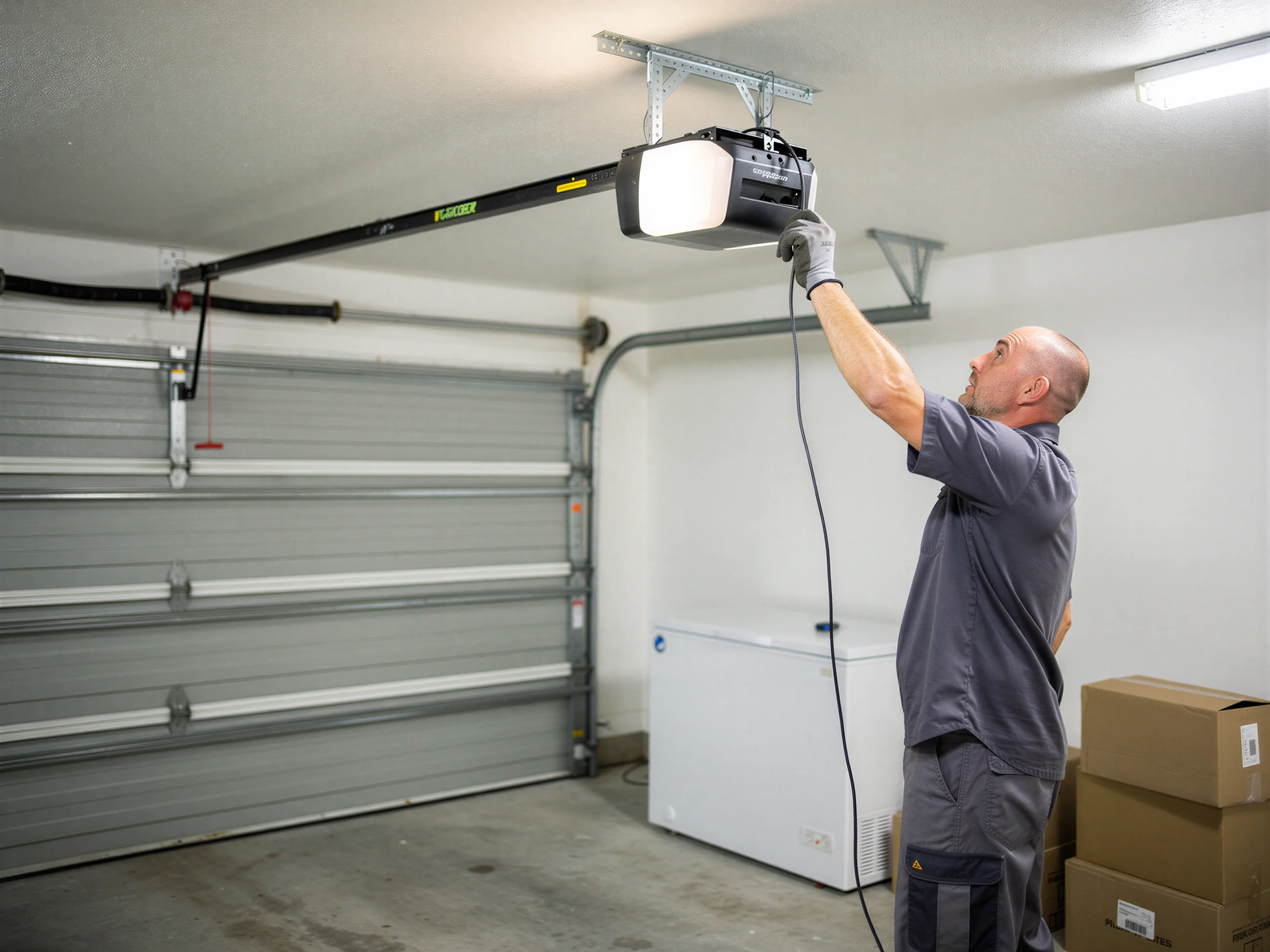
If your opener motor strains, reverses, or trips its breaker trying to lift the door, that's the same failure showing up a different way - the opener isn't broken, it's just fighting a spring that quit doing its job.
Gradual heaviness first
A few homeowners notice it gradually first: the door gets heavier to lift by hand over a few weeks before it finally lets go. More often it's sudden, usually on a cold morning when the metal is stiff and the spring has the least give left in it.
What Causes It Around Here
Housing in the Bettendorf service area runs 1948 to 2001, with a median build year around 1973, and most of the stock across the ten areas we cover falls squarely in that 1960s-70s band. That matters for one simple reason: torsion springs are rated for a number of cycles, not a number of years, and a 50-year-old spring on a door that's been opened and closed twice a day for five decades is well past any reasonable service life, original hardware or not.
Cold is the second half of it. This area sits in a cold, moderate climate band, and steel contracts and gets more brittle as temperatures drop. A spring that's already fatigued from age has less tolerance for that stiffness, which is why the failures cluster hard in the coldest stretches of the year rather than spreading evenly across twelve months. Add in galvanized cable that's been flexing over the same drum since installation, and you've got two wear points failing on the same timeline in the same weather.
Where This Job Goes Sideways
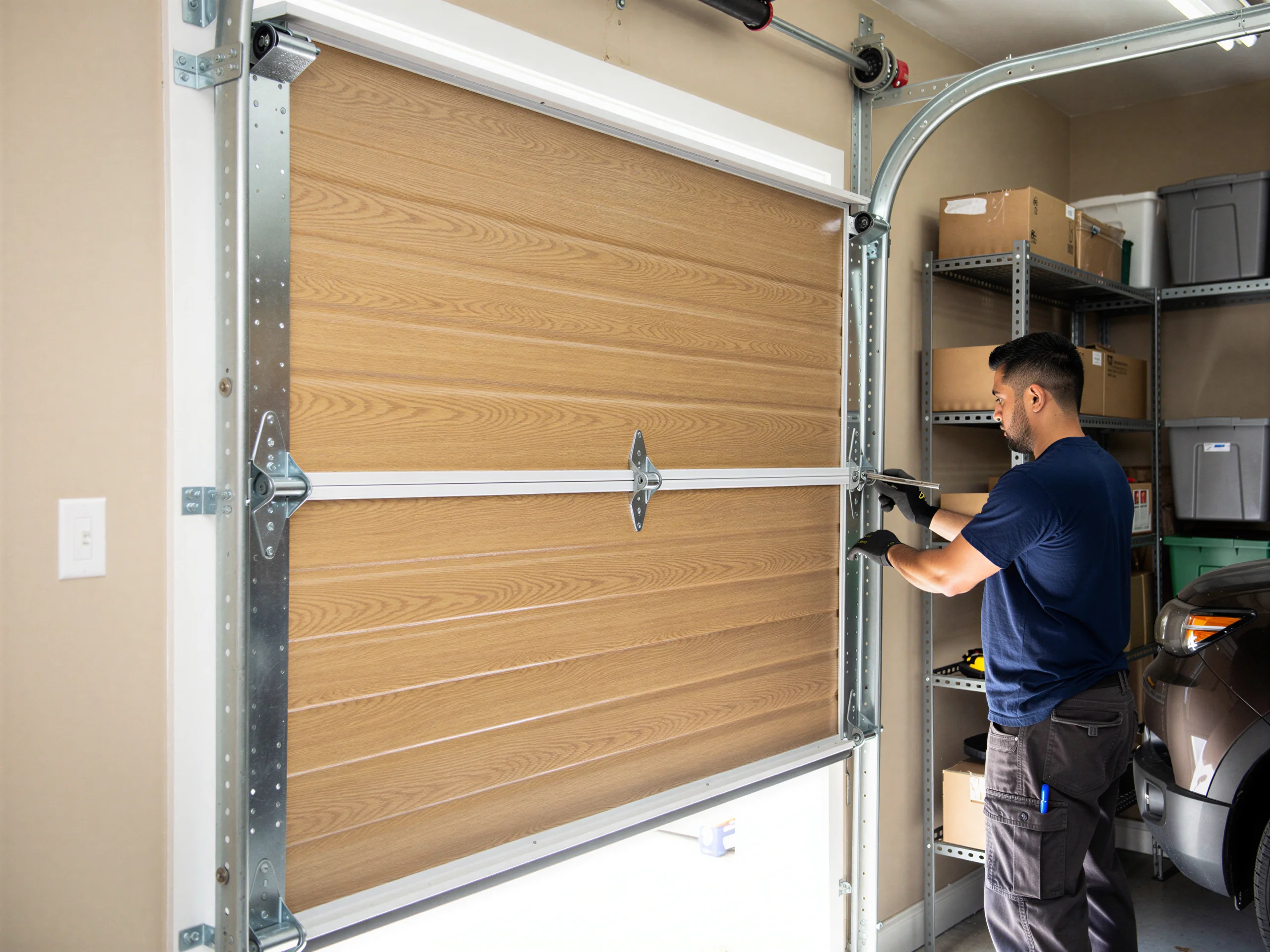
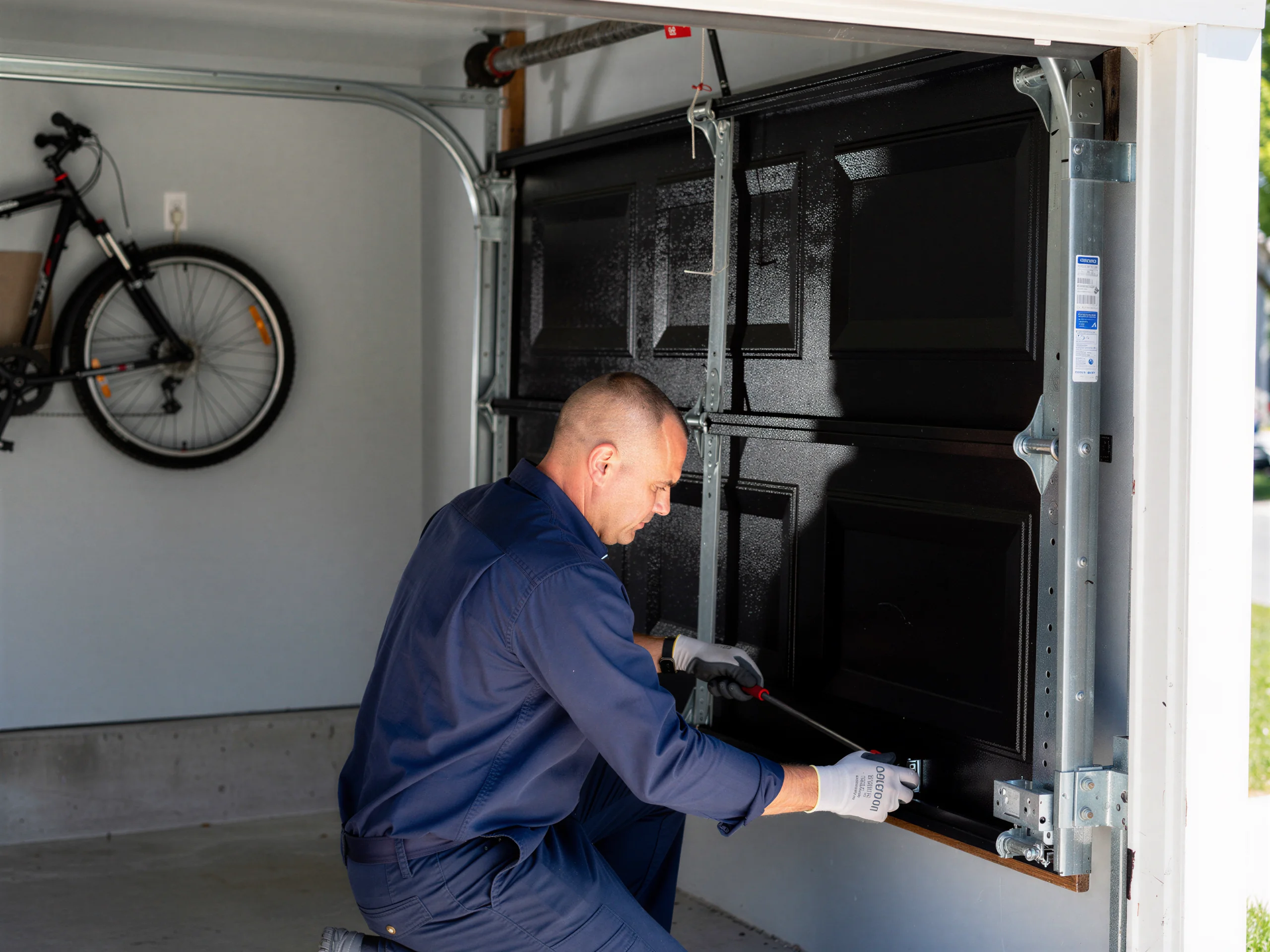
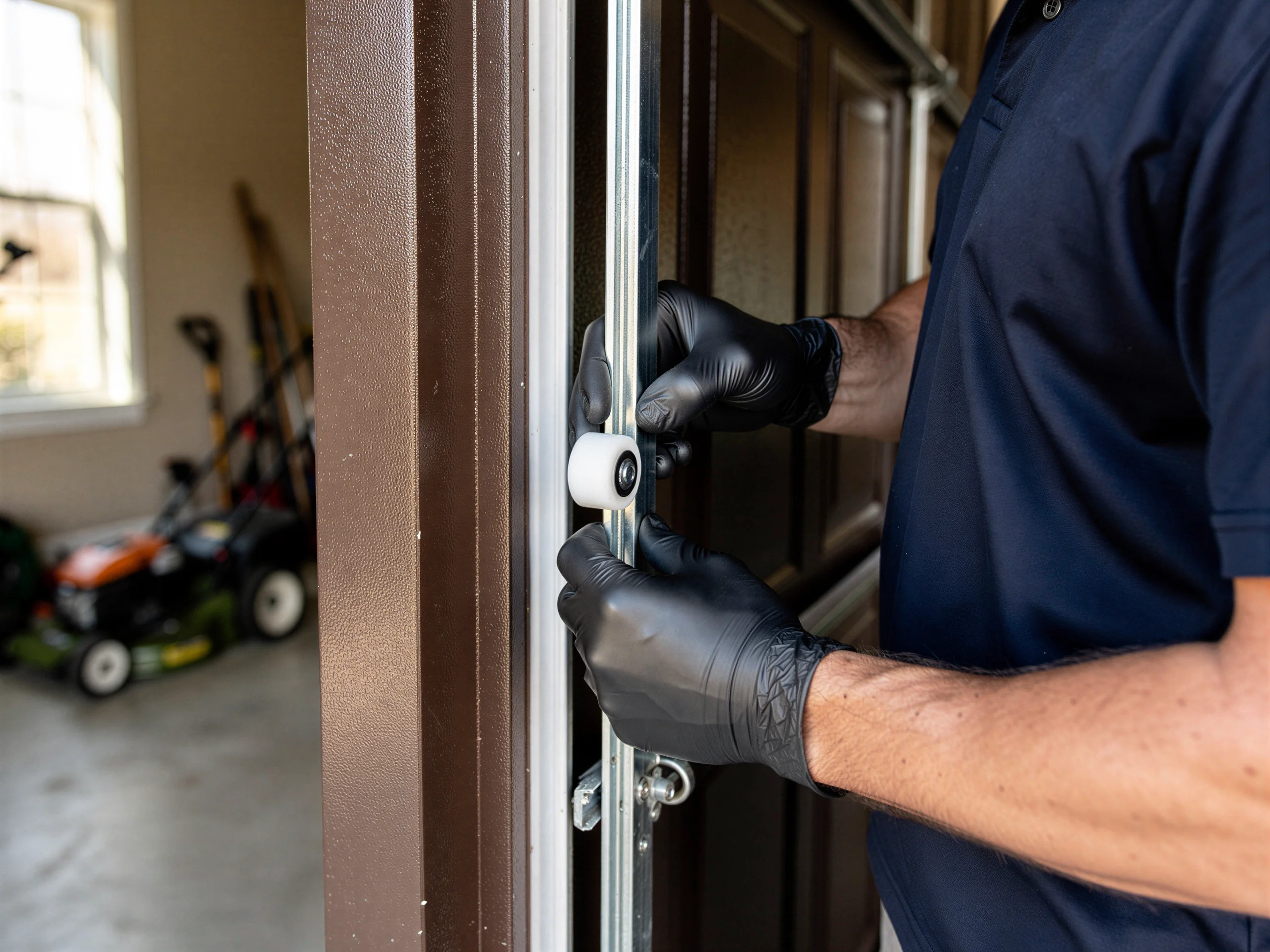
The job goes wrong when someone treats a spring replacement as a quick swap without checking the rest of the system first. On a house with original 1960s-70s hardware, the drums, bearing plates, and even the track can be worn to a point where a new spring just transfers the stress somewhere else and something fails again in a year.
Checking the whole system
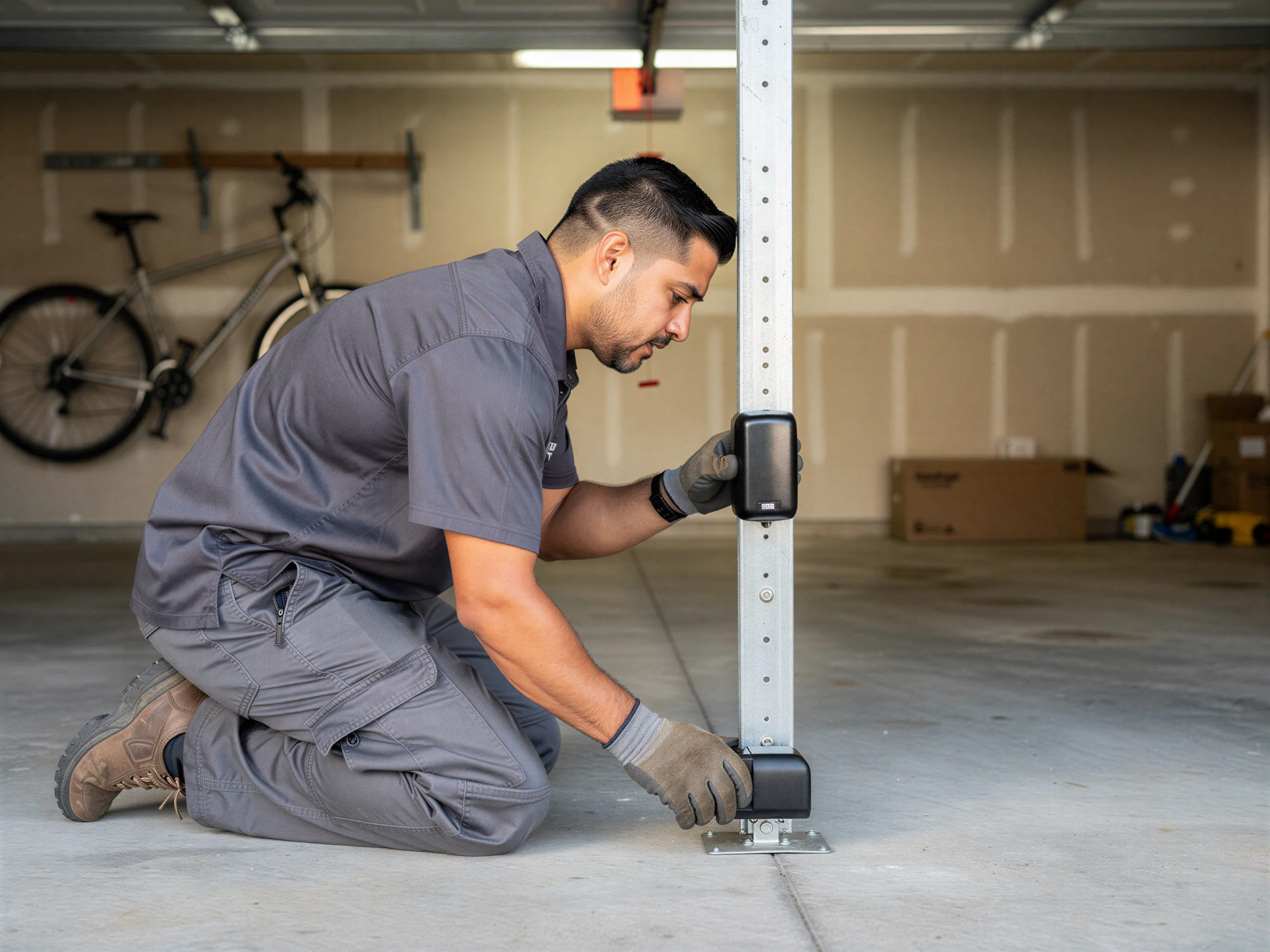
We check cable condition, drum wear, and track alignment before we touch a spring, because replacing one part on a door that age without looking at the others is how you end up back at the same garage twice.
Parts availability delays
The other place this gets expensive is parts availability. Doors from this era sometimes used hardware sizes or spring winding configurations that aren't the current standard, and matching those exactly can take longer than a same-week stock replacement.
Special-order parts
We'll tell you straight if your door needs a part we have to order rather than one we carry on the truck - that's not us dragging the job out, it's the door being fifty years old.
The Cost of This Job
We can't post a number here that would mean anything without seeing the door - spring size, drum type, and whether the cable and track need attention too all move the price. What we can tell you is how to think about it: a straight torsion spring replacement on standard hardware is a different job, and a different cost, than a spring plus cable plus drum replacement on a door where one worn part has already started wearing the next one.
Households across our service area have a median income around $84,380, and most of the roughly 6,807 owner-occupied houses here were built in that same 1960s-70s window - which is to say, this isn't a rare repair, it's the most common call we get, and we price it as routine work, not an emergency markup. Call and describe what the door is doing and we'll give you a real number before anyone drives out.
Talk to a local pro
Garage door service in Bettendorf?
Same-day service with honest, upfront quotes.