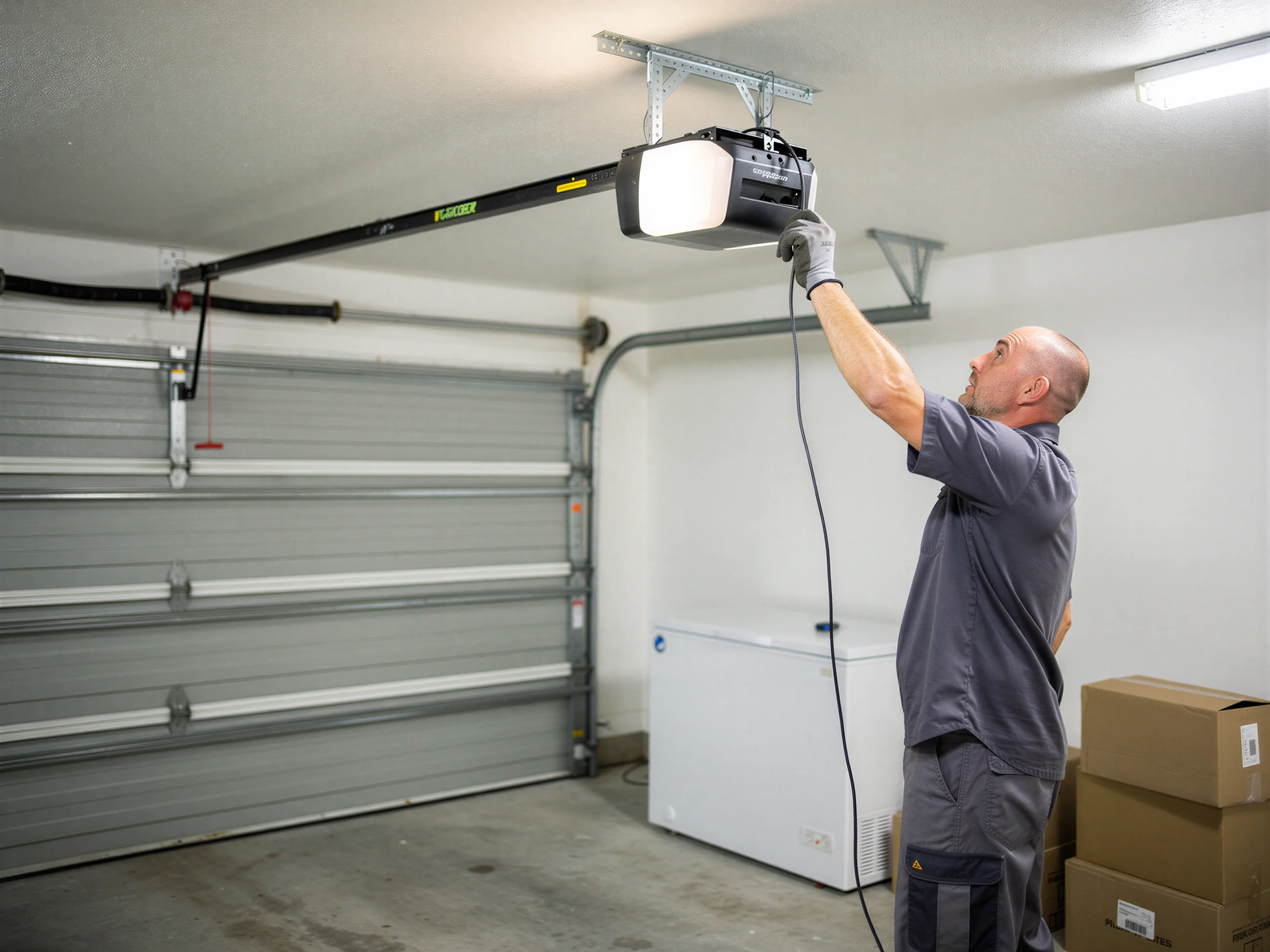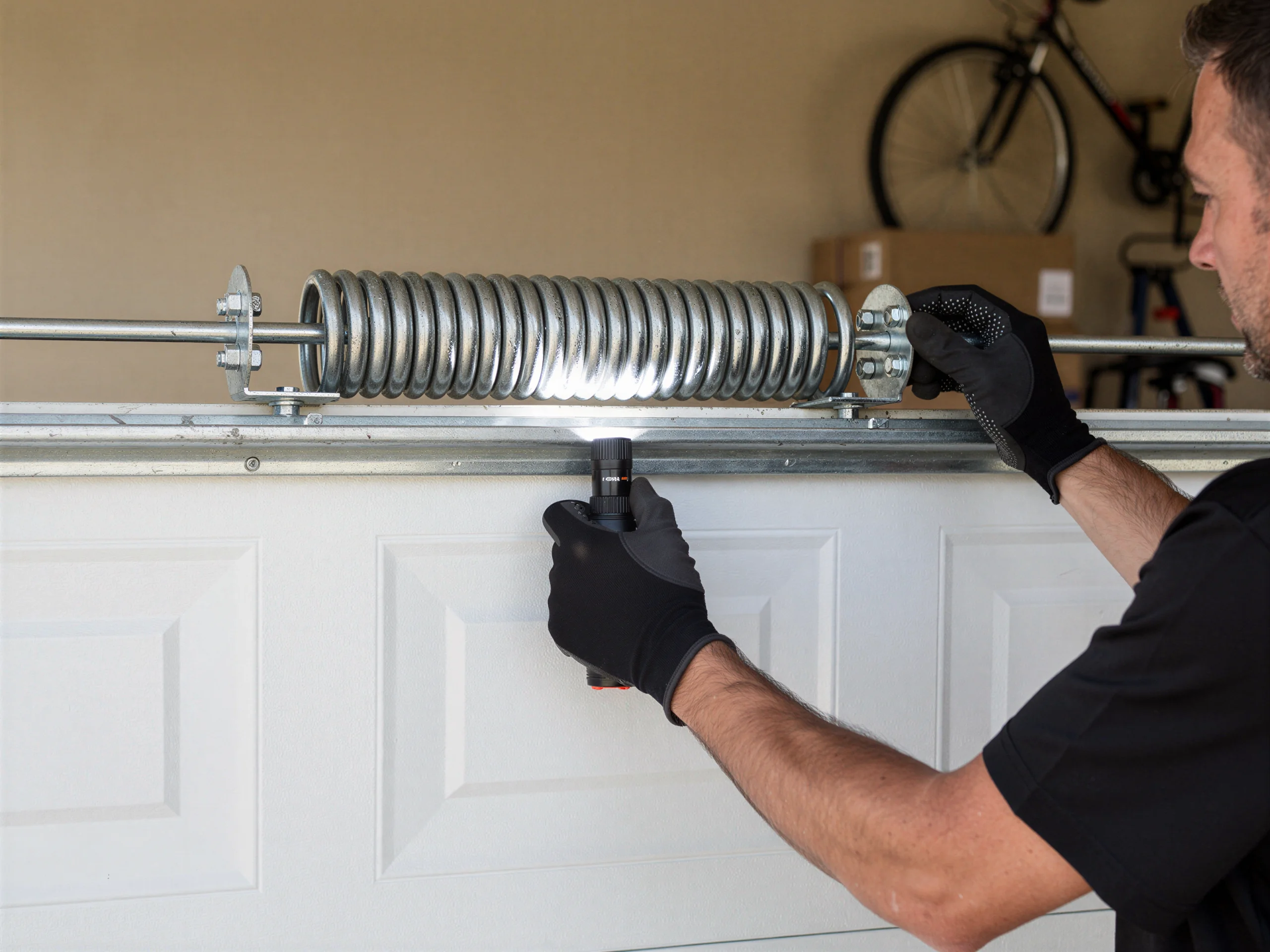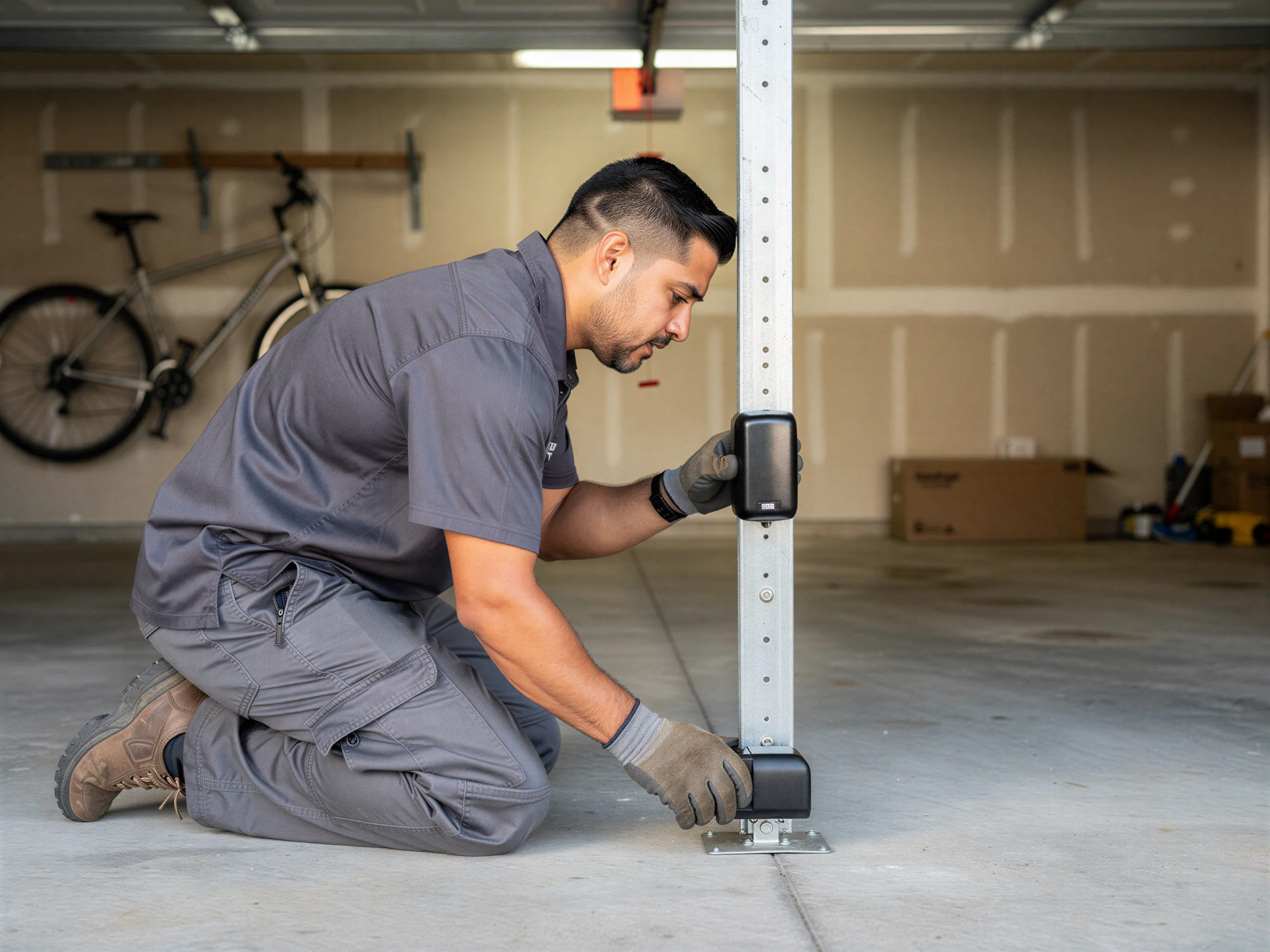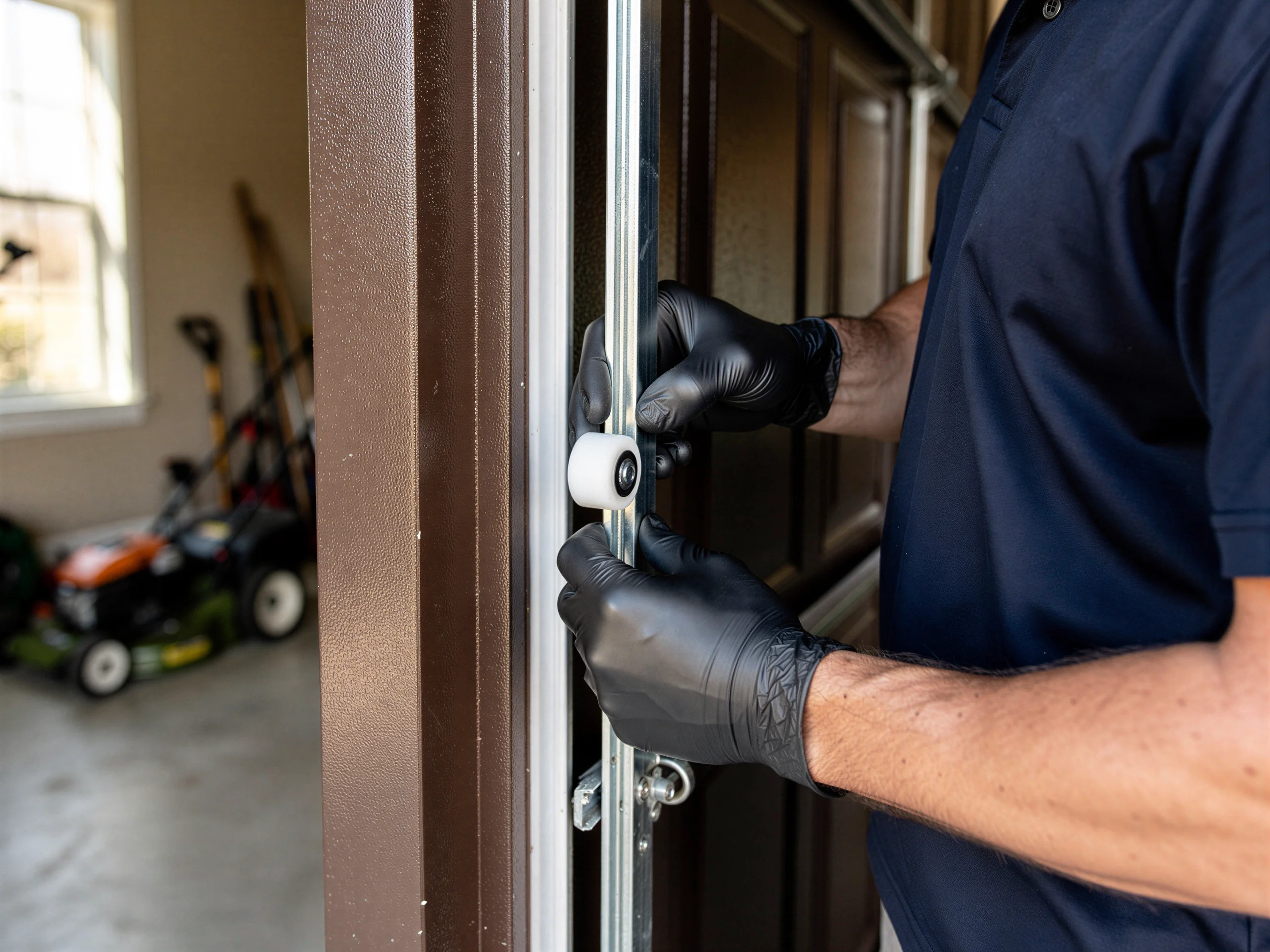
The Symptom
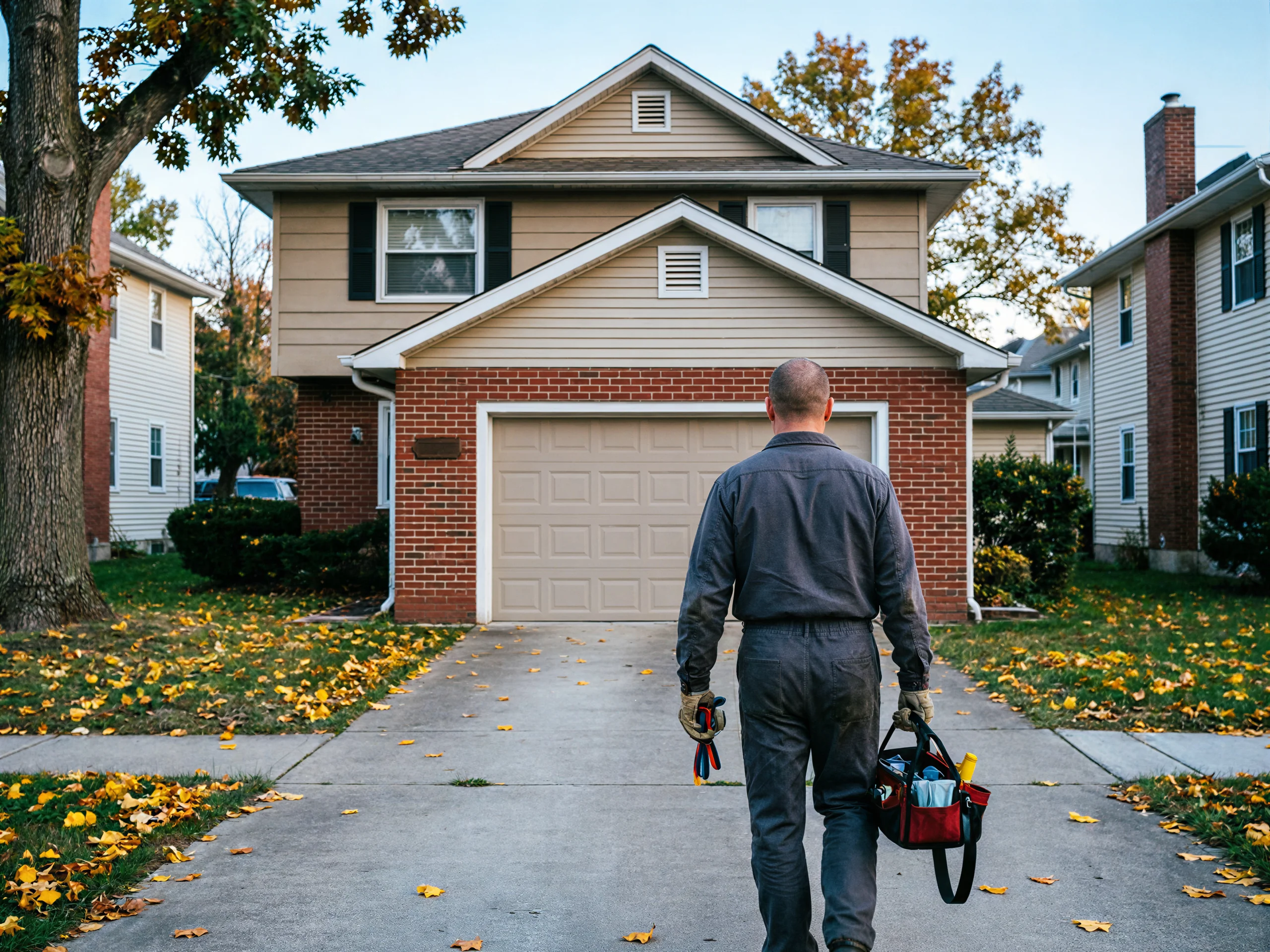
The door still opens and closes, but it's loud, it sags a little at the bottom corner, and you can see daylight along one side when it's shut. On a lot of Bettendorf houses this isn't a repair problem - it's the original door finally telling you it's done. Housing in this service area went up mostly between 1948 and 2001, with the bulk of it dating to the 1960s and 70s, which means a good share of these doors are the same age as the house or close to it. Steel skins from that era were thinner, the panel sections weren't insulated, and the track hardware was sized for a lighter door than what's sold today. When a homeowner calls us about "the door feeling heavy" or "not sealing right at the bottom," the fix usually isn't a new spring or a new roller. It's a full replacement, because the door itself - not any single part on it - is past what it was built to do.
What Causes It Around Here
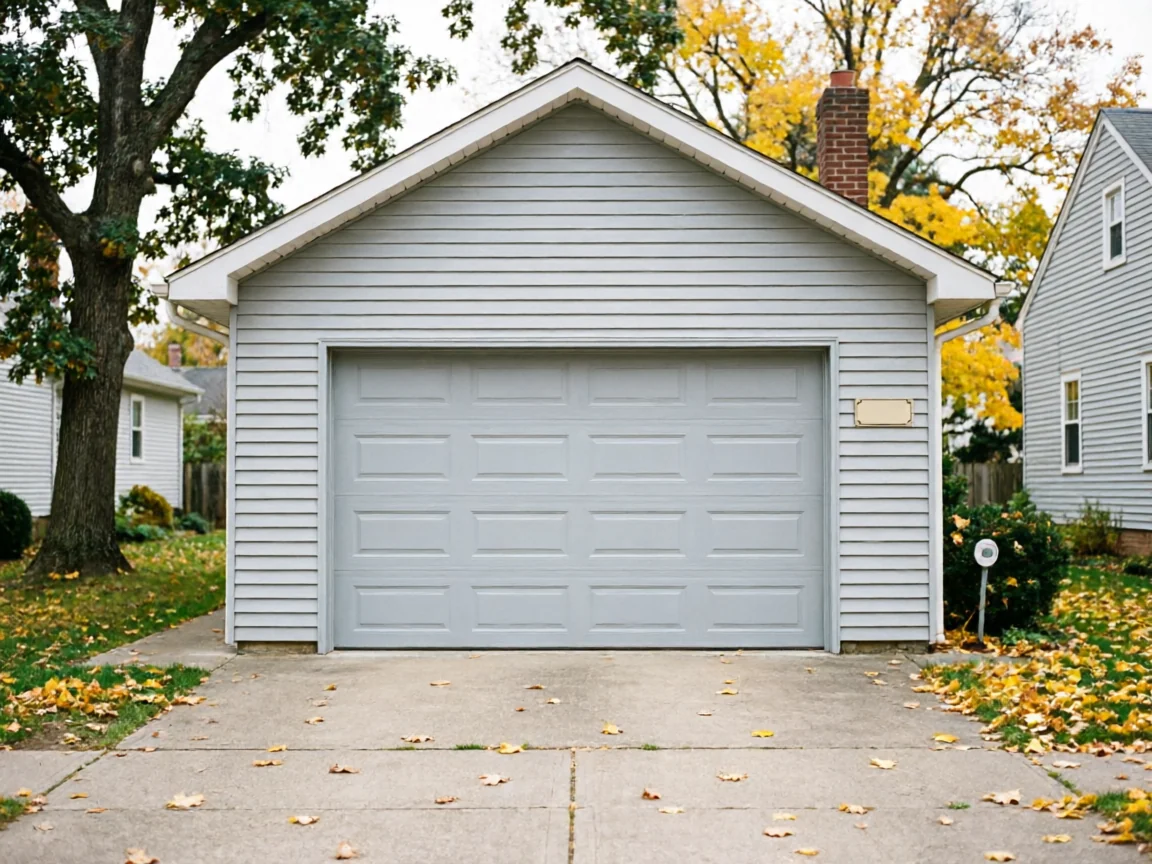
Two things compound on each other in this part of Iowa: the age of the housing stock and the climate band. We're in a cold, moderate zone, which means real freeze-thaw cycles every winter, not just a few cold snaps. A single-layer steel door with no thermal break expands and contracts through that cycle year after year, and on a door built in the 60s or 70s, five decades of that movement shows up as warped panels, bowed track, and bottom seals that have hardened and cracked. Newer installs use insulated steel or composite construction specifically because an uninsulated door in this climate loses its shape faster, not just its R-value. If your house falls into that 1948-2001 build window - and across the ten communities we cover, most do - the door reaching the end of its service life isn't bad luck. It's the expected outcome of the age of the stock and the winters it's been sitting through.
Where This Job Goes Sideways
The part homeowners don't expect: on an older house, the opening itself is sometimes not square anymore, and the existing track was mounted for a door that doesn't match what's sold today.
Opening measurement first
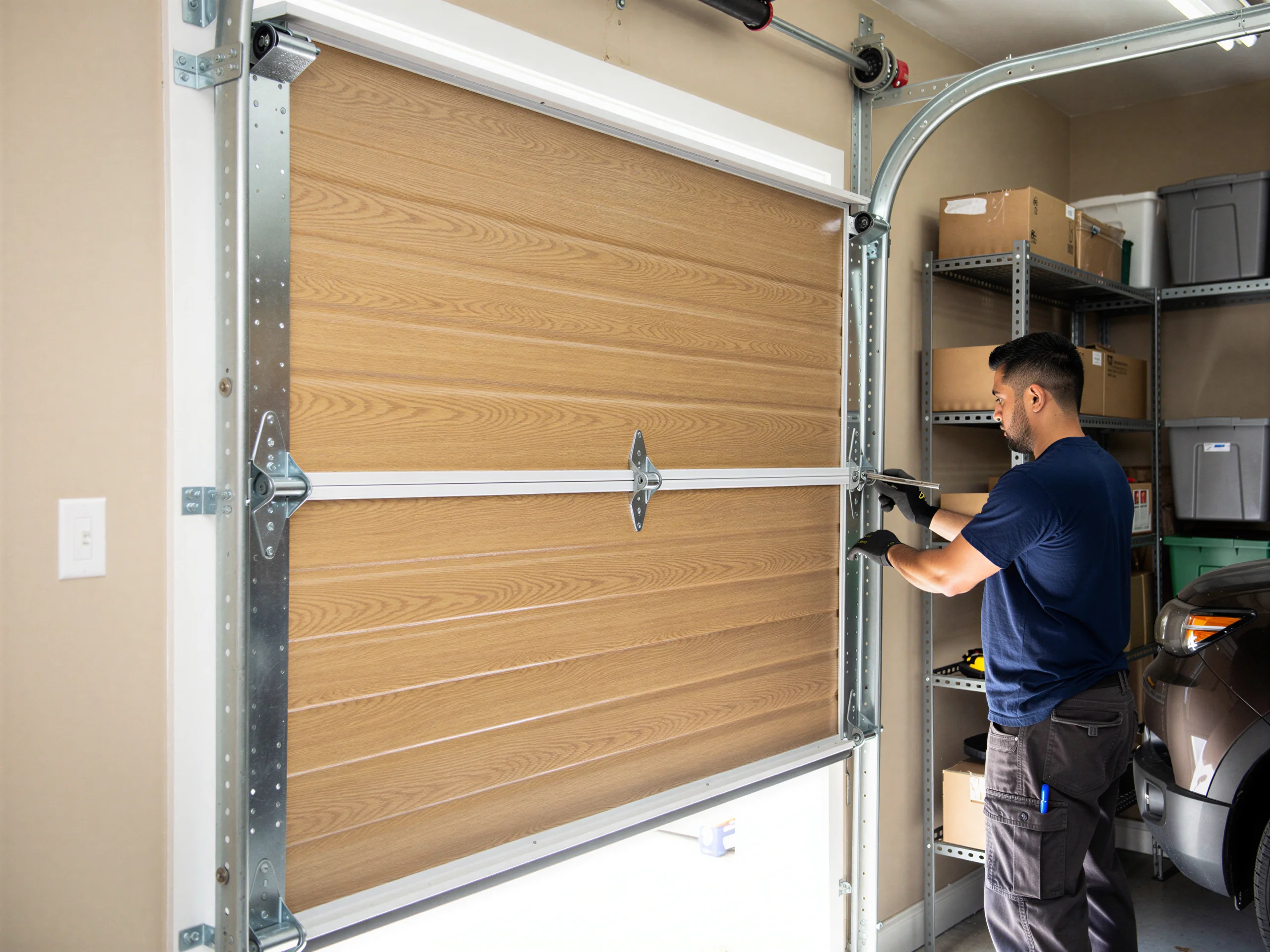
We measure before we quote for exactly this reason - a standard 7-foot door kit doesn't always drop into a 1960s-era opening without adjusting the jamb trim or re-setting the track brackets. This adds labor, and it's the kind of thing that turns a same-day job into a two-day job if we don't catch it up front.
Flagging extra opening work
We'll tell you straight if your opening needs extra work before a new door goes in - we'd rather flag it at the estimate than leave you with a door that doesn't seat right.
Out-of-square framing
One honest limit here: if the framing around the opening is rotted or out of square enough to need carpentry, that part isn't something we do, and we'll point you to get it addressed before we hang anything.
The Cost of This Job
With median household income in this service area at $84,380 and roughly 6,807 owner-occupied houses among the 11,334 households we cover, most of the installs we quote are for people replacing a door they've owned the house with for decades, not flipping a property. That changes the calculus - it's worth paying for a properly insulated door built for the cold-moderate swings here, rather than the cheapest option, because you're the one who'll be opening it every winter for years. We don't have a flat price to quote without seeing the opening and the door style you want, since insulation level, window inserts, and track type all move the number. What we can tell you is that an accurate quote happens after we look at the actual opening - not off a phone call.
Talk to a local pro
Garage door service in Bettendorf?
Same-day service with honest, upfront quotes.