Booking a Visit
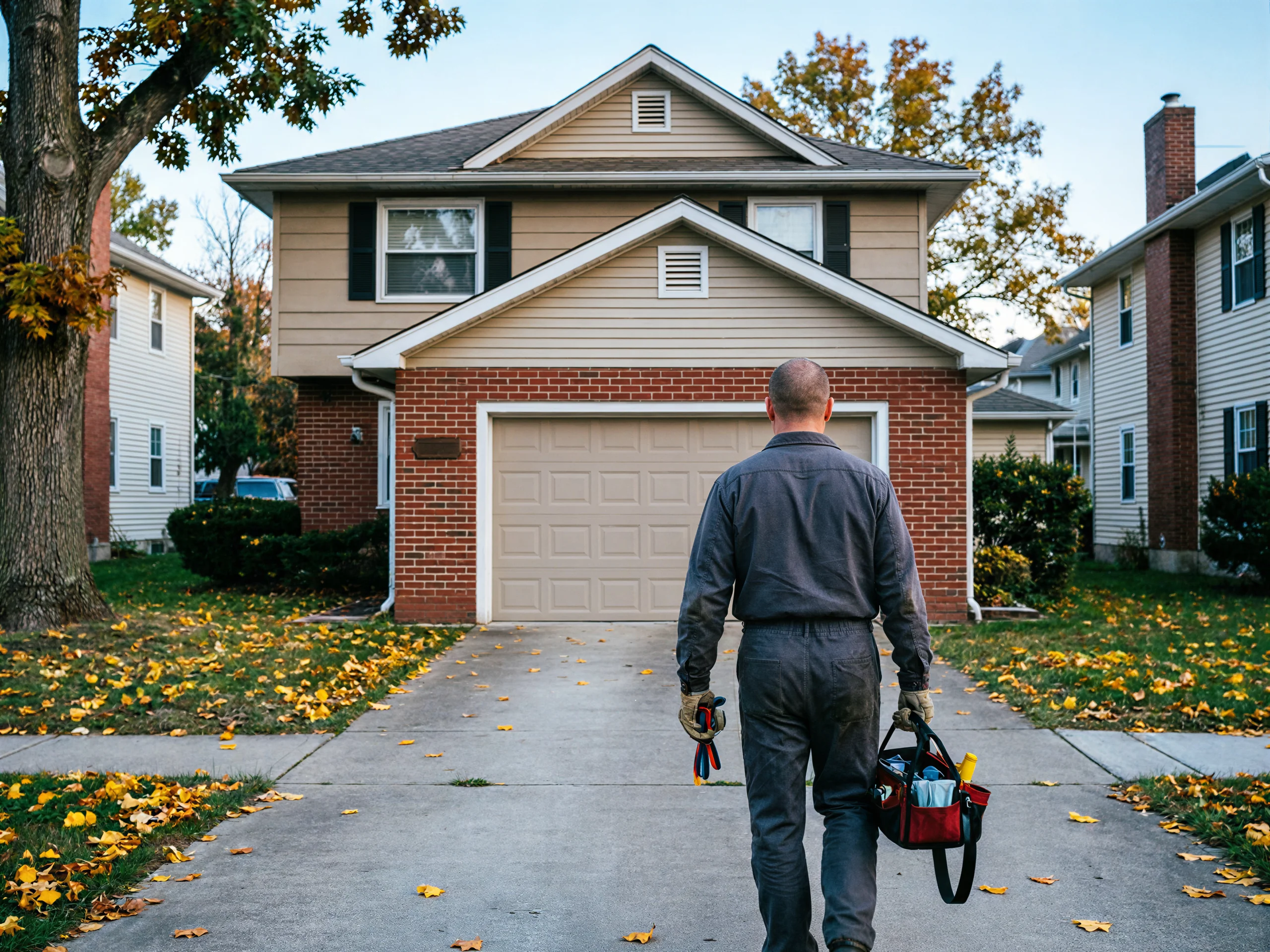
DeWitt sits about 18 miles out from our shop in Bettendorf, and we run that stretch regularly for door calls - it's one of the farther stops on our route, alongside towns like Camanche and Grand Mound, but it's a normal trip, not a special one.
House age for planning
When you call, tell us the age of the house if you know it; a lot of DeWitt was built around the mid-1970s, and knowing that up front tells us what kind of spring and track hardware to expect before the truck even leaves.
Phone symptom descriptions
We book the visit around what you can describe over the phone: whether the door won't budge, whether it's making a grinding sound on the way up, or whether the opener just hums and does nothing.
Specific appointment windows
We don't keep a branch in DeWitt, so every job here is scheduled as a drive-out from Bettendorf, which means a specific appointment window matters more than it would for a town we sit in.
The DIY Question
If a door built around 1975 is suddenly hard to lift by hand, that's almost always a spring that's lost tension or snapped, and torsion springs under a load are not a safe DIY repair - the stored energy in a wound spring can break fingers or worse.
Weatherstripping and lubrication
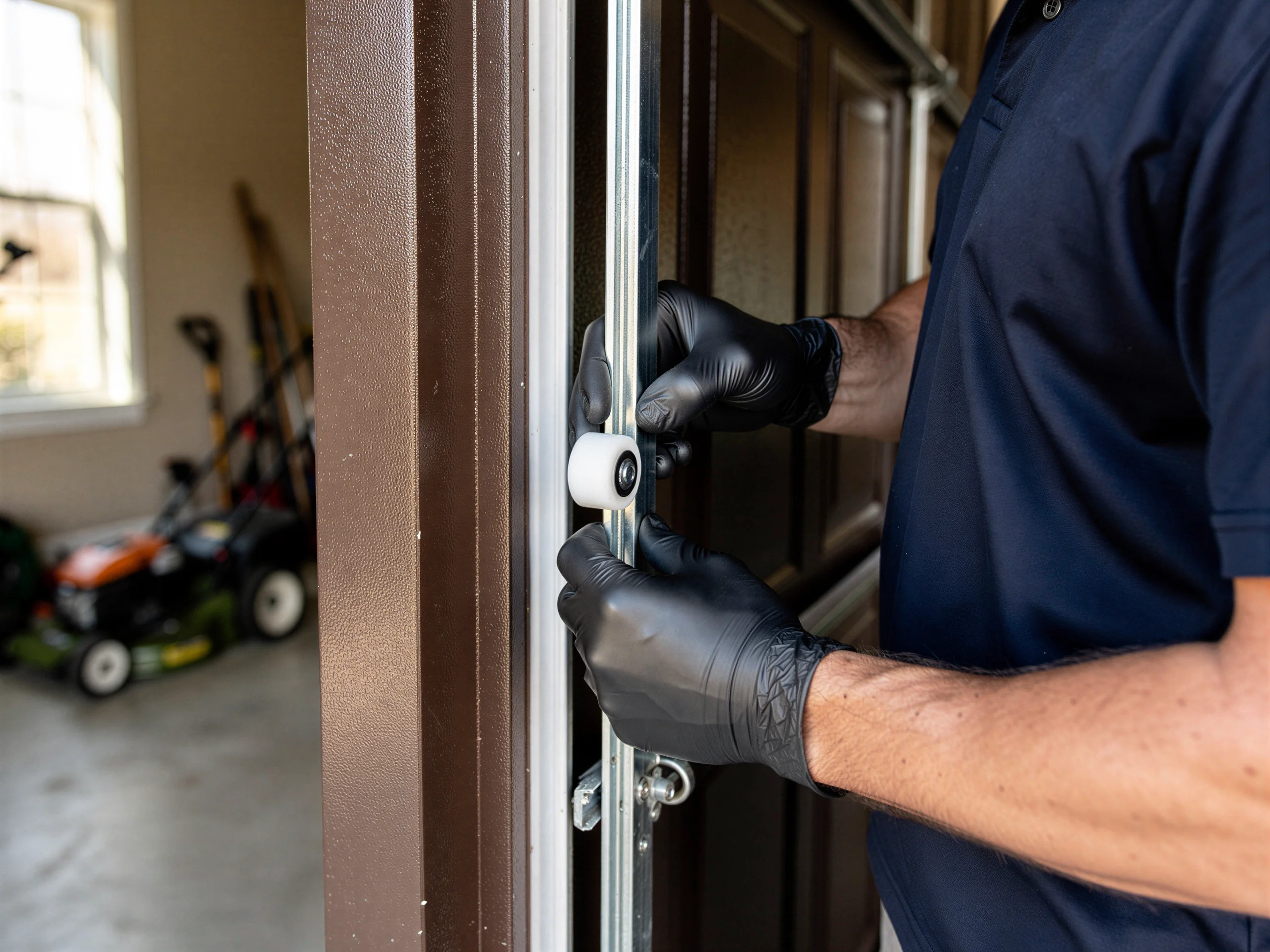
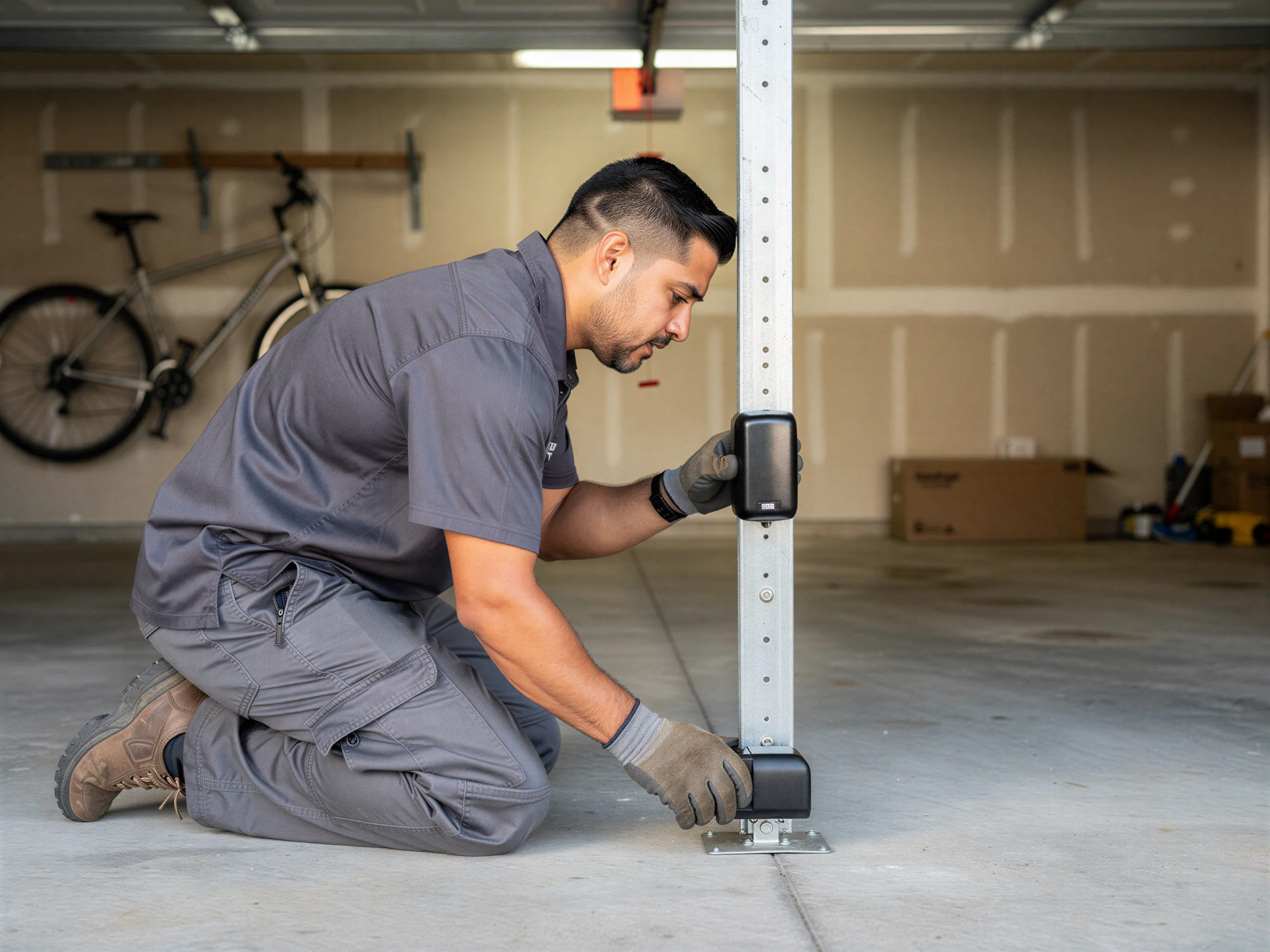
Where you can safely do your own work: lubricating hinges and rollers, tightening loose bolts on the track brackets, replacing worn weatherstripping, and testing the auto-reverse safety feature by running something under the door's sensor beam.
Off-limits spring work
Where you shouldn't: anything involving the spring, the cable drums, or pulling the door off its track to inspect hardware that's been in place since the house was built.
Hardware versus current standards
On houses this age the original hardware is often a mismatch for current safety standards anyway, which is reason enough to have it looked at rather than guessed at.
What the Fix Involves
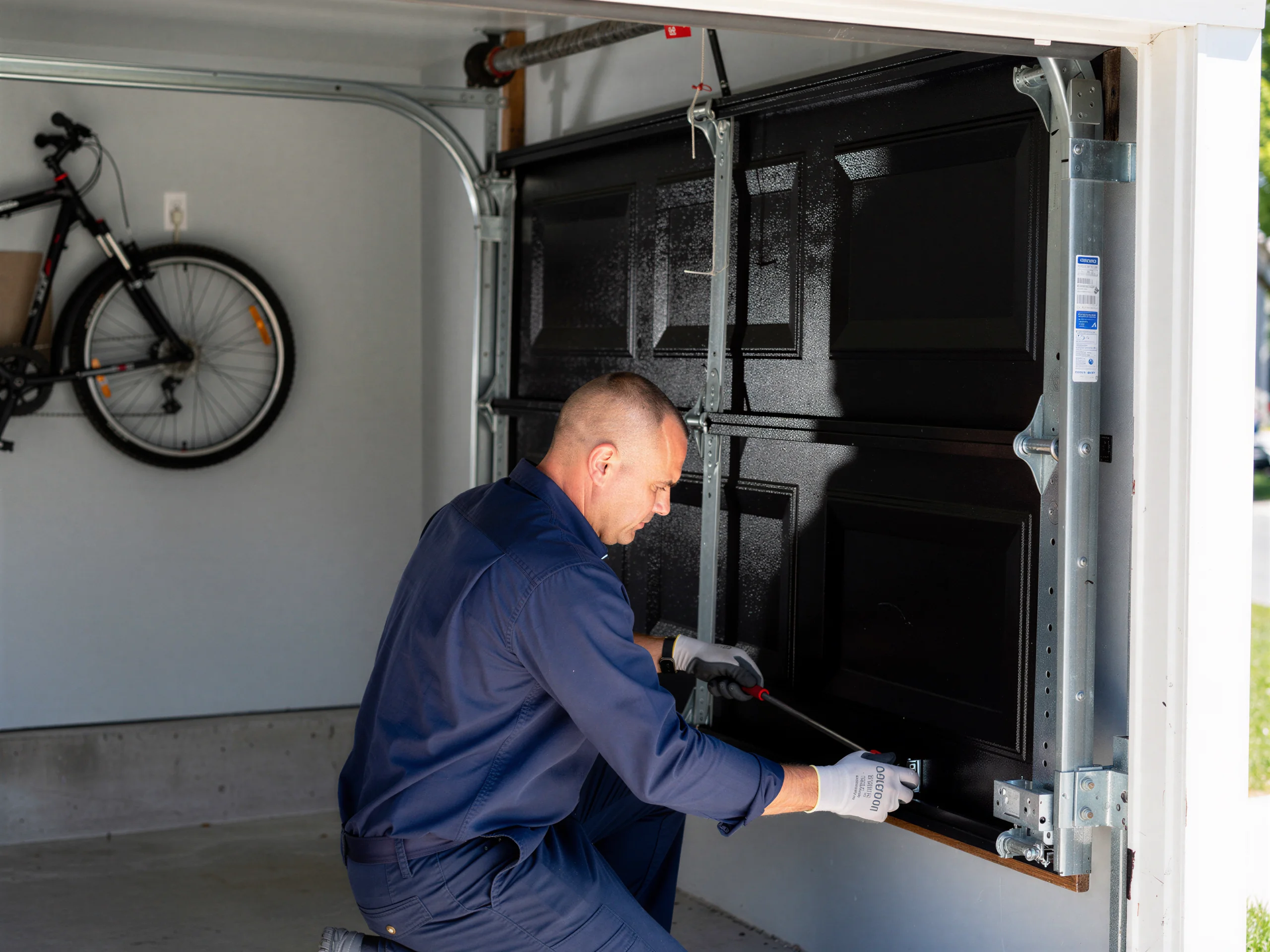
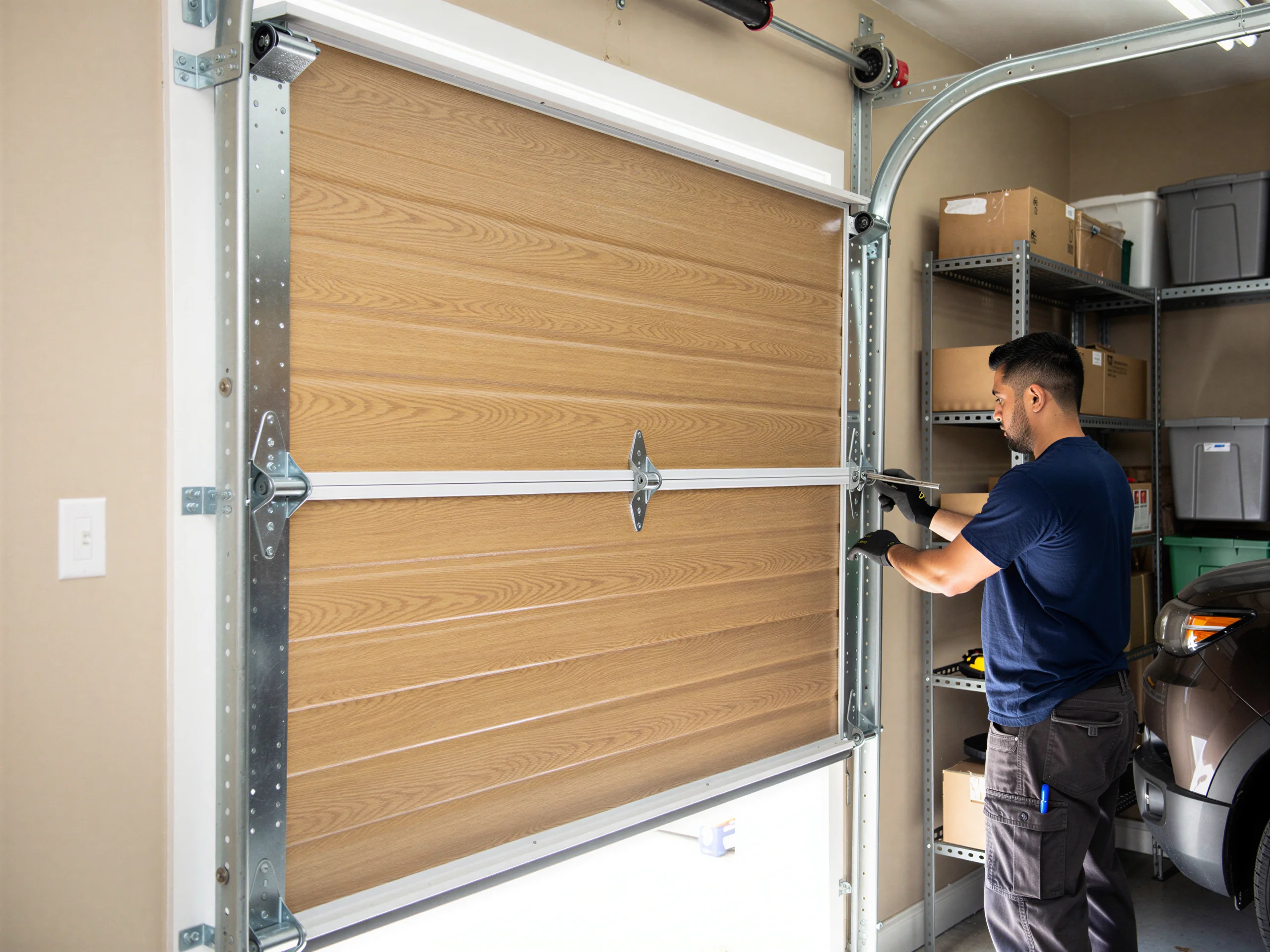
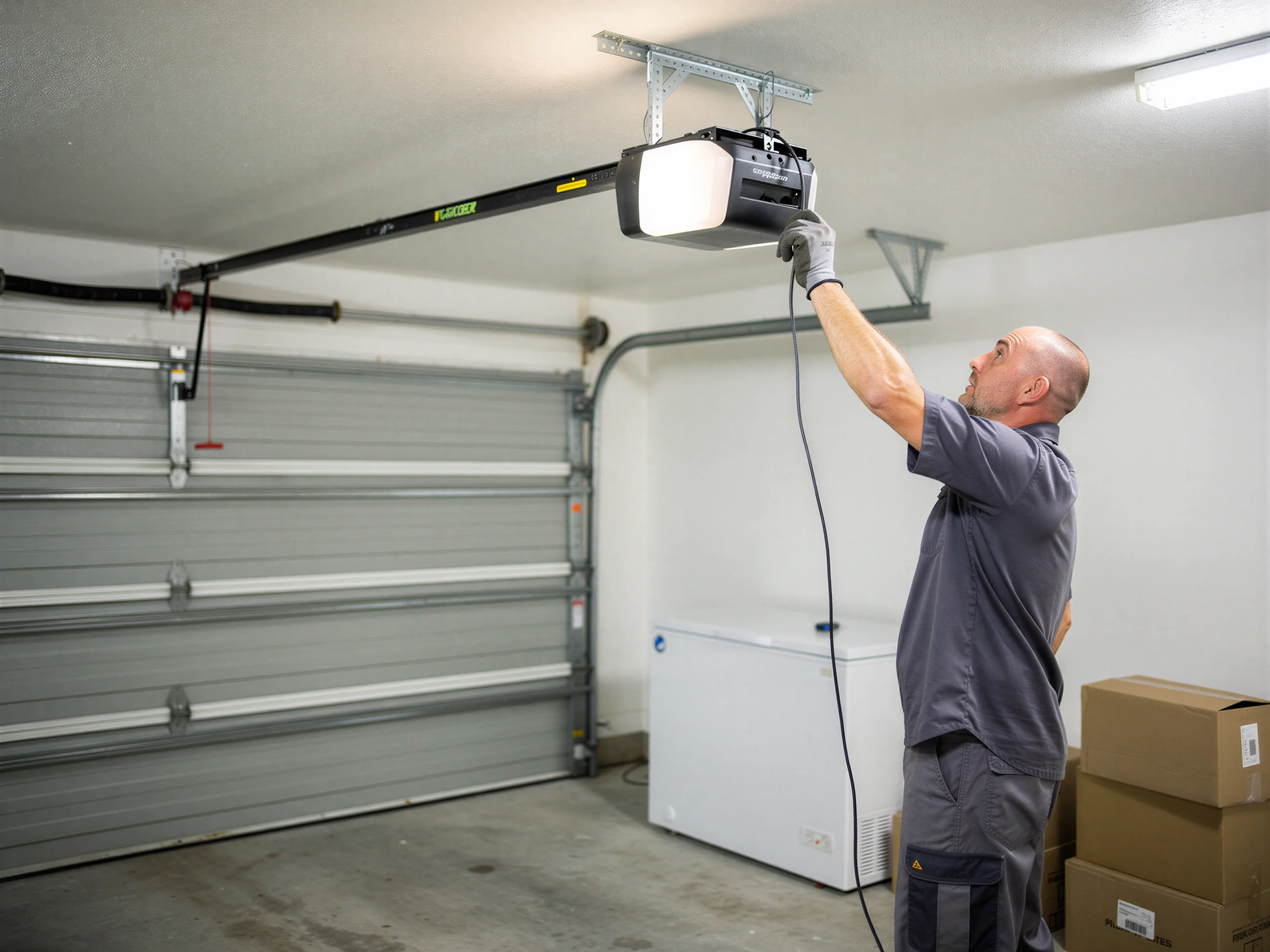
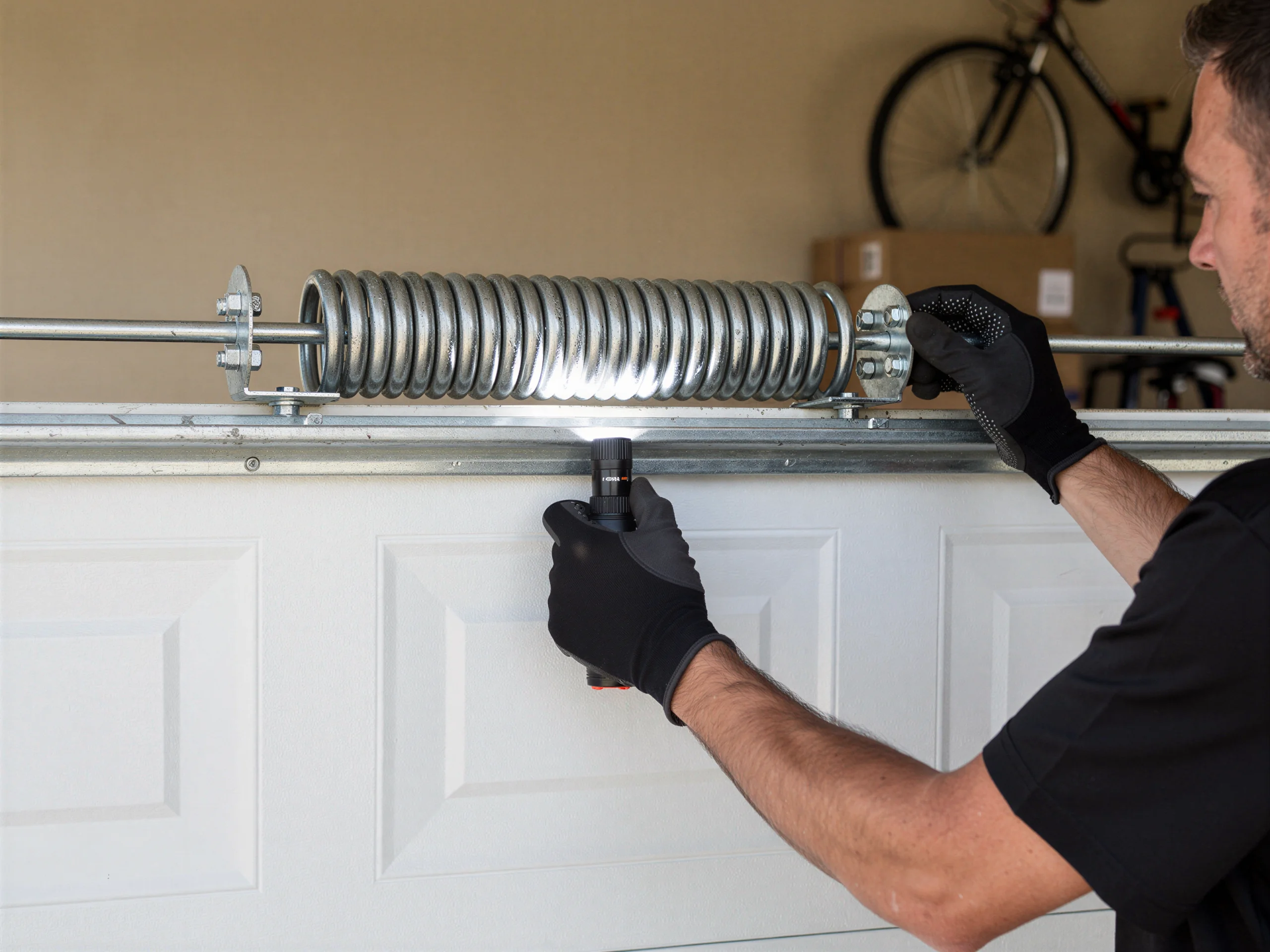
On a DeWitt house built in the mid-1970s, the door itself has usually been swapped at least once, but the track, the spring anchor brackets, and sometimes the opener mounting hardware are original to the build - nobody budgets to replace what still technically works. A repair call here usually starts with pulling that old hardware to check it, not just the part that failed. If the spring is original, the cable drums and end bearings are probably original too, and they wear at the same rate, so we check all of it rather than swapping one part and leaving the rest to fail next winter. We carry common spring sizes and standard track hardware on the truck; what we can't always carry is an exact match for a 50-year-old opener motor, and in that case replacement of the opener is usually the honest answer rather than a special-order wait.
What Causes It Around Here
This part of eastern Iowa sits in a cold climate band with real winter swings, and a garage that isn't heated puts stress on a door twice a day through freeze and thaw. Steel contracts in the cold, grease stiffens, and a spring that was already near the end of its life tends to snap on the first sub-zero morning rather than gradually. On the 1970s-era houses that make up most of DeWitt, the springs and track hardware have had close to fifty years of that cycle, which is longer than the rated life of almost any torsion spring on the market. Add a cracked or missing bottom seal, and the door is dragging moisture and road salt into the track all winter, which speeds up rust on cables and rollers that are already past due for replacement.
Talk to a local pro
Garage door service in Bettendorf?
Same-day service with honest, upfront quotes.