Booking a Visit
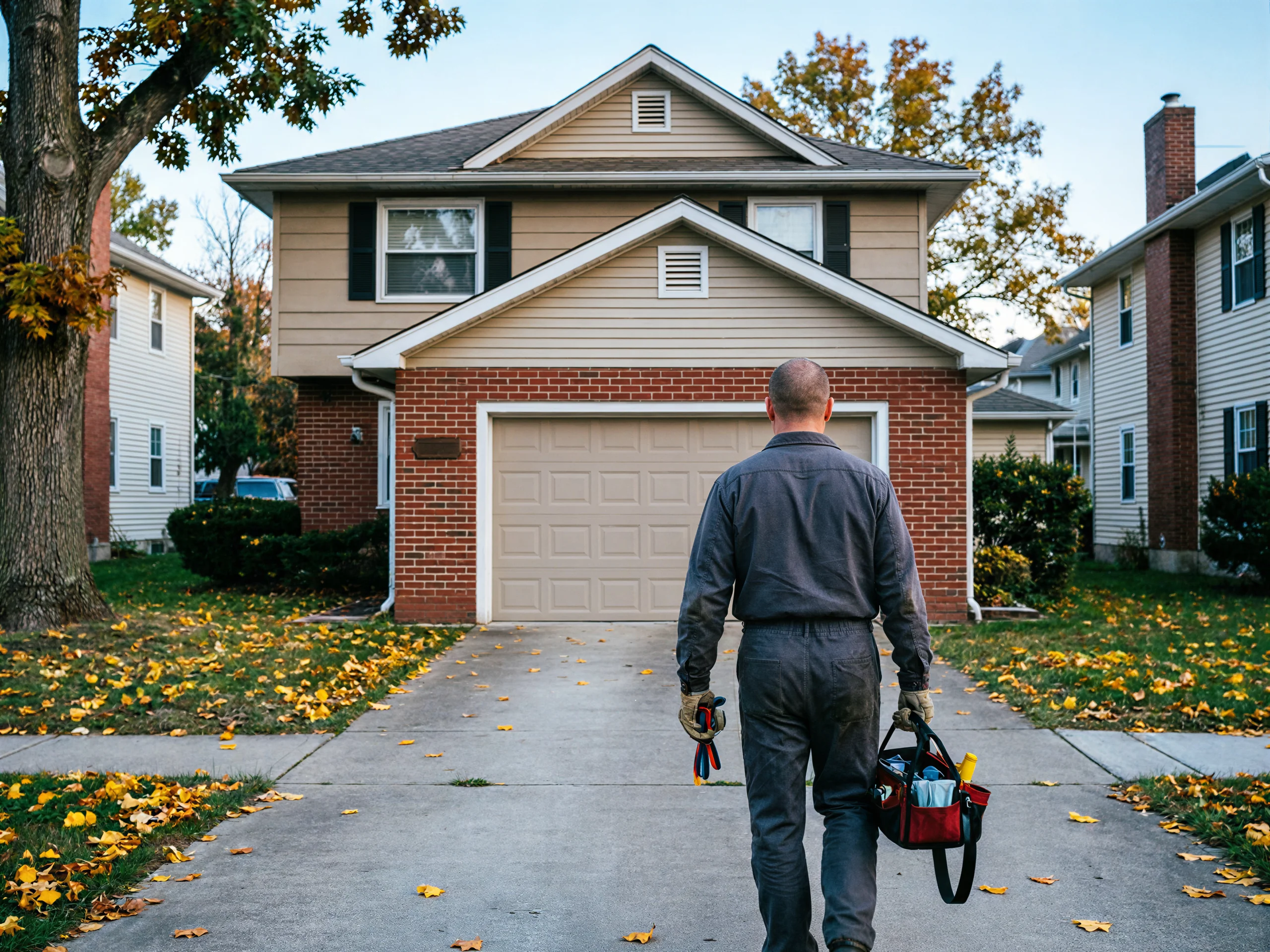
DeWitt sits about 18 miles out from Bettendorf, which is where the truck comes from. There's no branch or depot in DeWitt itself, so when you call, you're booking a visit from a crew that drives in, not one parked around the corner.
Spring snap versus cable
That matters for how you plan the call: have the door situation described clearly when you reach out, because a spring snap and a cable off the drum get handled differently and the right parts need to be on the truck before it leaves Bettendorf.
Post-1975 hardware expectations
DeWitt's 2,142 households sit in a town built mostly after 1975, later than a lot of the surrounding service area, so the hardware we expect to find is a notch newer than what we pull out of some of the older river towns nearby.
Trapped car, jammed door
That doesn't mean faster parts availability on-site - it means the tech knows roughly what he's walking into before the truck even gets there. If your door is jammed shut and the car's trapped inside, say so when you call. That's the detail that changes what goes on the truck.
The DIY Question
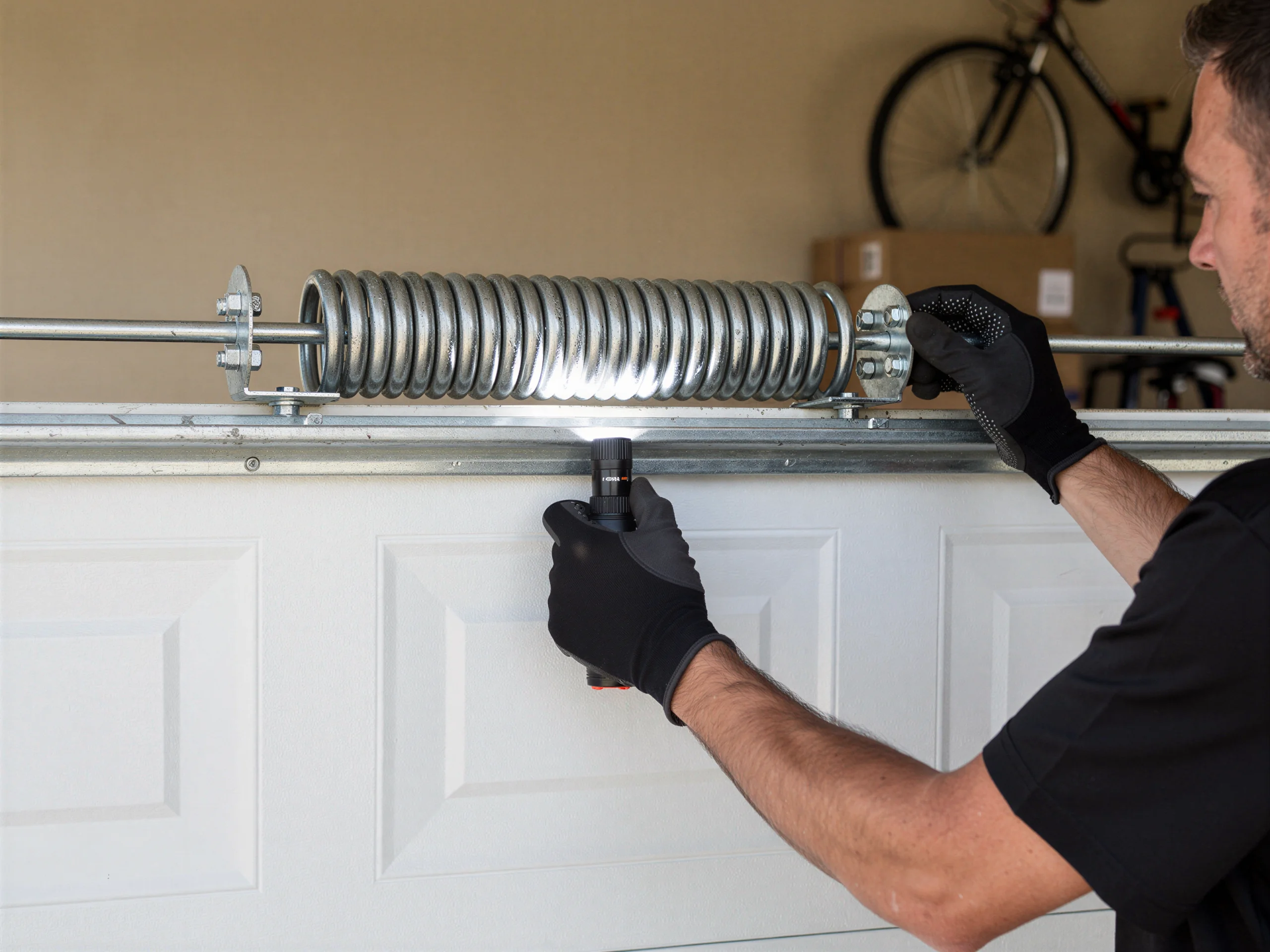
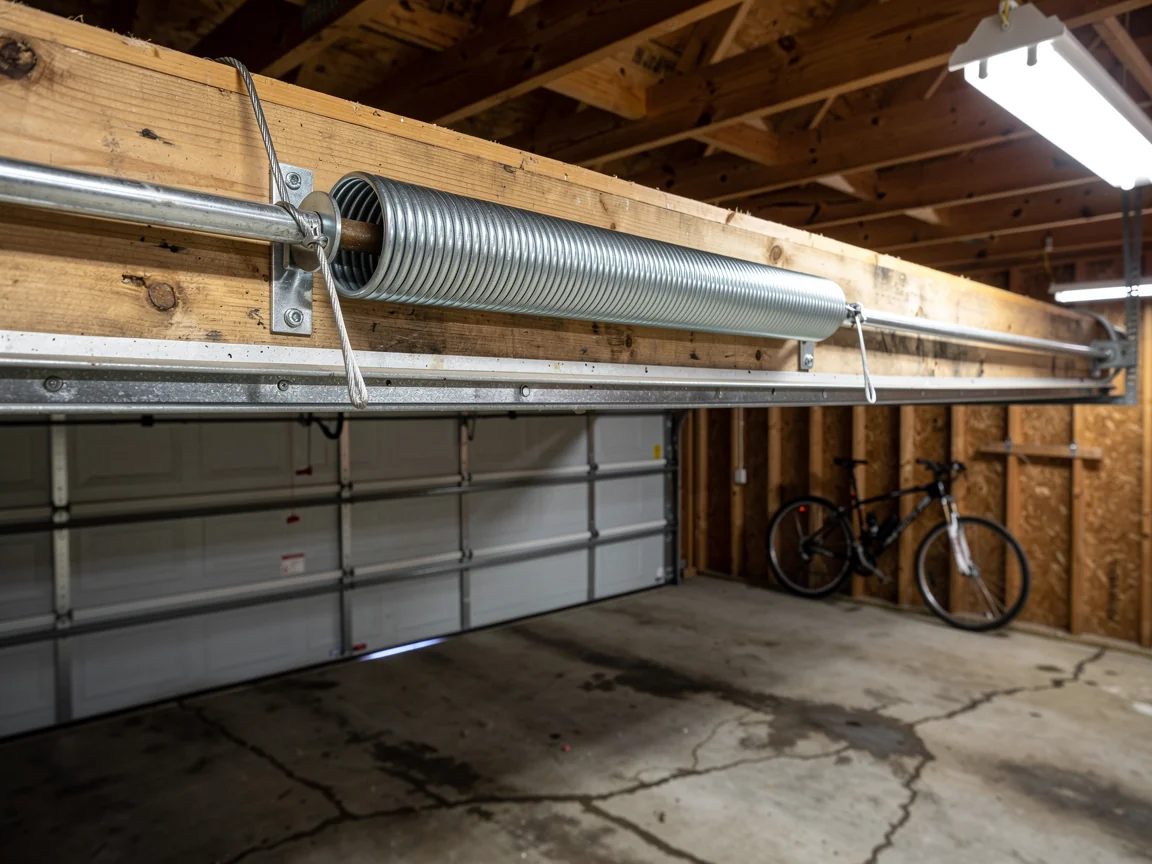
A door that won't open isn't always a job for a wrench and a Saturday afternoon. Torsion springs store enough force to break fingers or worse, and on a standard double door that spring is under load whether the door's open or shut.
Pro-only repairs
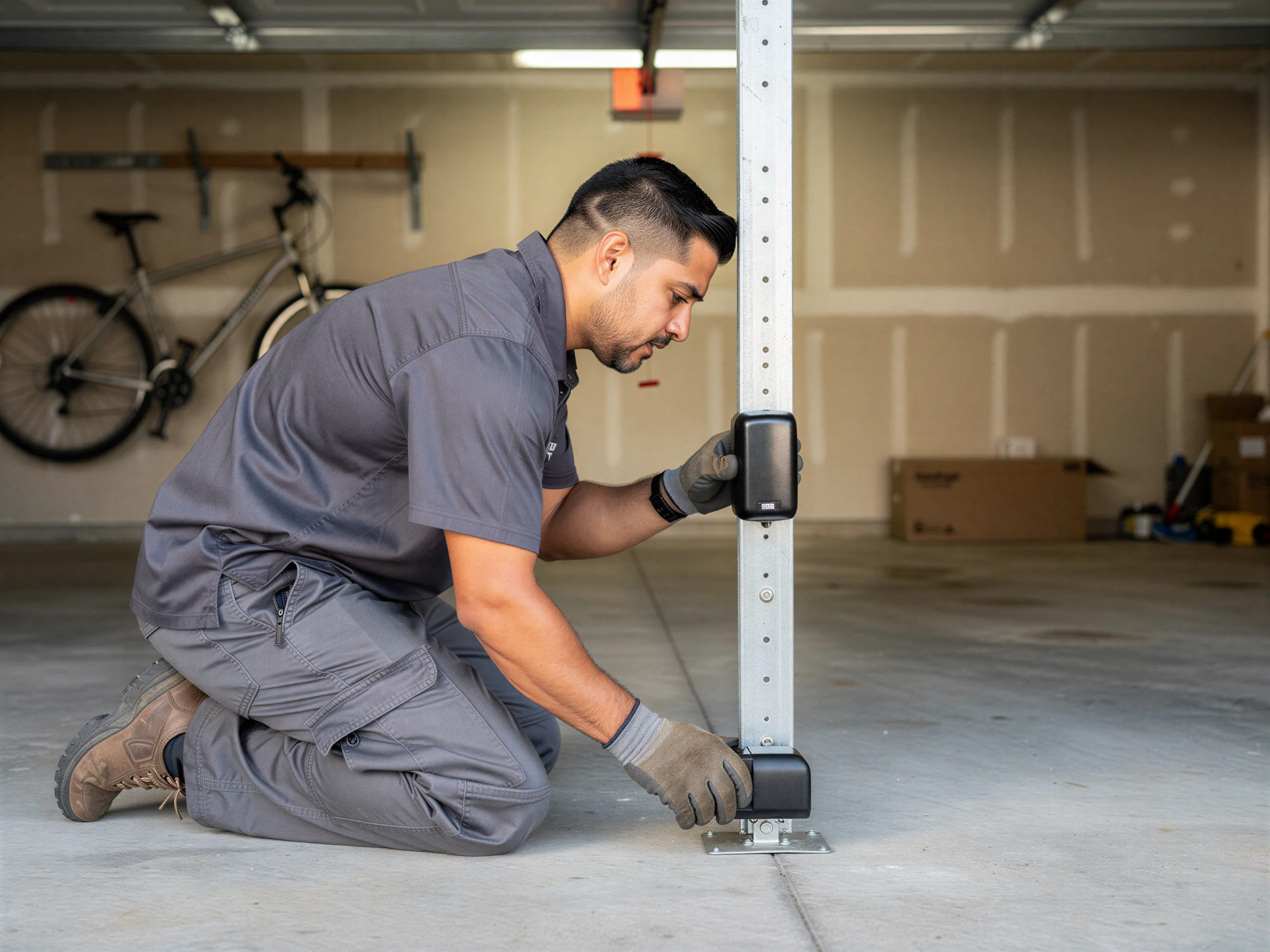
If the issue is a broken spring, a bent track, or a cable that's jumped the drum, that's a call-the-pro situation, full stop. Where DIY makes sense: a door that's just off its sensor alignment, or a remote that's lost its signal.
Owner's manual fixes
Those you can usually sort yourself with the owner's manual. Where it doesn't: anything involving the spring system, the cables, or a door that's come off its rollers on one side.
Hardware from the 1970s
Given DeWitt's housing mostly dates from the 1970s onward, you're less likely than some neighboring towns to be dealing with ancient one-piece hardware nobody stocks - but the springs and openers from that era are still original on plenty of houses, and original parts at 50 years old fail without warning. If you're not sure which category you're in, don't open the door and don't pull the emergency release. Call first.
What the Fix Involves
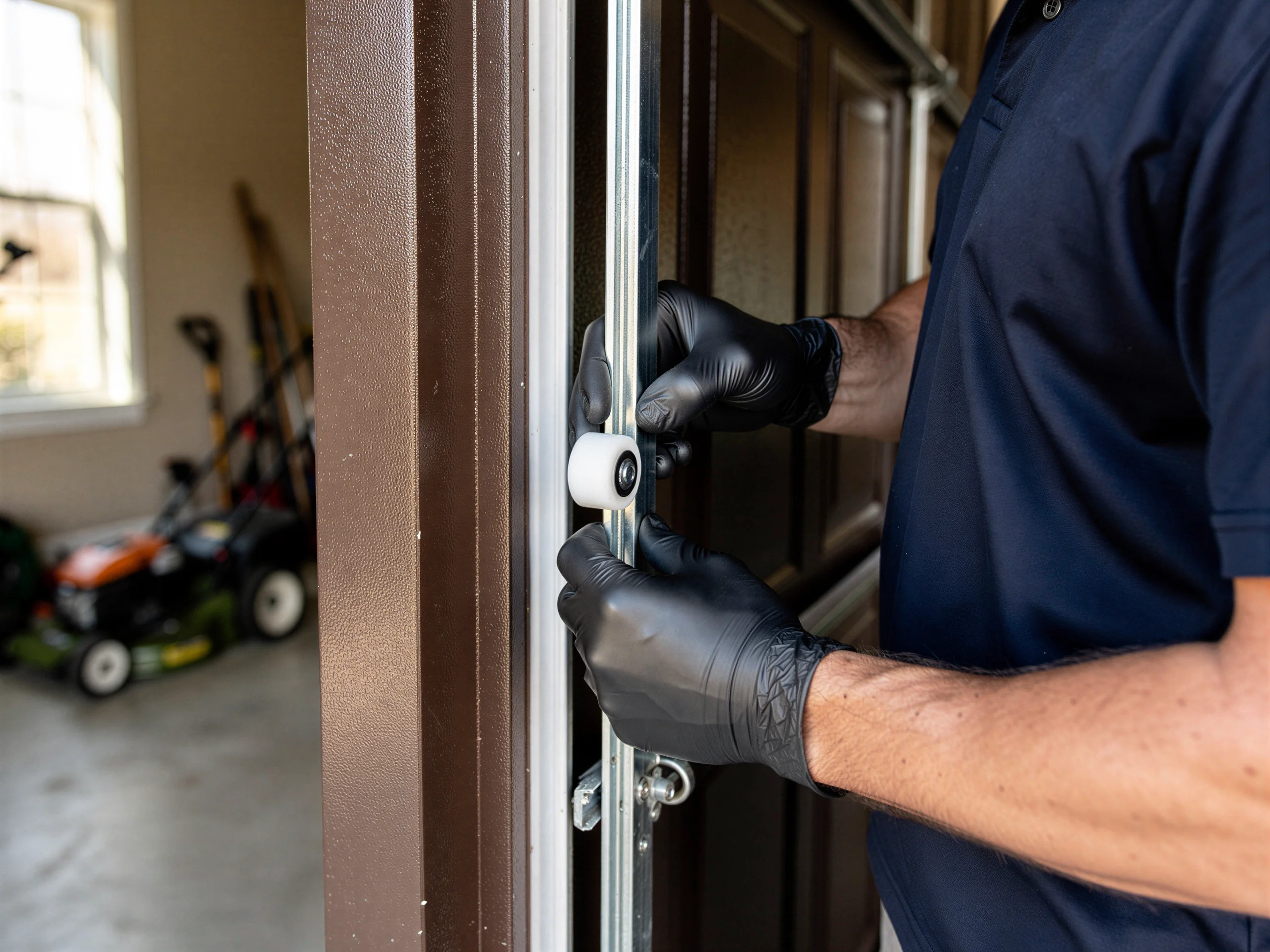
Most emergency calls in this part of the service area break down into a handful of repeat failures: a torsion spring that's let go, a cable that's frayed through and slipped the drum, or a roller that's jumped the track and bound the door at an angle.
Retrofitted opener units
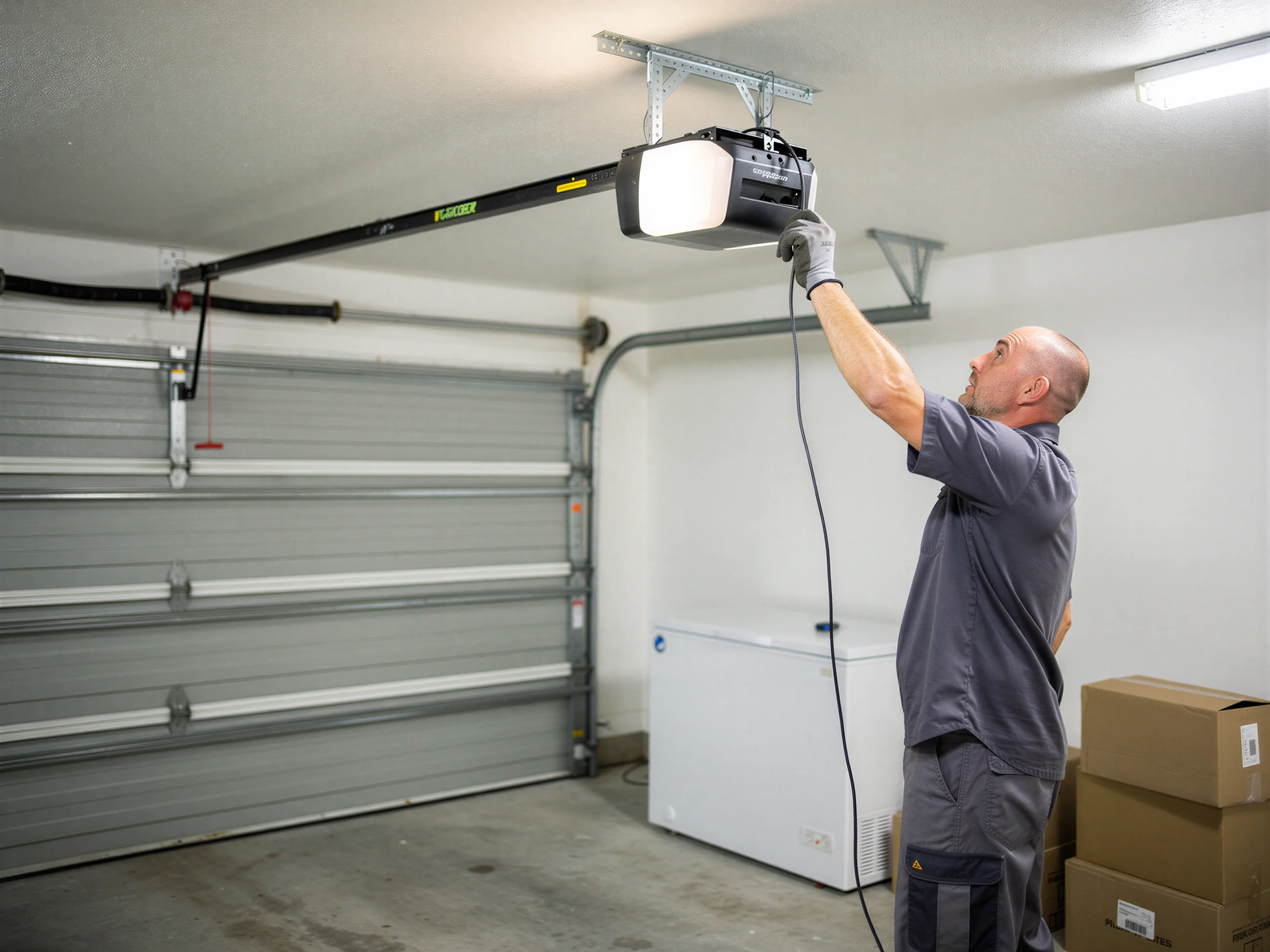
On a house built in the DeWitt range - mid-1970s and later - the opener is more likely to be a chain or belt-drive unit from a later retrofit than the original factory door motor, since openers get replaced more often than the door itself.
Clamping the door first
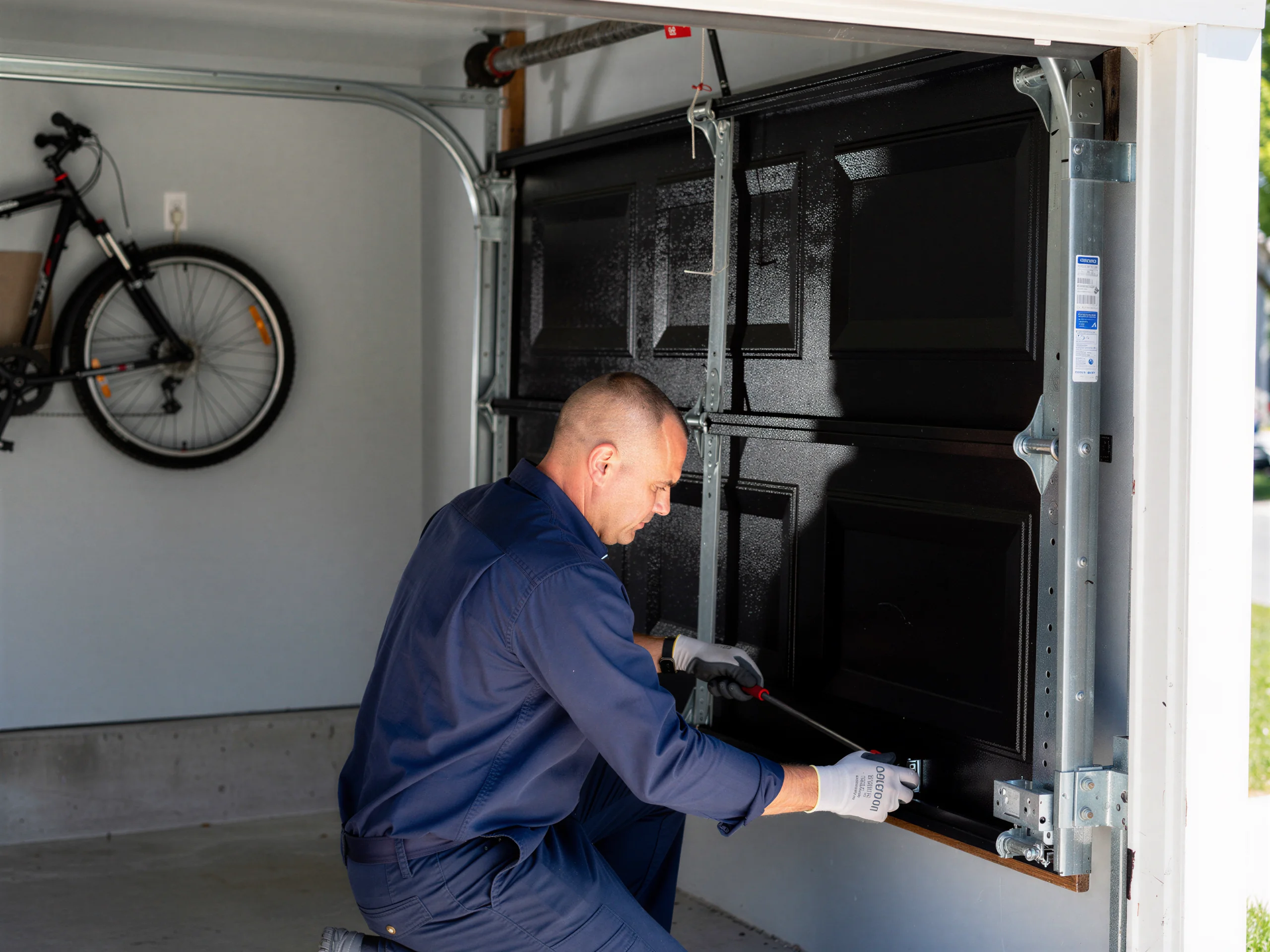
The fix starts with getting the door safe and controllable: if a spring's broken, that means clamping the door down before anything else happens, because an unsecured door on a dead spring can come down fast. From there it's a straight swap - matching spring wire size and winding to the door weight, not just grabbing whatever's closest on the truck.
Bent track sections
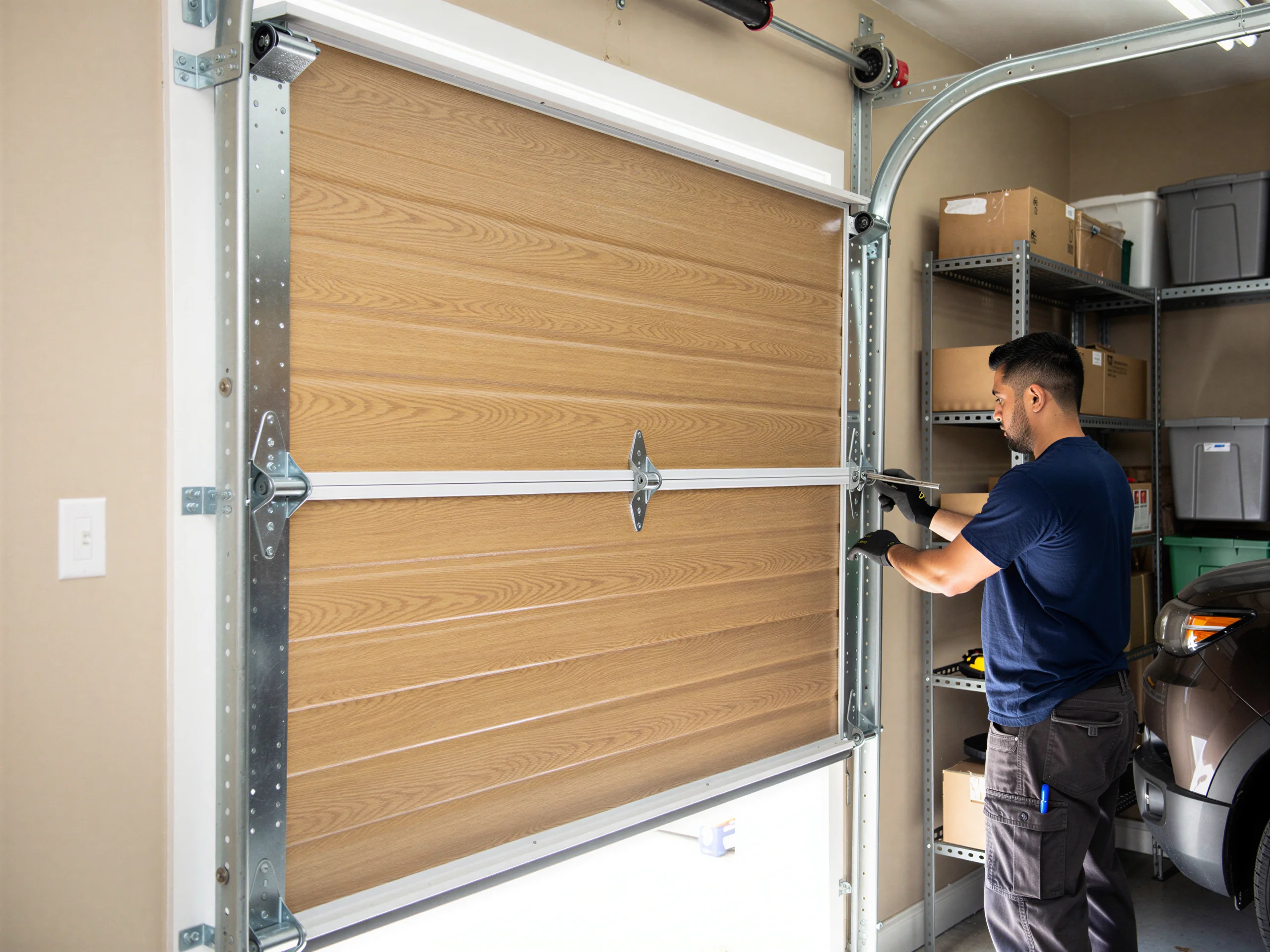
Track and roller repairs are more about alignment than parts: a bent section gets replaced, not bent back, because a straightened track rarely holds true a second time. The one thing we won't do is force a repair on a door that's cheaper to replace outright - more on that below.
What Causes It Around Here
Cold is the constant across this whole area, and it doesn't care what decade your door was built. Steel contracts in low temperatures, and a spring that's been carrying marginal fatigue all year tends to let go on the first hard cold snap rather than in July. In a town like DeWitt, built mostly from the mid-1970s through the turn of the century, that means the springs failing right now are often original or first-generation replacements - forty-plus years of daily cycles finally catching up with the metal. Openers from that era also used lighter-duty drive components than what's sold today, so a chain that's stretched or a gear that's stripped shows up more in houses of this vintage than in newer construction. None of this is unique to one street or one subdivision - it's a function of when the housing went up, and DeWitt's build pattern happens to put it a little later than some of the older river towns in the area. That's the honest limitation worth stating plainly: if a door's original hardware is pushing fifty years old and the repair would cost more than half a replacement, we'll tell you to replace it rather than patch it again.
Talk to a local pro
Garage door service in Bettendorf?
Same-day service with honest, upfront quotes.