Booking a Visit
DeWitt sits about 18 miles out from our shop in Bettendorf, so a roller job here gets scheduled as a drive-out visit, not a same-day walk-in.
Same-hour promise limits
That's the honest limitation: we're not based in town, and if you need something same-hour, DeWitt isn't where we can promise that. What we can promise is that once we're on site, roller replacement is a short job - usually one visit, one set of parts, done.
Affordable roller calls
At a median household income of $84,474 in this area, roller replacement is one of the easier calls to make financially. A full set of rollers, parts and labor, runs well under what a new door section costs, and it's a job that doesn't need financing or a second visit for a part we didn't bring.
Track width compatibility
We bring both steel and nylon rollers on the truck because DeWitt's older track widths sometimes take one and not the other, and we'd rather check your track than guess. Call ahead with the door's age if you know it, or just tell us it's grinding, catching, or dropping a fraction when it passes the bend in the track. That's enough for us to load the right rollers before we leave Bettendorf.
The DIY Question
Rollers are one of the few garage door parts a careful homeowner can swap without a torsion bar jack or a trip to the ER.
Replacing worn wheels
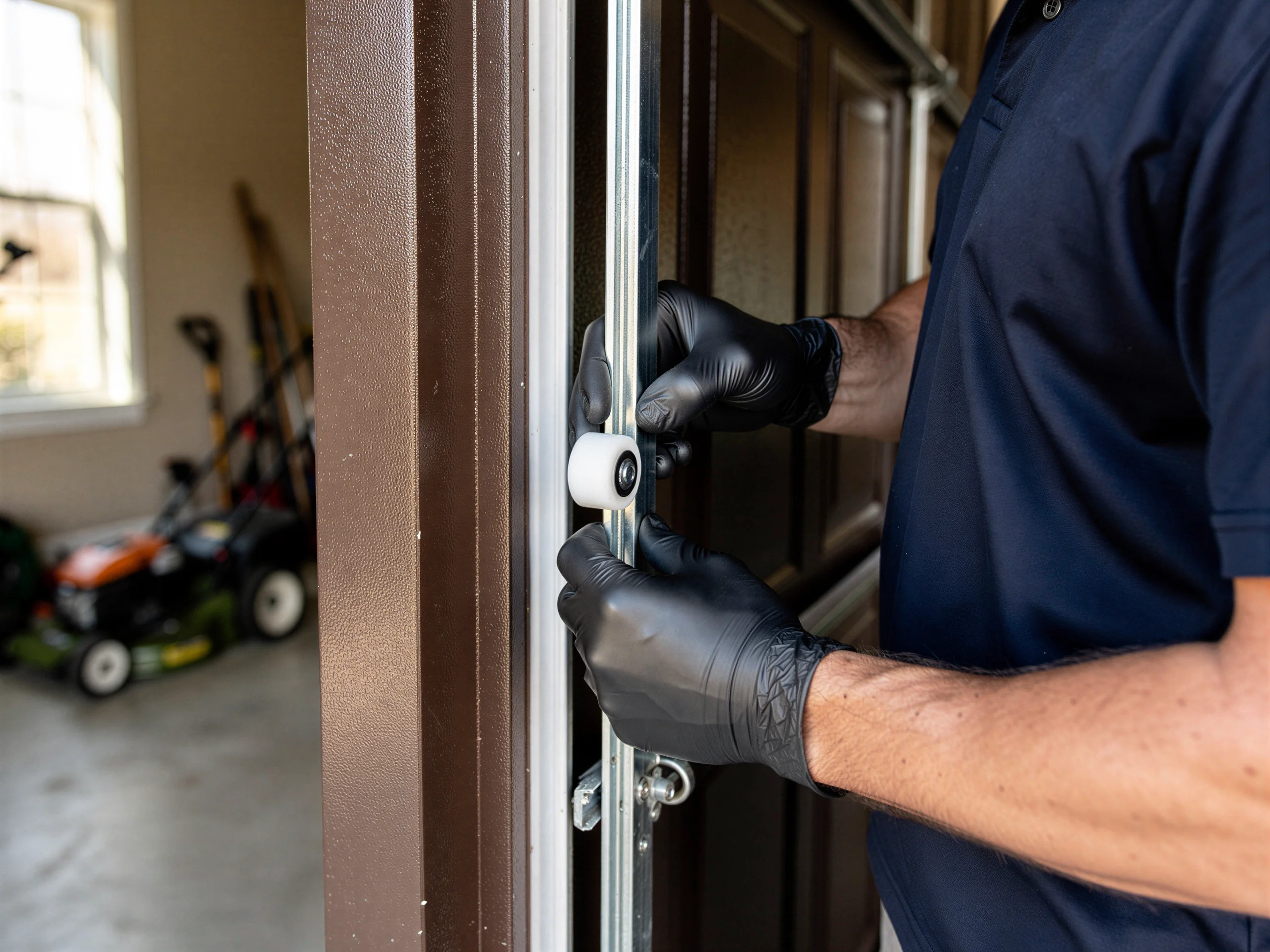
The door stays down, the spring stays loaded, and you're just pulling worn wheels out of brackets one at a time. If your door is on nylon rollers and only one or two are chipped, a kit from a hardware store and an hour on a Saturday will get you there.
Seized roller stems
Where it stops being a DIY job: if the roller has seized in its bracket and the stem is bent, if the track itself is dented at the spot where the roller used to ride, or if more than half your rollers are original steel and worn thin.
Sideways door walking
On a lot of DeWitt's 1975-era doors, that's exactly what we find - steel rollers that have been in the same track since the house was built, with enough play in the stem that the door walks sideways as it opens.
Assembly wear correction
At that point you're not replacing a part, you're correcting for 50 years of wear on the whole roller-and-track assembly, and that's worth having someone check before you start pulling brackets. If you're not sure which situation you're in, a photo of the roller and the track where it's worn tells us a lot before we ever load the truck.
What the Fix Involves
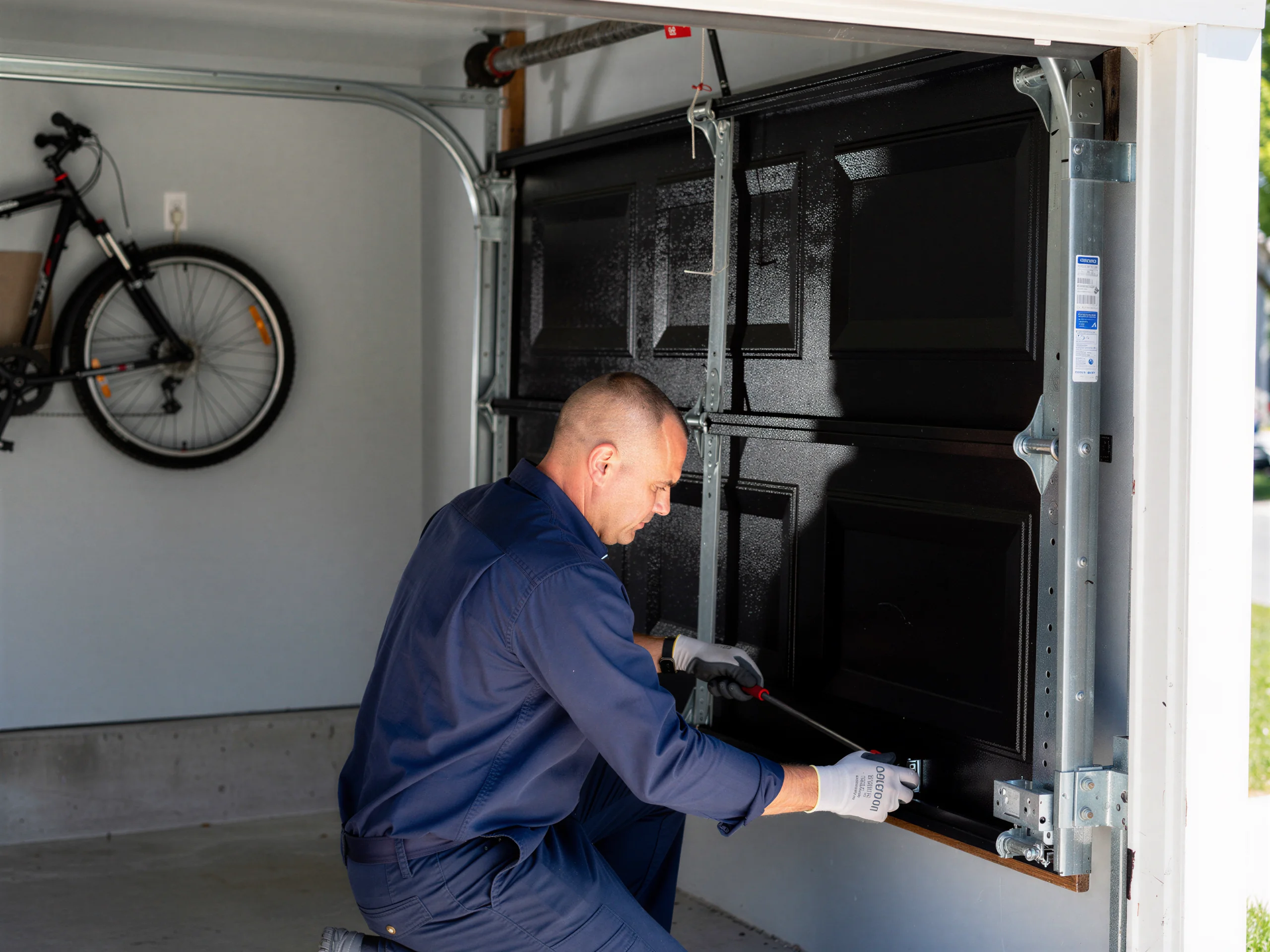
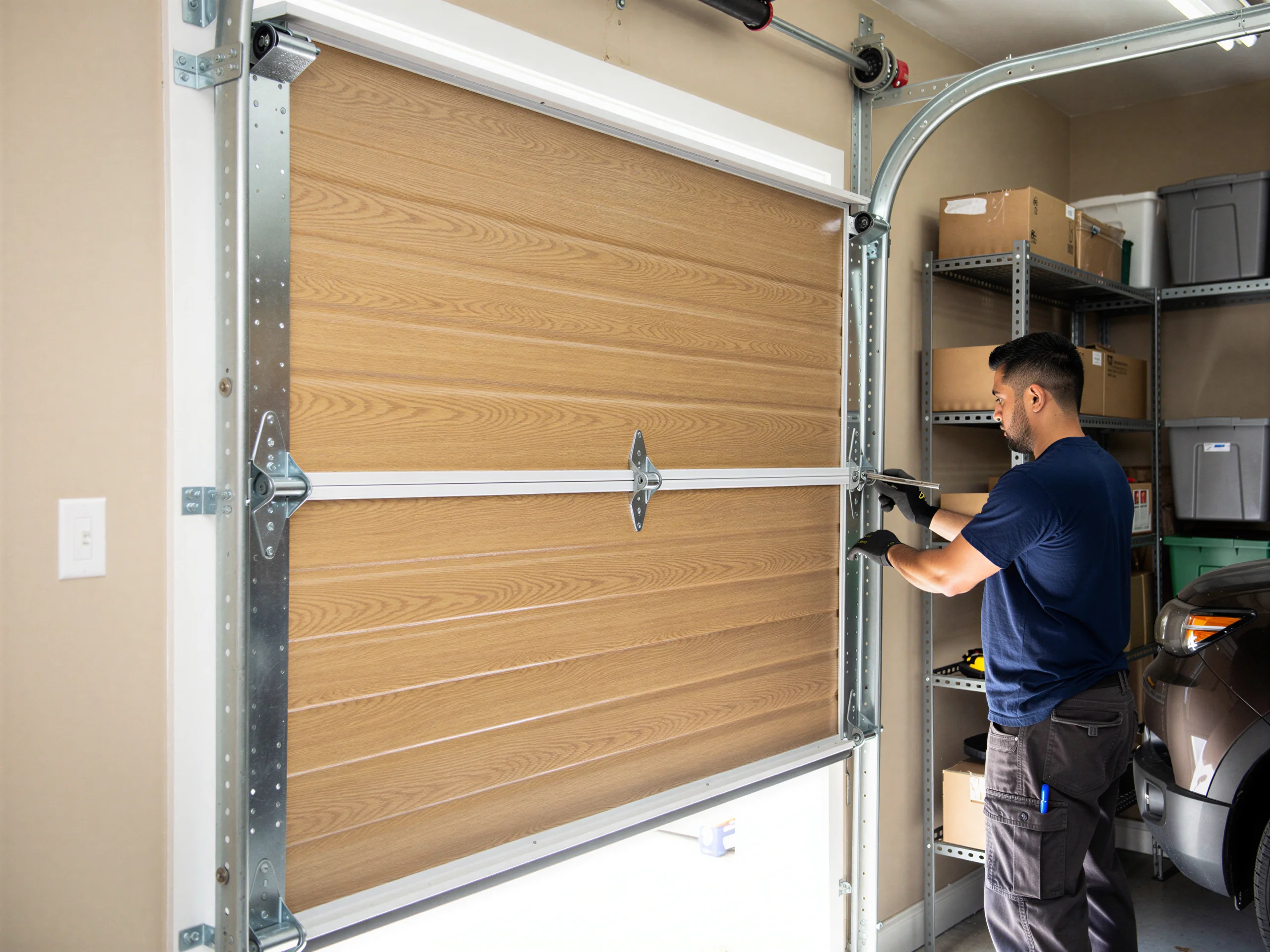
Roller replacement on a standard double door takes ten rollers, five brackets per side, and a pass down the track to clean out the grease and grit that's built up around each wheel bearing.
Nylon versus steel care
We pull the door down to working height, unbolt the hinge-mounted rollers one at a time so the door never loses its support, and swap steel for nylon where the track allows it. Nylon doesn't need lubrication the way steel does, and it runs quieter - which matters more than people expect once they've lived with the grinding for a few years.
Bowed or dented track
We also check the track alignment while we're in there, because a bent track is often what killed the old rollers in the first place, not the other way around. Bowed or dented track gets straightened or, if it's too far gone on one section, replaced in that stretch rather than the whole run.
Scope limited to rollers
This isn't a job we sell up from. If your rollers are worn but your springs, cables, and opener are sound, roller replacement is the whole fix - we don't add work that wasn't asked for. The job closes out in one visit with the door cycled a dozen times to confirm it tracks straight before we leave.
What Causes It Around Here
Housing in this part of the service area went up mostly in a single building wave, and DeWitt's stock centers on 1975 - squarely inside the broader 1948-2001 range we see across the ten communities we cover, but on the later side of it. Doors from that era were almost universally hung on steel rollers riding in galvanized steel track, a combination that was standard then and is now the main thing that fails.
The area sits in a cold, moderate climate band, and that matters for rollers specifically: steel contracts in winter cold, which tightens the clearance between roller and track just enough to accelerate wear on a part that's already decades past its design life. Combine original steel rollers with 45-plus winters of that contraction cycle and the wear pattern we see in DeWitt is consistent - stems worn thin, bearings dry, and a door that's started to sag slightly to one side as the worn rollers let it drift in the track.
Newer builds in town with nylon rollers from the factory don't show this pattern nearly as often. It's specifically the original-hardware houses from the mid-70s wave that call us for this.
Talk to a local pro
Garage door service in Bettendorf?
Same-day service with honest, upfront quotes.