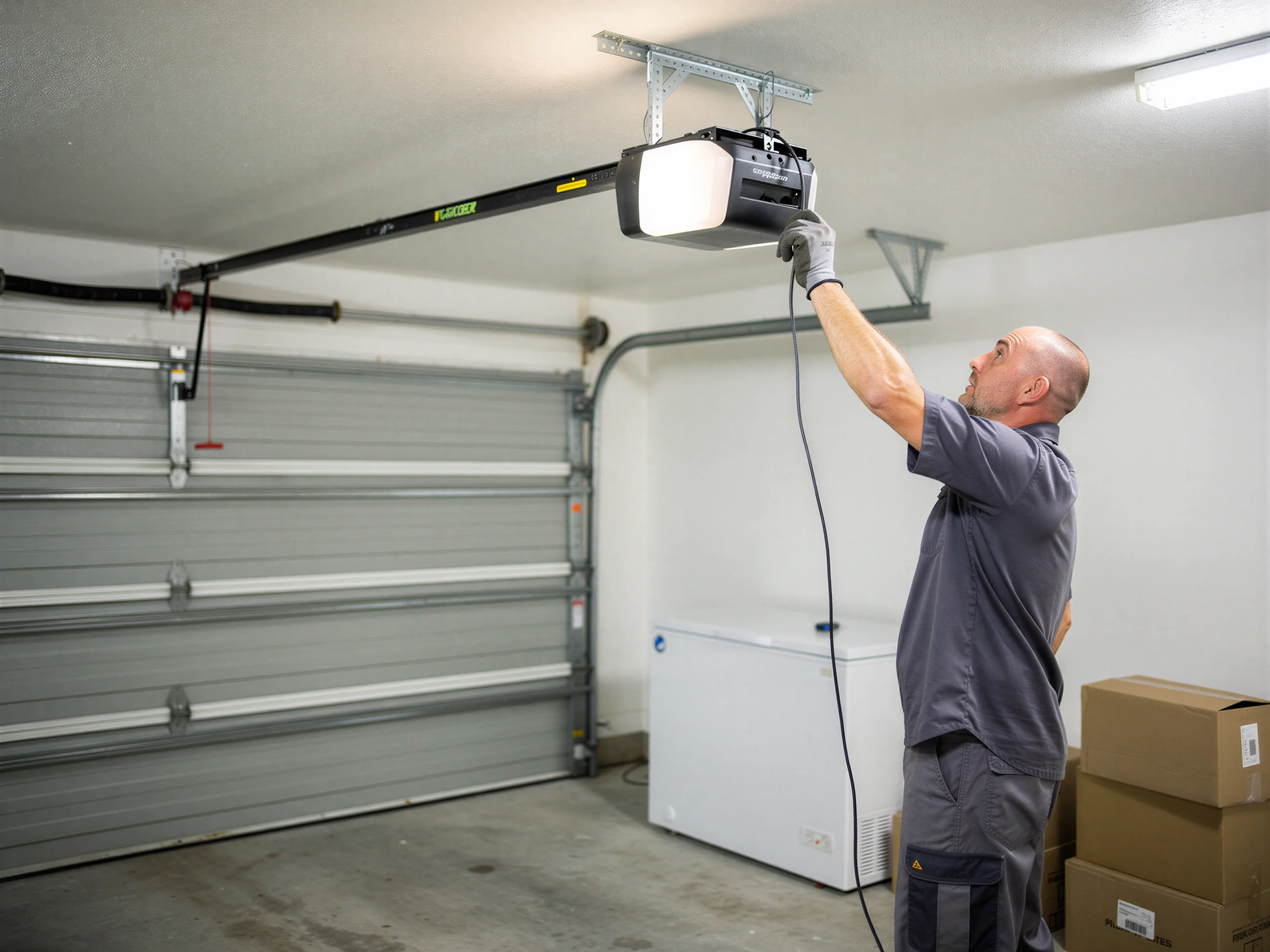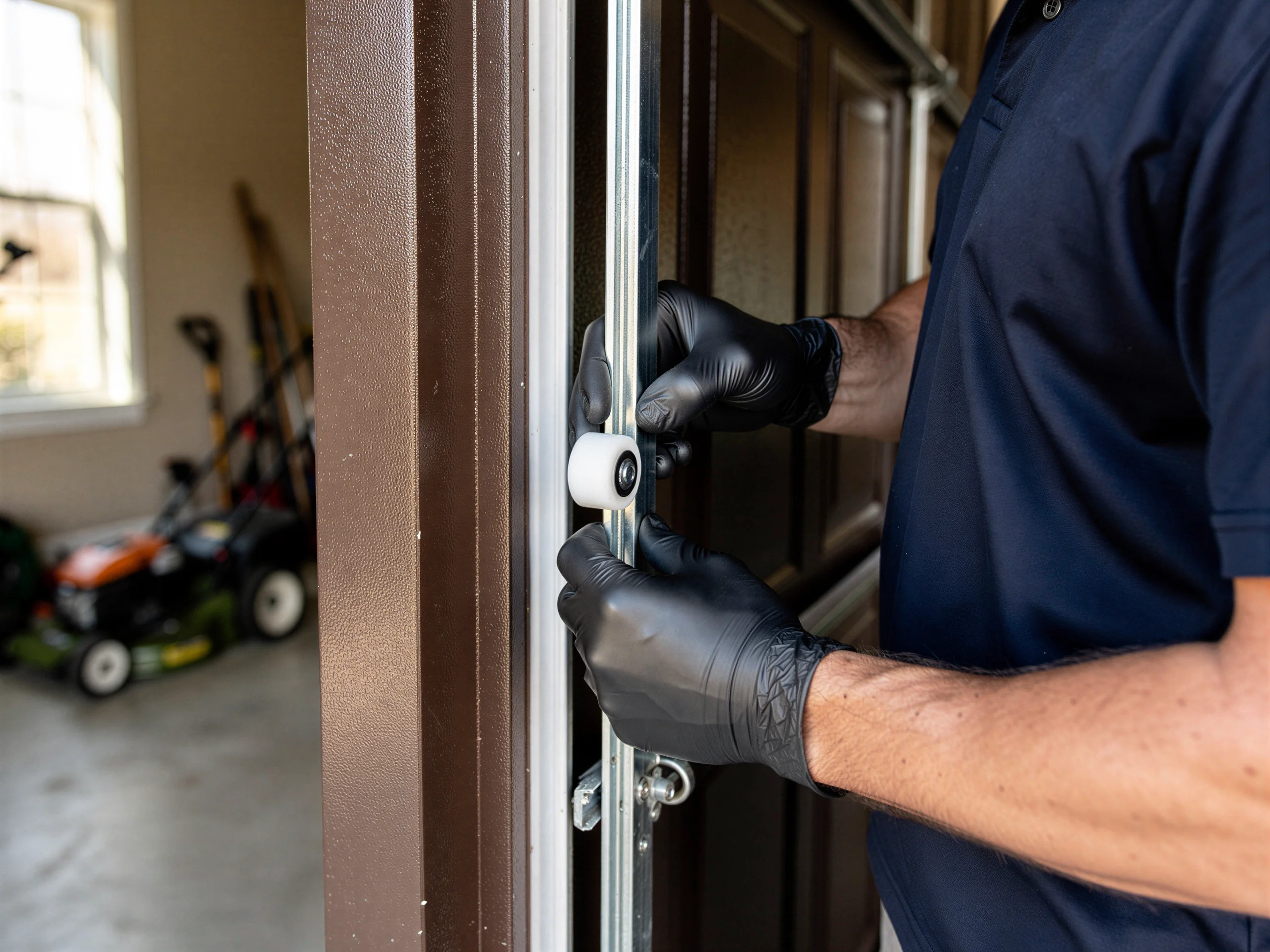
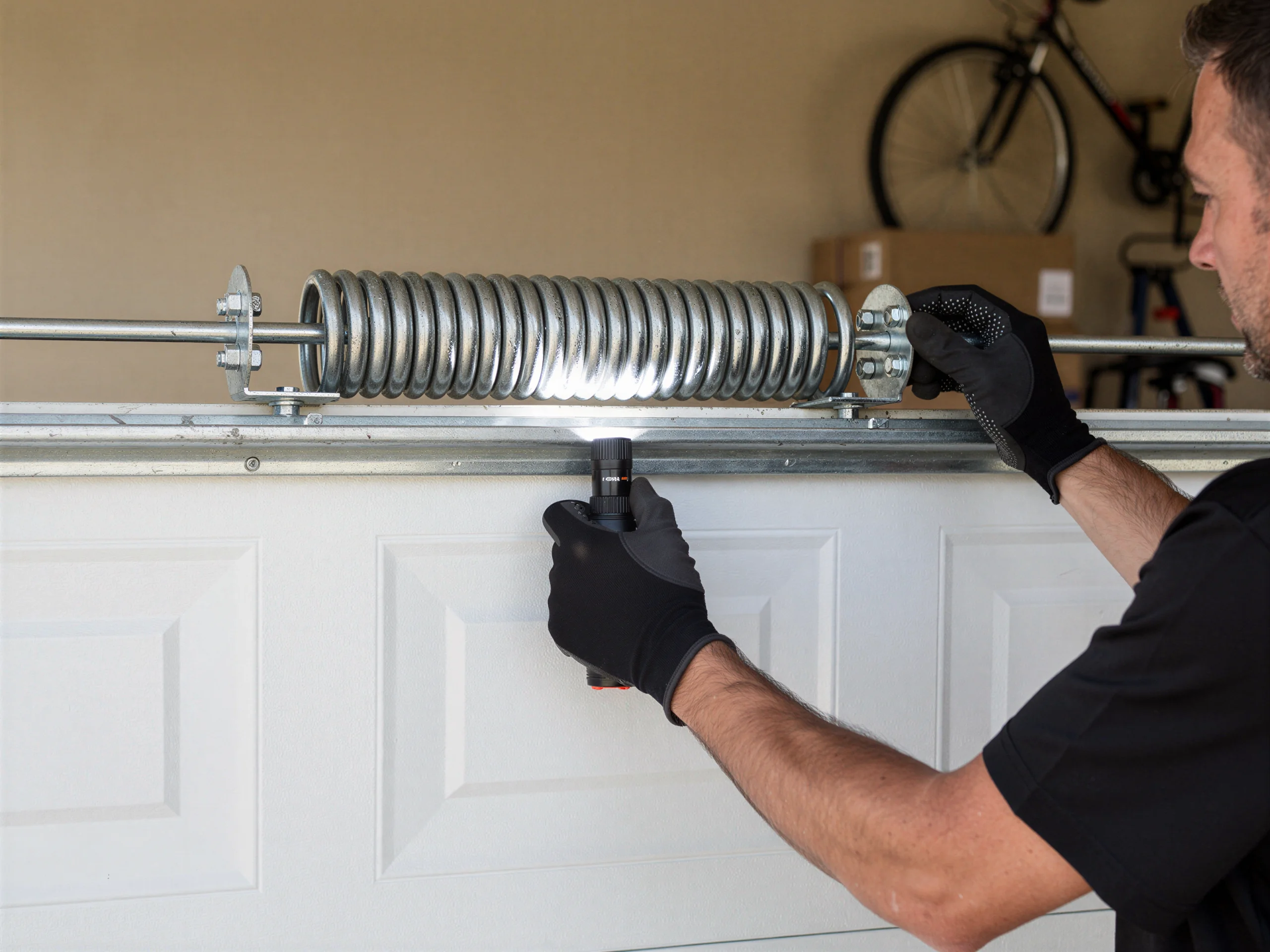
What Causes It Around Here
Buffalo's housing stock centers on a median build year of 1952, a full two decades older than the 1973 median across the wider service area. That matters for springs. A torsion spring is rated in cycles, not years, but a door from the early 1950s has had seventy-plus years to rack up those cycles, and in a lot of Buffalo homes nobody has ever swapped the spring out. It's still the one that went up with the house.
Cold is the other half of it. This area sits in a cold-moderate climate band, and steel springs lose a bit of temper every time they go from a warm afternoon to a frozen night. Combine that with a spring that's already seventy years into its working life and you get the classic failure: a loud bang from the garage, the door won't budge, or it slams down the last foot because nothing is holding the weight anymore.
We also see sagging on older one-piece doors where the spring is fine but the hardware around it - end bearings, the stationary cone, sometimes the shaft itself - has worn enough that the spring is doing more work than it should. On a house this age, the spring is rarely the only thing that needs attention.
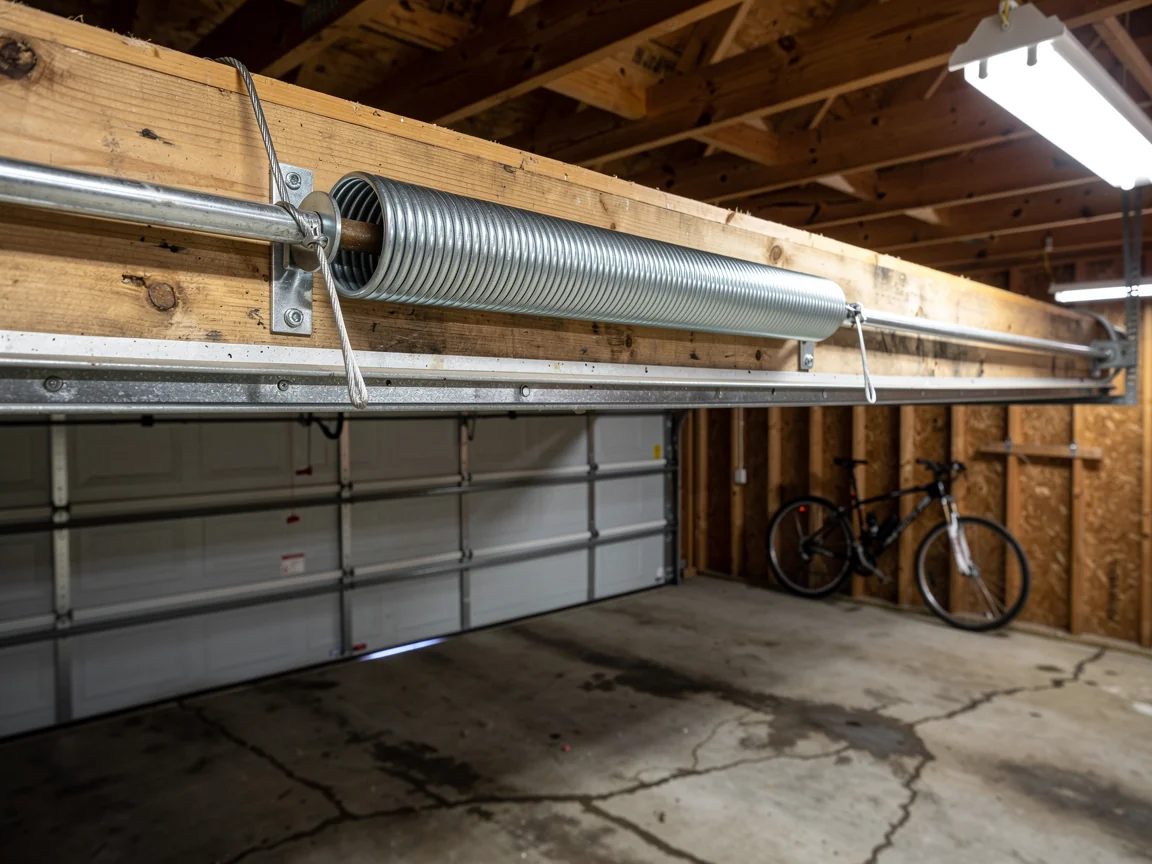
Time on the Job
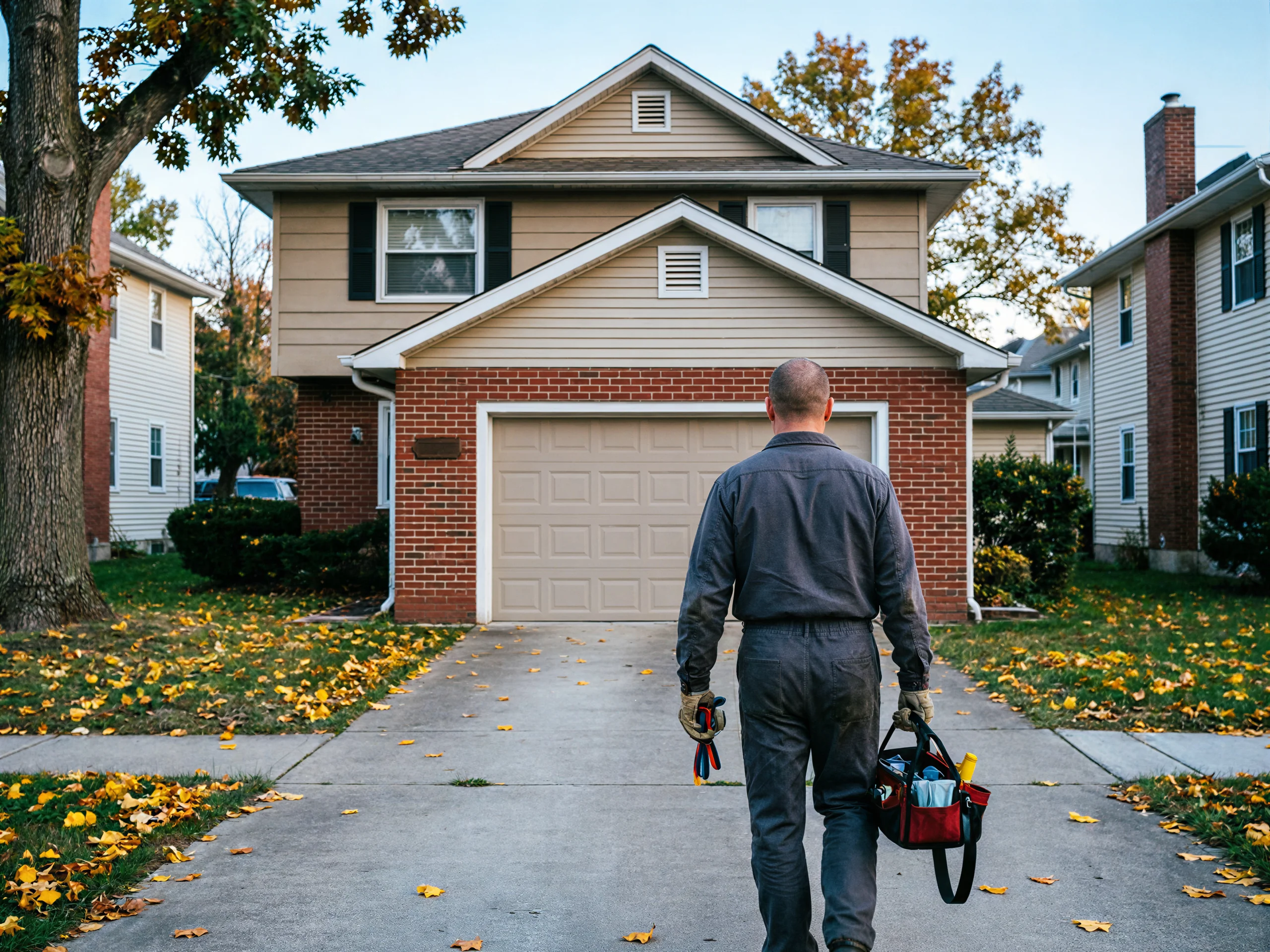
Buffalo sits about 17 miles out from Bettendorf, farther than Riverdale, Le Claire, or Eldridge on our usual route. We don't keep a branch or a truck stationed in Buffalo - every job here starts with a drive from Bettendorf, and we're upfront about that rather than promising a response time we can't back up locally.
Once we're on site, a standard torsion spring replacement runs close to the same as it would anywhere else in the territory - the drive is the variable, not the repair itself. What can add time is diagnosing hardware that's original to a 1952 install: a stationary cone that's rusted onto the shaft, or a center bearing plate that was never designed for the spring size someone bolted on during a past repair. We budget extra time to check that before we start, because rushing torsion work on unknown-age hardware is how people get hurt.
Stocked Parts
The truck carries torsion springs in the sizes that cover most doors built from the late 1940s through the 1970s, which is the bulk of what we see on this side of the territory.
Torsion bars for older panels
Buffalo's homes, sitting at that 1952 median, fall squarely in that range - single-car and two-car doors on torsion bars sized for lighter, older panel construction rather than the heavier insulated doors common in newer builds.
Bearings and cable sets
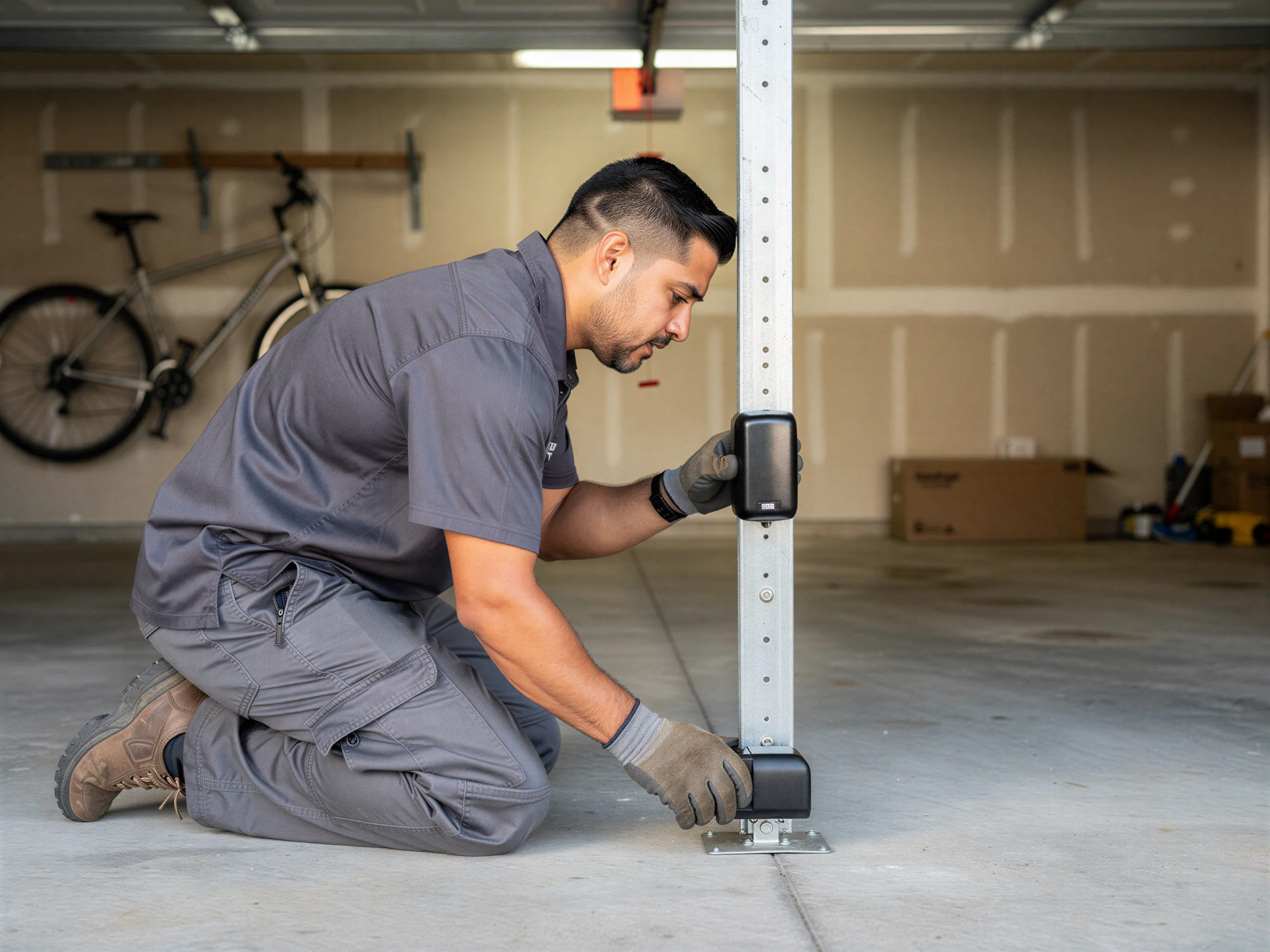
We also carry standard end bearings, center bearing plates, and cable sets, since on a house this age the spring is almost never the only original part still in service.
Odd-size spring matches
What we don't always have on the truck is a match for a spring that's been replaced before with an odd size, or a drum that's been discontinued by its original maker. In that case we measure on site and order the part, which can add a day or two - an honest gap, not a reason to put off the call.
What the Fix Involves
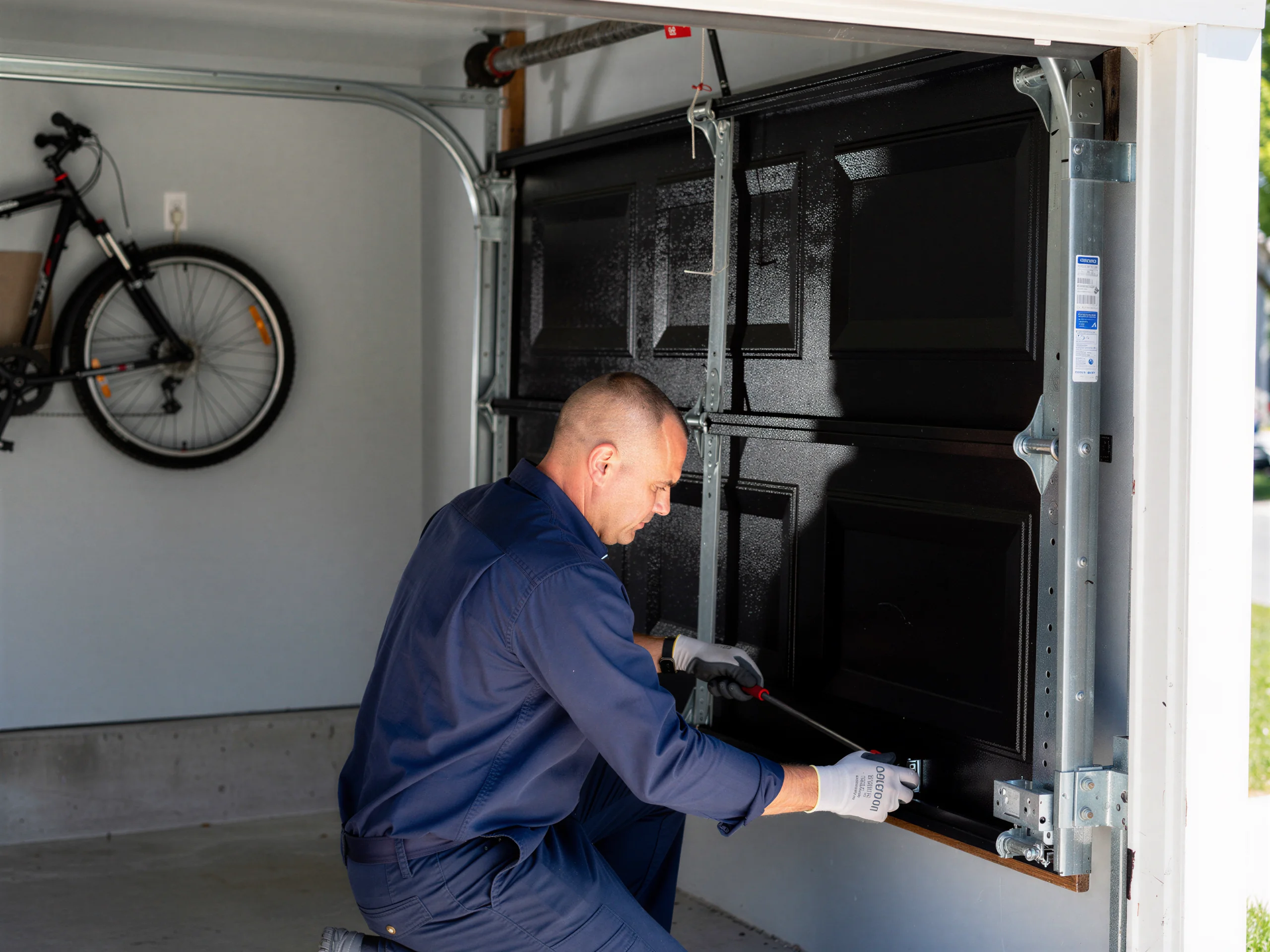
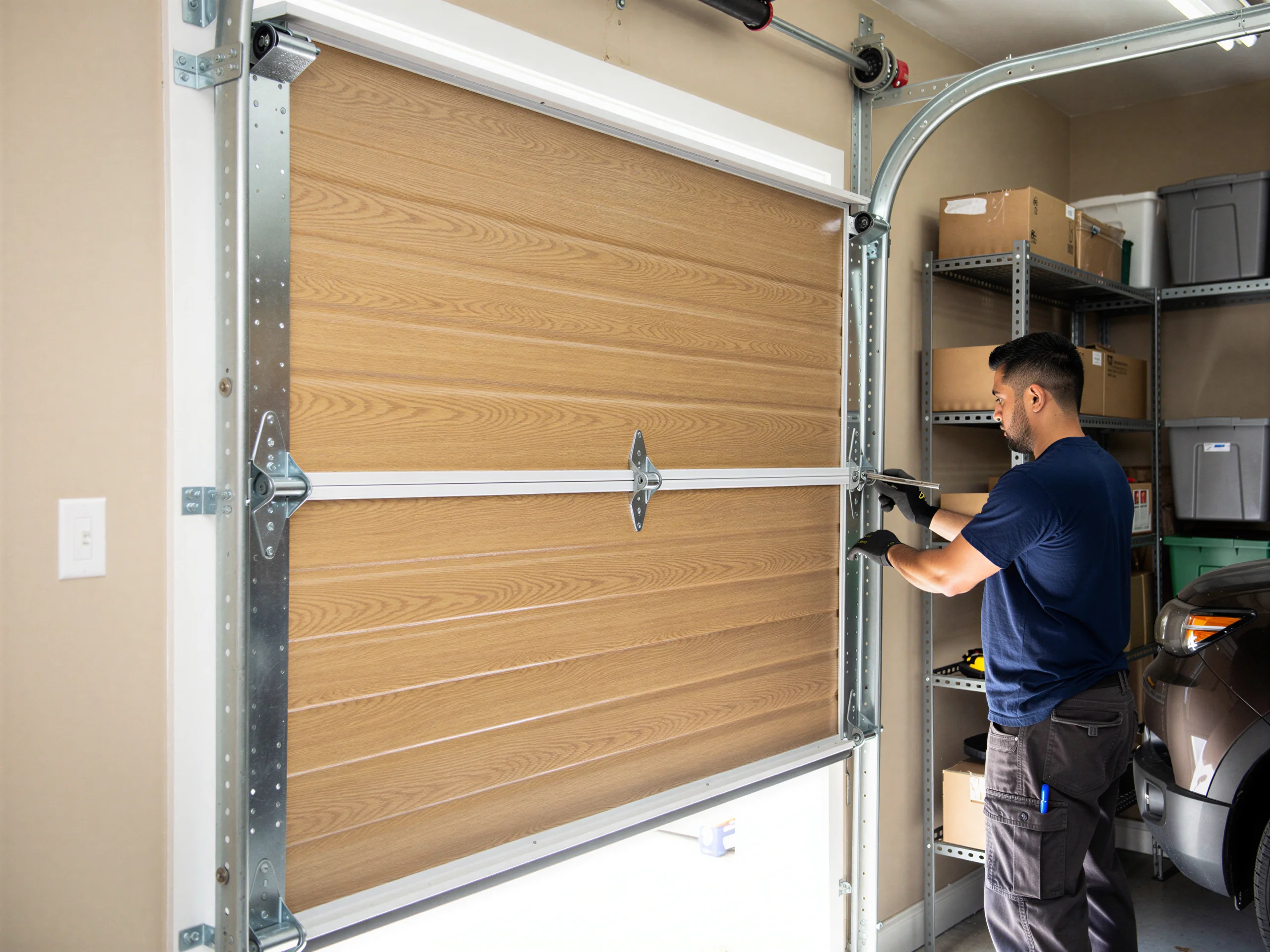
A torsion spring repair starts with the door clamped and the opener disconnected, so nothing can move under load while we work. We unwind the old spring, pull the shaft if the bearings or cones need replacing, and set the new spring to the door's actual weight - not a generic size, since a 1952 one-piece door and a newer sectional door of the same width can weigh very differently.
We wind the new spring to the correct number of turns, which is where a lot of amateur jobs go wrong - too few turns and the door won't lift, too many and you're back to a dangerous amount of stored tension. Once it's wound, we test the door's balance by hand with the opener still disconnected: a properly sprung door should hold still at waist height on its own. Only after that passes do we reconnect the opener and run it through a full cycle.
The DIY Question
We'll say it plainly: don't wind a torsion spring yourself. The spring on a standard garage door holds enough stored energy to break bones or worse if it slips while you're working on it, and the winding bars and clamps that make the job safe aren't things most households own or have used before.
Where a homeowner can help themselves is in the decision of whether to call at all. If the door won't open and you hear a loud pop beforehand, that's almost always a broken spring - stop using the opener, since it'll strain the motor trying to lift a door with no spring assist. If instead the door is slow, sagging, or drifting open on its own, that's more likely worn cable or hardware than a dead spring, and it's worth mentioning when you call so we bring the right parts the first trip out.
Talk to a local pro
Garage door service in Bettendorf?
Same-day service with honest, upfront quotes.