What Causes It Around Here
Start with the door itself, not the fault. Most houses on this stretch of Buffalo went up around 1952, well before the 16-foot double-wide steel door became the default. What you've likely got is a single narrow bay, maybe 8 or 9 feet wide, carrying a lighter steel or wood-panel door that was never meant to outlast the house around it.
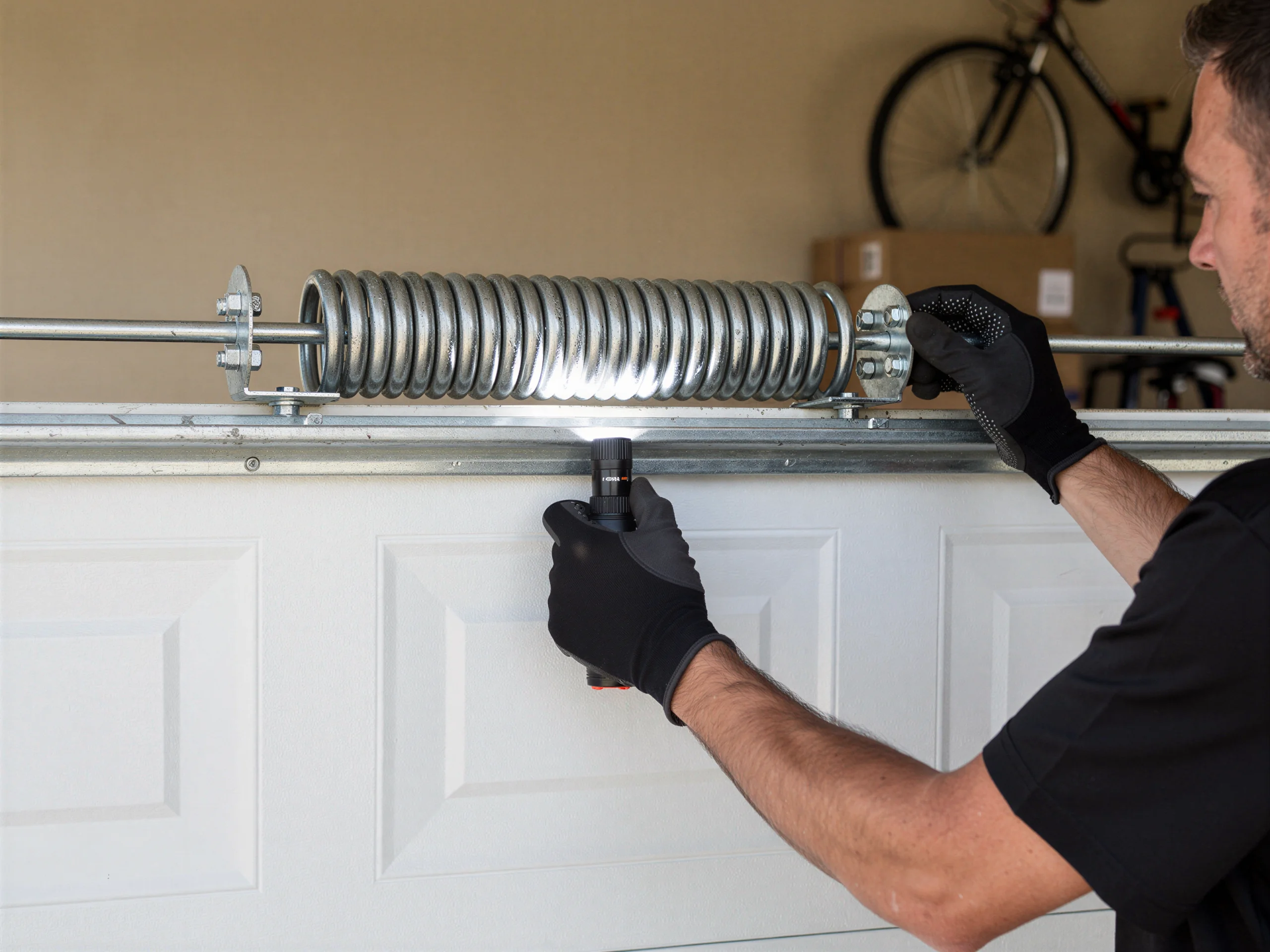
That matters for what breaks. A door that size usually runs on an extension spring setup rather than a torsion bar, with hardware sized to a bay that doesn't exist on new construction anymore. Seventy years of lift cycles on steel brackets that were already undersized for the weight wears differently than it does on a door installed in the last decade. Rollers seize in tracks that were never galvanized to modern standard. Cables fray at anchor points that have rusted in place.
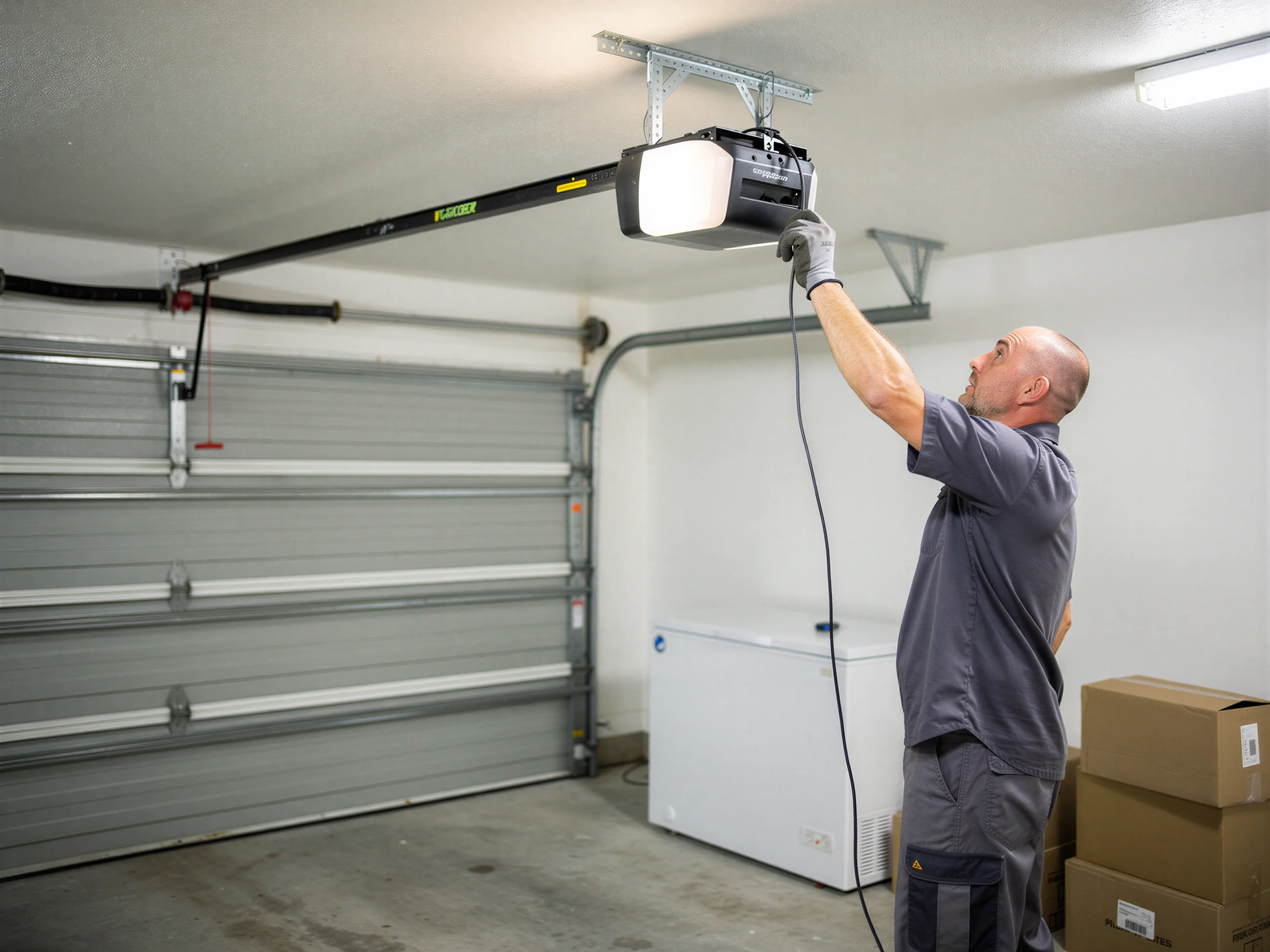
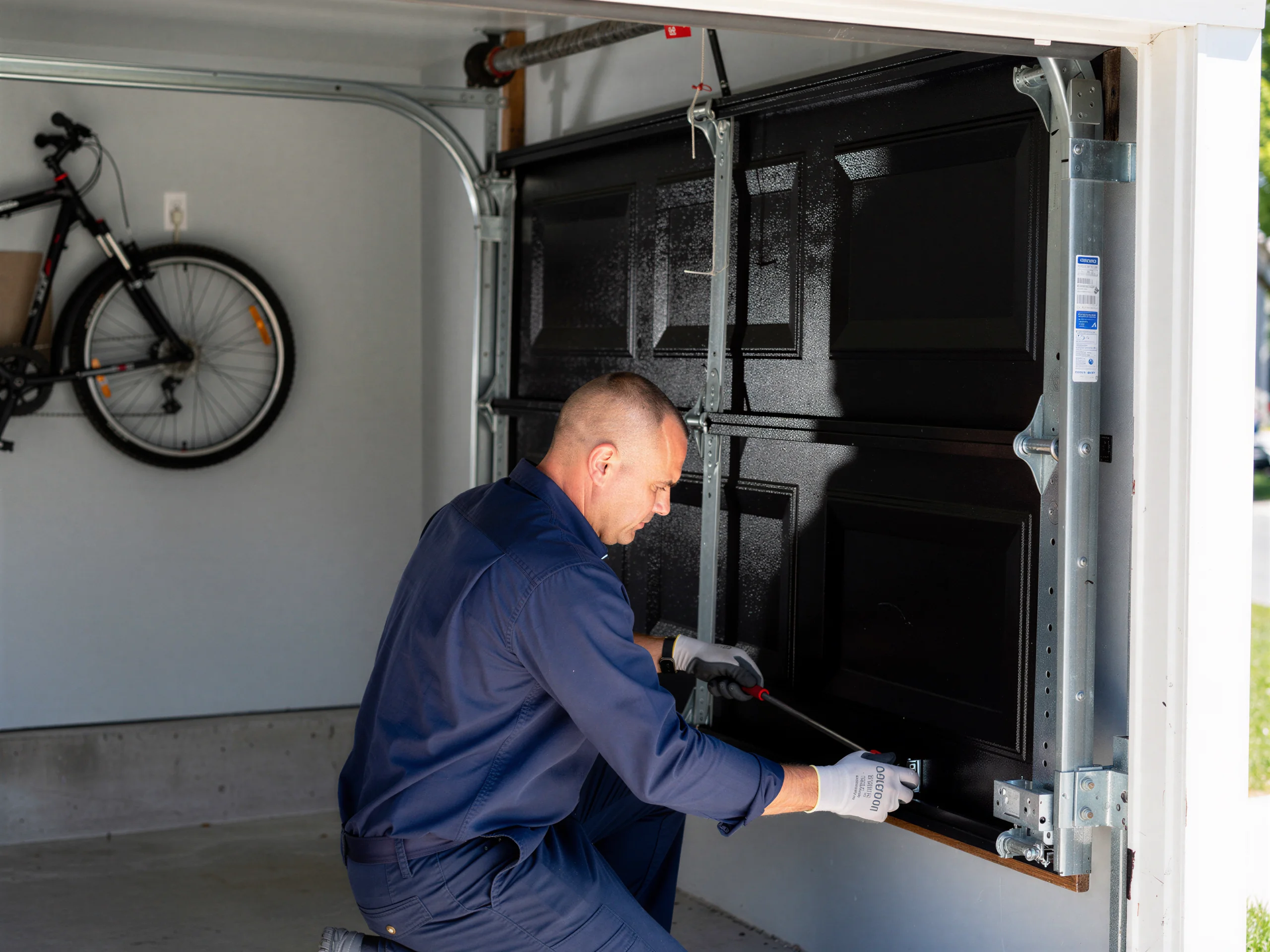
The fault pattern we see out here skews toward spring failure and track misalignment rather than opener electronics, simply because the doors are older than the openers bolted onto them. A lot of these houses added an opener decades after the original door went in, so you end up with a modern motor fighting an old door that's heavier or stiffer than it should be.
Time on the Job
Buffalo doesn't have its own crew. At roughly 474 households, it's too small a town to support a standing truck, so every job here means a drive from Bettendorf, about 17 miles out. We're not going to promise a response window we can't back up from that distance - if you need a same-day fix on a Saturday afternoon, say so when you call and we'll tell you straight whether that's realistic that day.
Once the truck's on site, the work itself doesn't take longer because the house is in Buffalo instead of closer in. Diagnosis, spring swap, or track adjustment runs the same either way. The time difference is all in getting here, not in the repair.
Stocked Parts
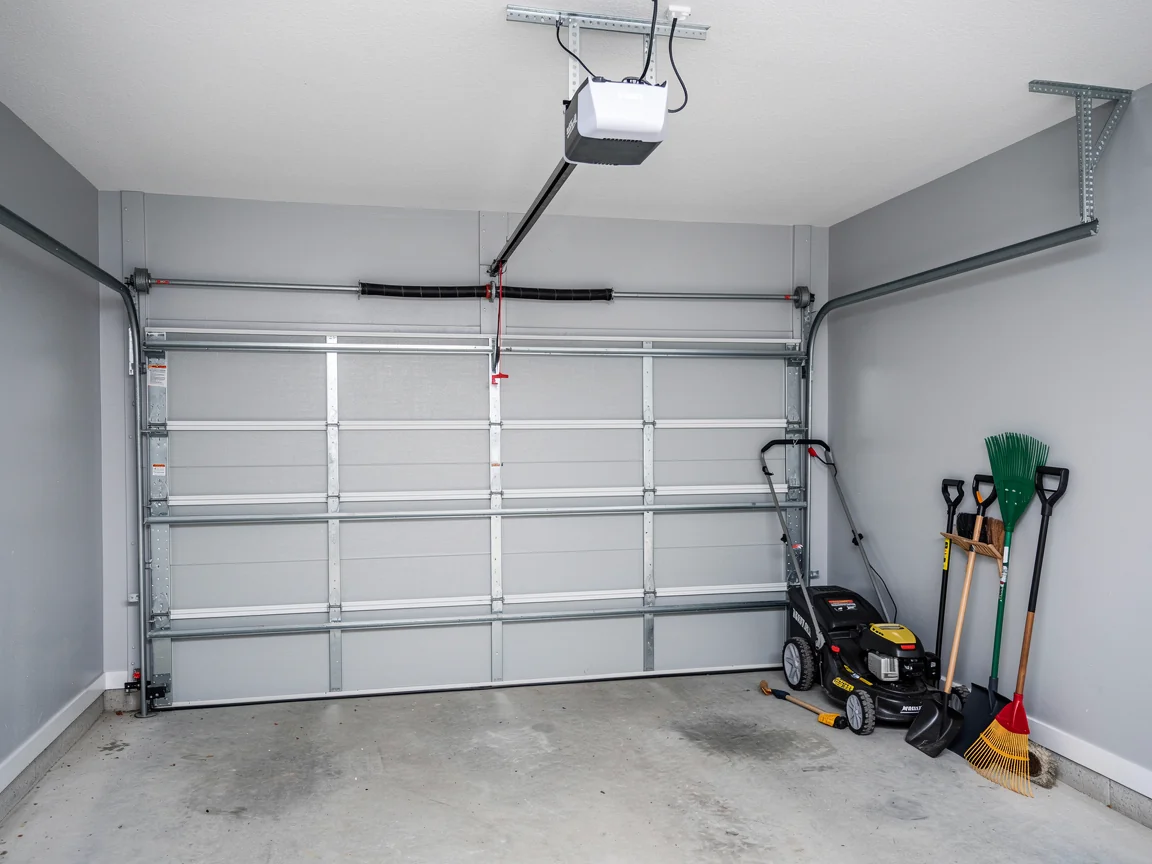
The truck carries the parts that fit current door widths and standard torsion hardware, because that's what most of the region needs. A door sized for a 1952 single bay sometimes needs a spring or track length that isn't a stock item on every truck - we carry common extension spring sizes, but an odd original width can mean a short wait on the exact part rather than a same-visit swap.
Matching hardware to openings
Where we can, we match new hardware to the old opening rather than pushing a full-width replacement door on someone who just wants the current one working again.
Torsion conversion brackets
A new torsion conversion bracket can often be fitted to an old narrow bay without reframing the opening, which keeps the job a repair instead of turning it into a remodel.
Rotted wood panels
Honest limit: if the original panel is wood and it's rotted through, or the track is bent beyond pulling straight, that's a replacement conversation, not a parts swap. We'll tell you which one you're looking at before we quote anything.
What the Fix Involves
First the door gets cycled by hand with the opener disconnected, to feel whether the resistance is spring tension, a bent track, or a dragging roller.
Order of repairs
On doors this age, more than one of those is often true at once, so the order matters - fixing the spring on a door with a bent track just moves the strain somewhere else.
Wire gauge and coil length
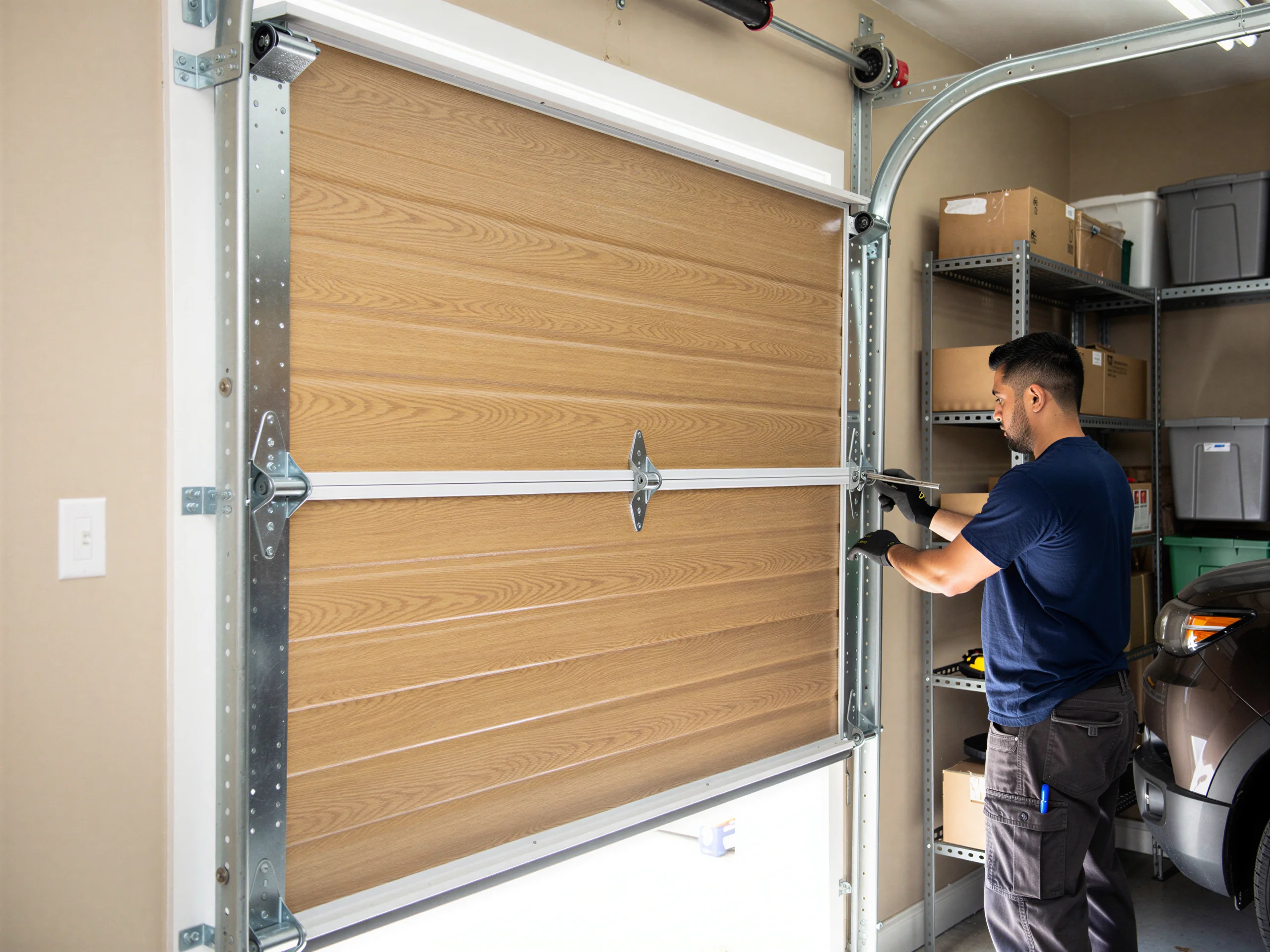
Spring replacement on an extension system means matching wire gauge and coil length to the door's actual weight, not guessing from the opening size. Track work on houses from this era usually means re-anchoring brackets into framing that's shifted slightly over 70 years, not just re-bending the rail.
Balance test, opener off
Once the door balances - meaning it holds steady about halfway open with the opener off - that's the test we use before calling the job done, not just whether the opener can muscle it shut.
The DIY Question
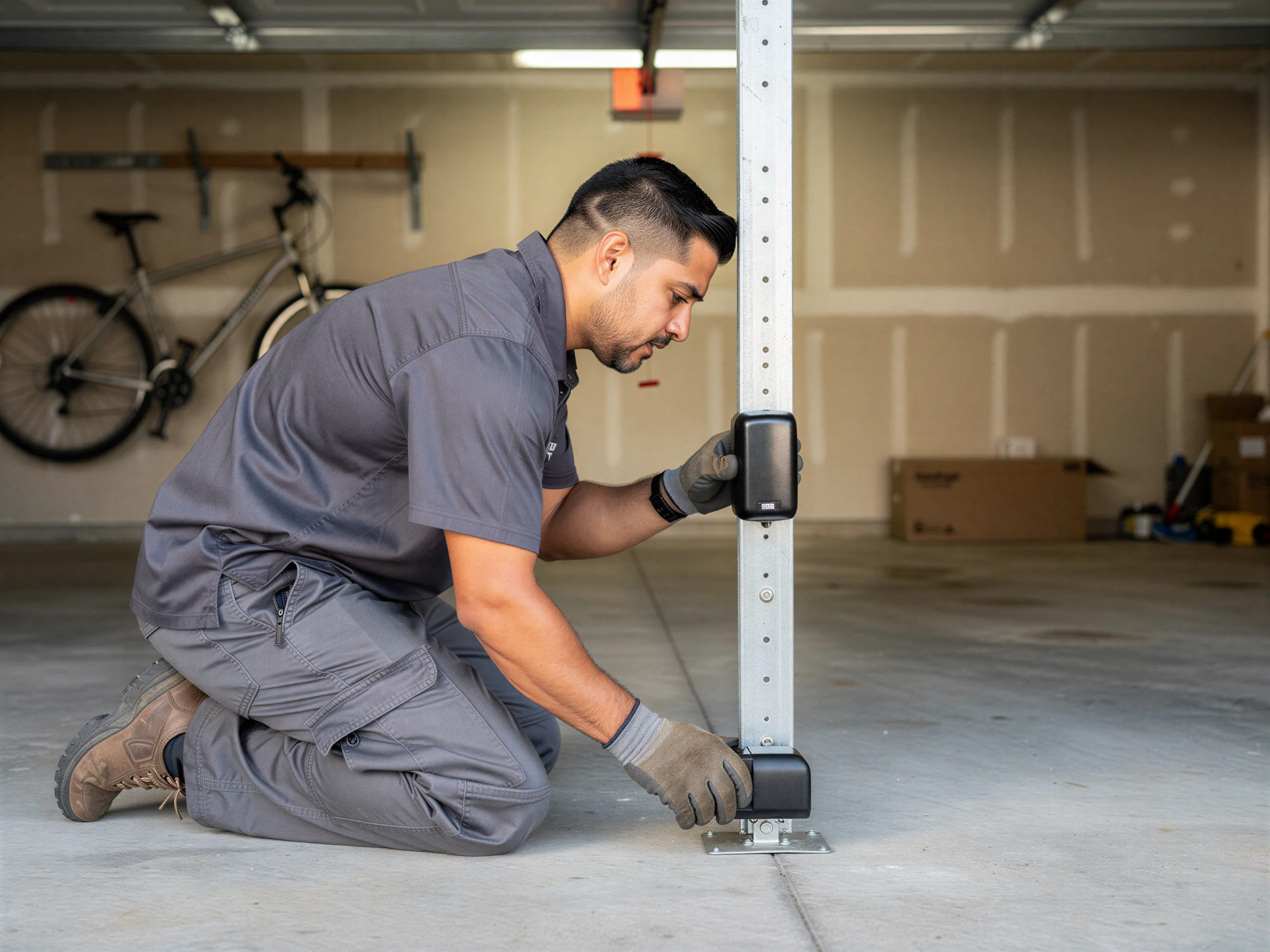
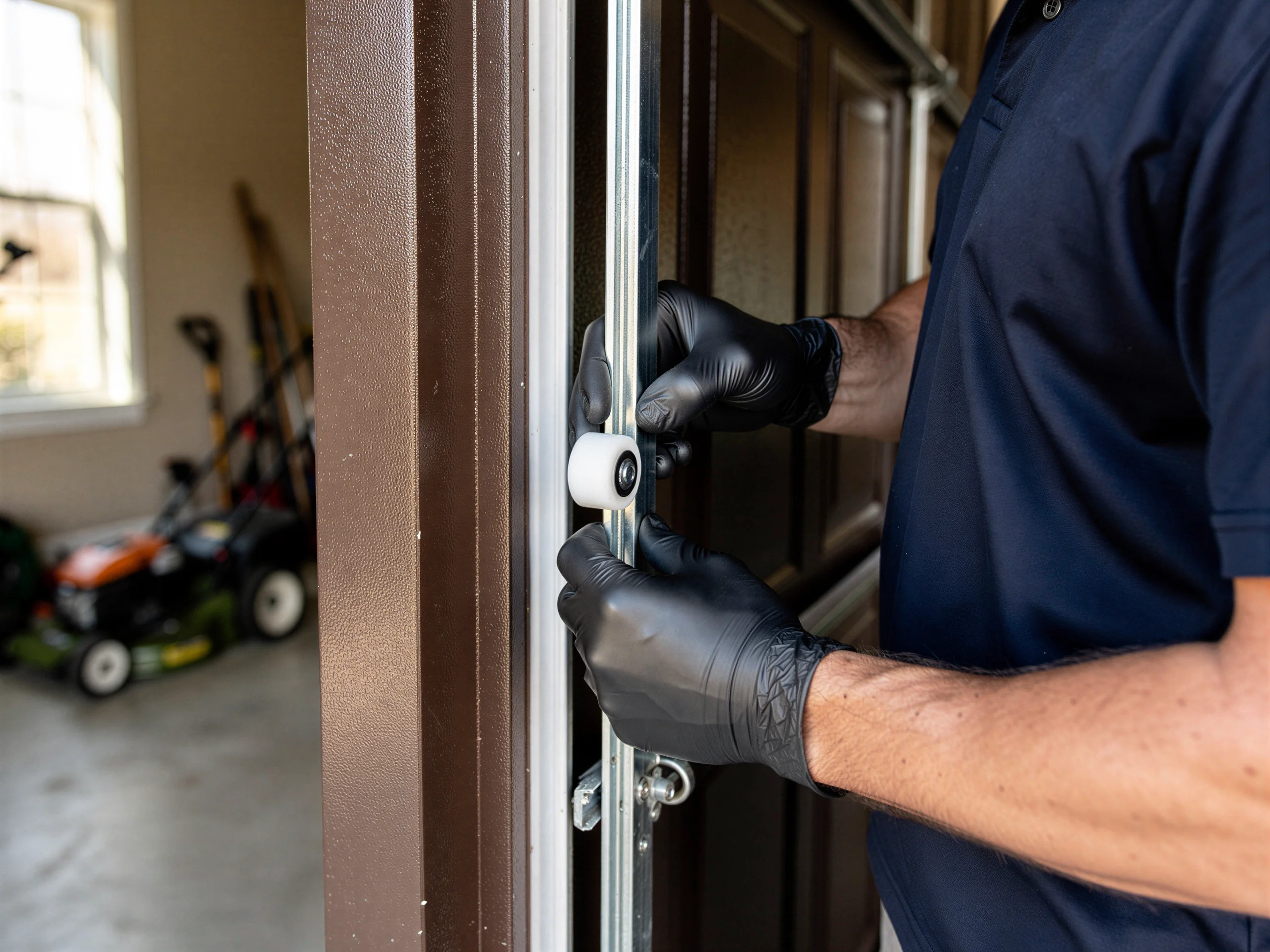
Lubricating rollers and hinges, tightening loose bolts on the track brackets, checking that the photo-eye sensors aren't knocked out of alignment - all of that is fair homeowner work on a door this age, same as any other.
Extension springs are a different matter. They're under less tension than a torsion spring, which is why some older installs skip the safety cable, and that's exactly why a snapped one on an unsupported system can whip hard enough to hurt someone. If you're not sure whether your door has the safety cable run through the spring, that's a question for a call, not a guess.
If household income here runs lighter than a lot of the surrounding service area - Buffalo's typical household sits around $74,773, below the wider area's $84,380 - we get that a repair quote needs to make sense against that, which is part of why we'll tell you plainly when a $40 part fixes it versus when you're better off saving toward a full replacement.
Talk to a local pro
Garage door service in Bettendorf?
Same-day service with honest, upfront quotes.