What Causes It Around Here
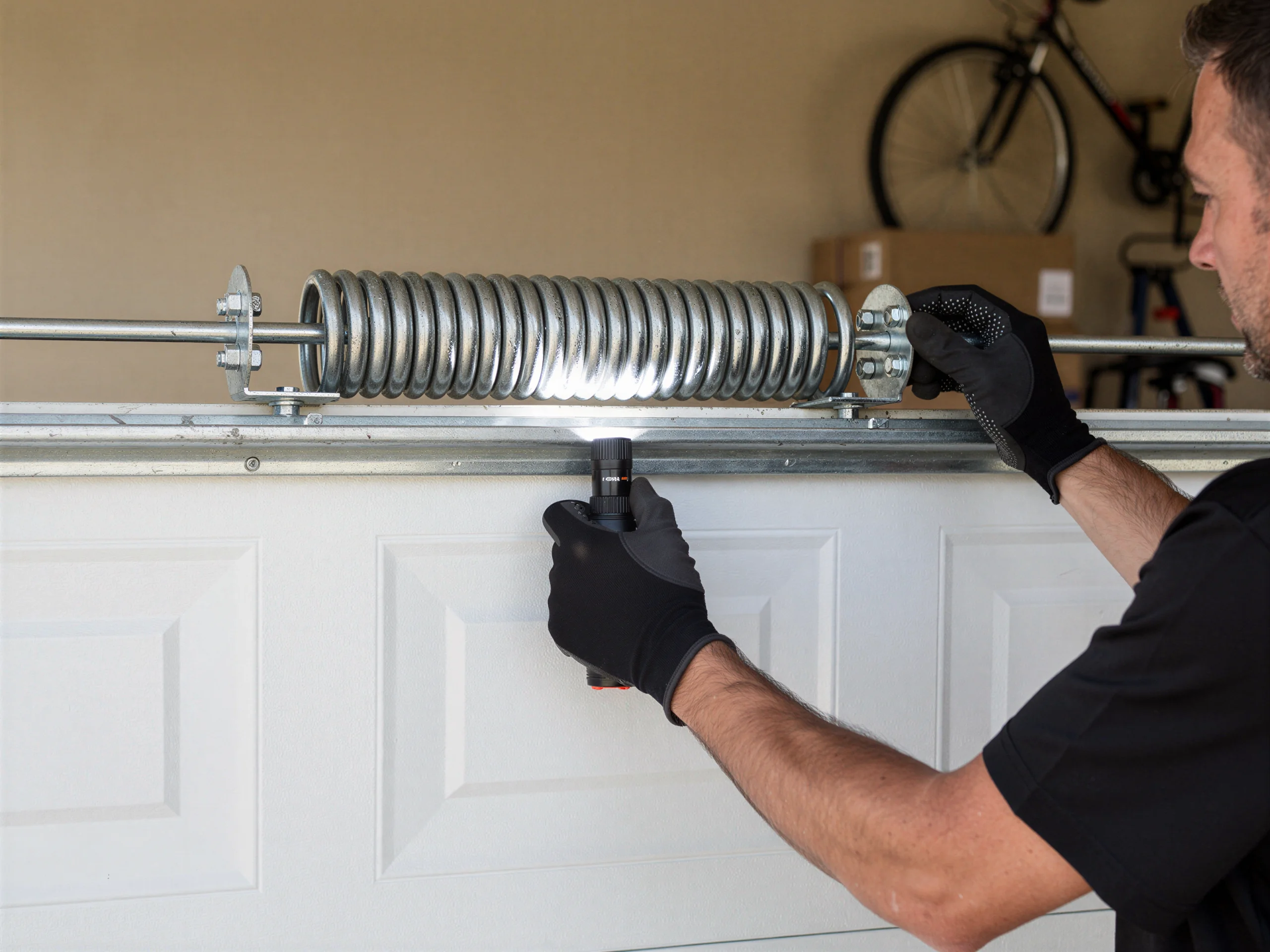
The fault we see most in Buffalo is a door that shudders, bangs, or catches halfway up, and it almost always traces back to rollers that have worn down to a smaller diameter than they started with, riding loose in track that's lost its factory shape. That's not a Buffalo-specific defect so much as a Buffalo-specific age problem: the median home here went up in 1952, which puts a lot of original or early-replacement steel rollers on narrow-gauge track, the kind built decades before nylon rollers with sealed bearings became the standard swap-in part. Steel-on-steel rollers don't flex. They chip, flatten on one side, and start walking out of the track channel, which is why a 1952-era door often sounds like gravel in a can before it ever stops working entirely. Add in a cold-climate winter, where the metal contracts and grease stiffens, and a roller that was marginal in October can jump track in January. We're not telling you this because Buffalo is unusual - we're telling you because the housing stock here means this fault shows up earlier and louder than it would on a newer door with plastic rollers and shielded bearings.
Time on the Job
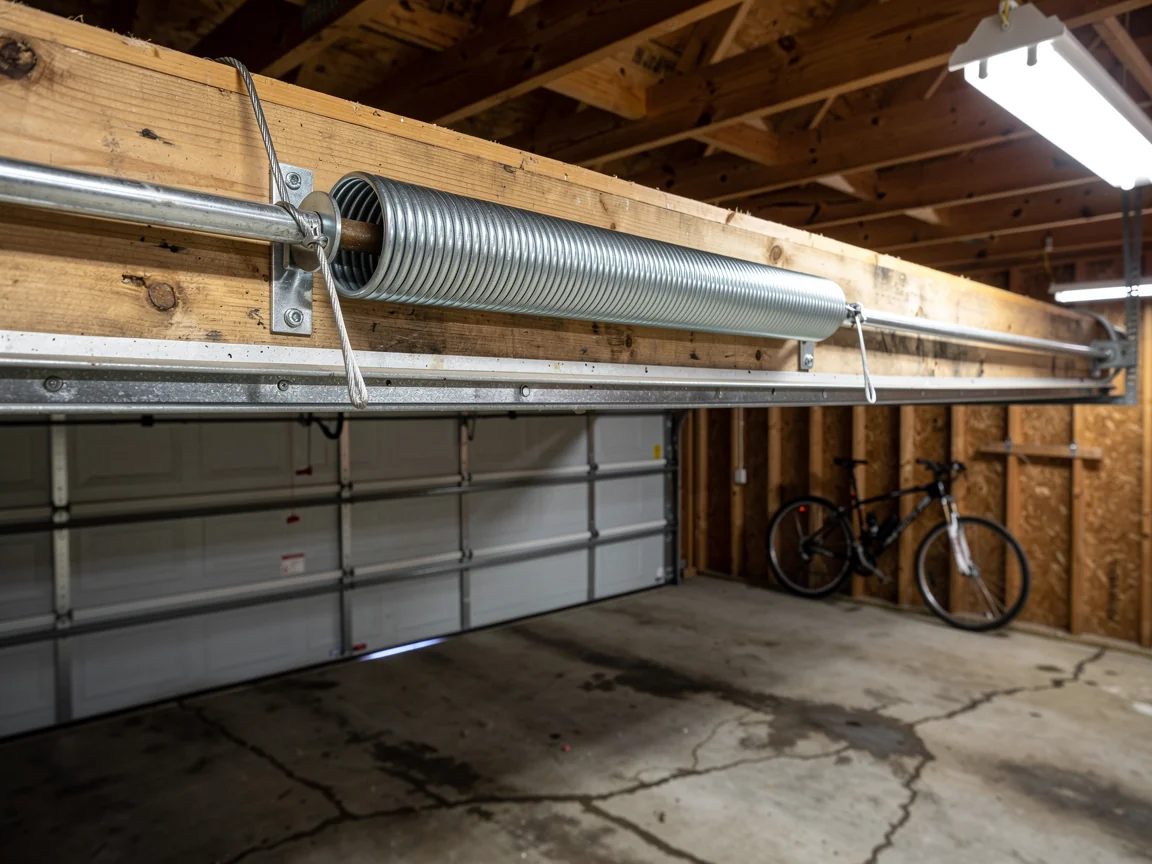
A straightforward roller swap on a double door, done while you're not in a hurry and nothing's bent, is a same-visit job - we pull the old rollers one at a time with the door supported, so the cable and spring tension never gets disturbed.
Track condition sets time
What stretches the job is track condition, not the roller itself. On a lot of the 1952-built homes we work on in this area, the track has taken enough abuse from worn rollers that it's dented or bowed in spots, and straightening or swapping a track section adds time we can't promise until we've got the door open and a level on the rail.
Enough time on-site
We travel from Bettendorf for this call, about 17 miles out, so we plan the visit with enough time on-site to actually finish rather than rushing back for a second trip.
Stocked Parts
We carry both nylon rollers with sealed ball bearings and heavier-duty 13-ball versions on the truck, because a house built in 1952 might have anything from the original steel rollers to a 1990s nylon replacement, depending on what the last owner did. What we don't stock is anything custom-length or a specialty track profile - if the door turns out to need a nonstandard track width, that's a part we order rather than carry, and we'll tell you that honestly on-site instead of pretending otherwise. For the service area overall, where 6,807 of 11,334 households own their house outright or with a mortgage, roller wear is one of the most common calls we get precisely because it's cheap to ignore until it isn't.
What the Fix Involves
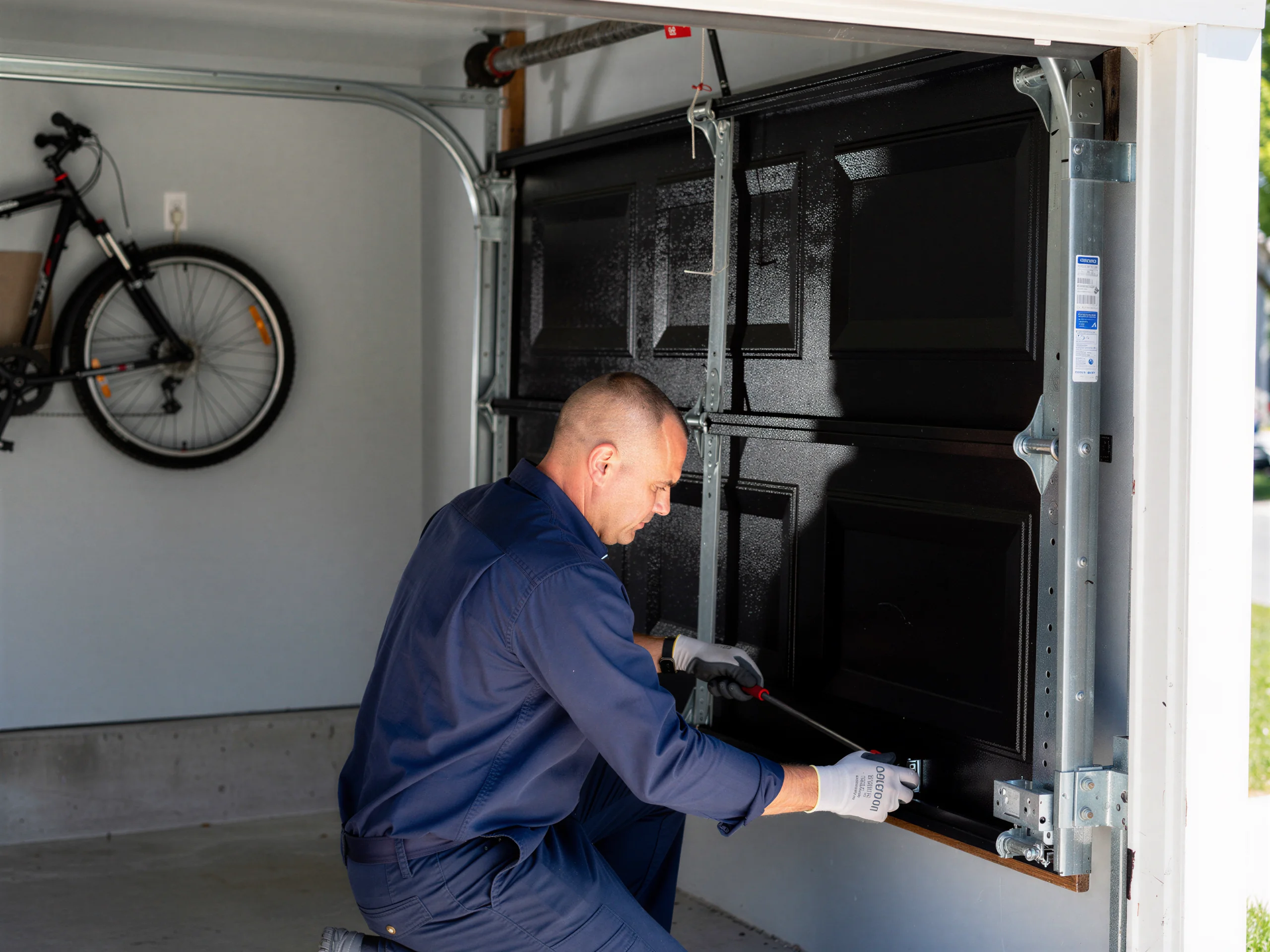
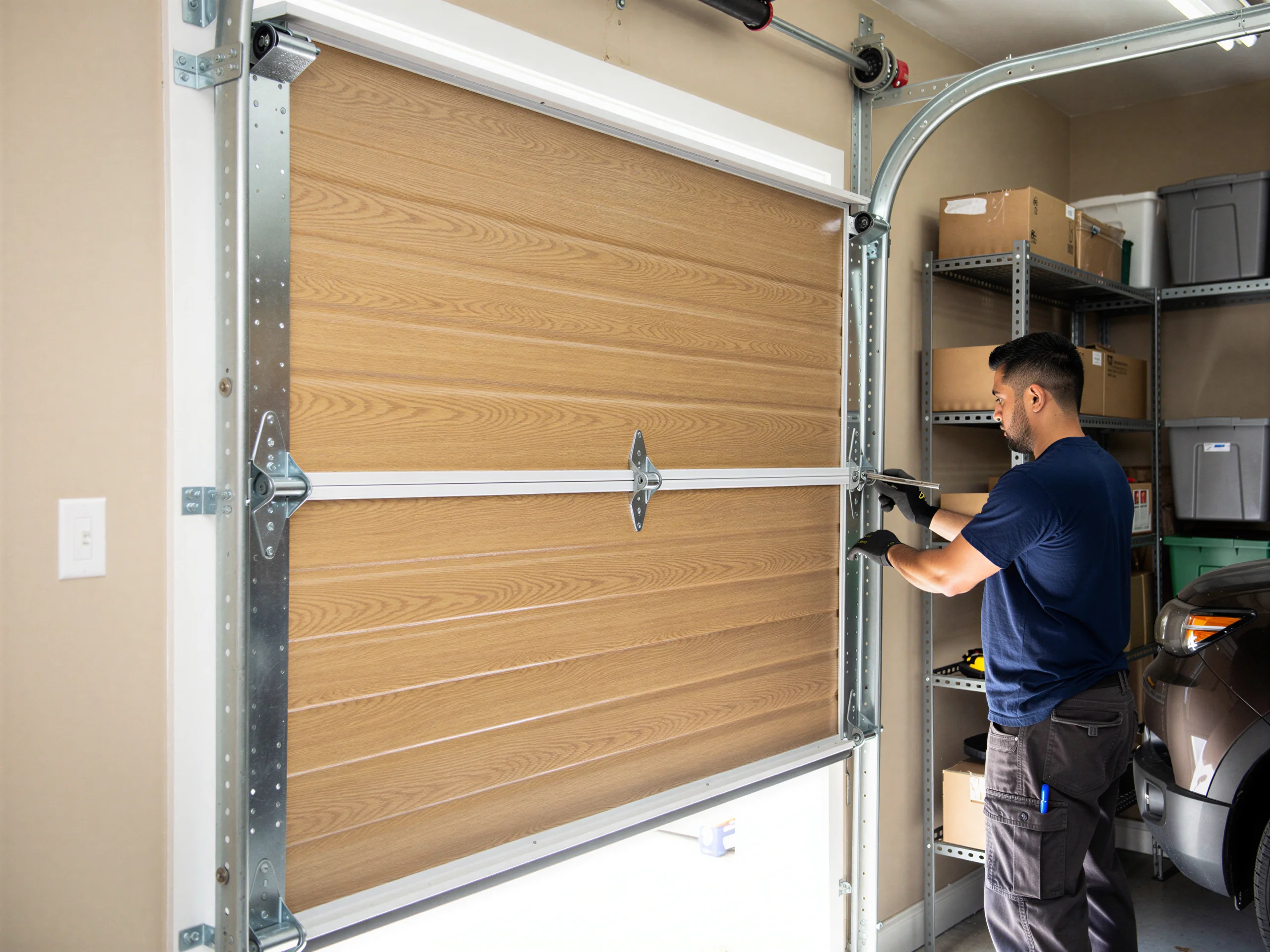
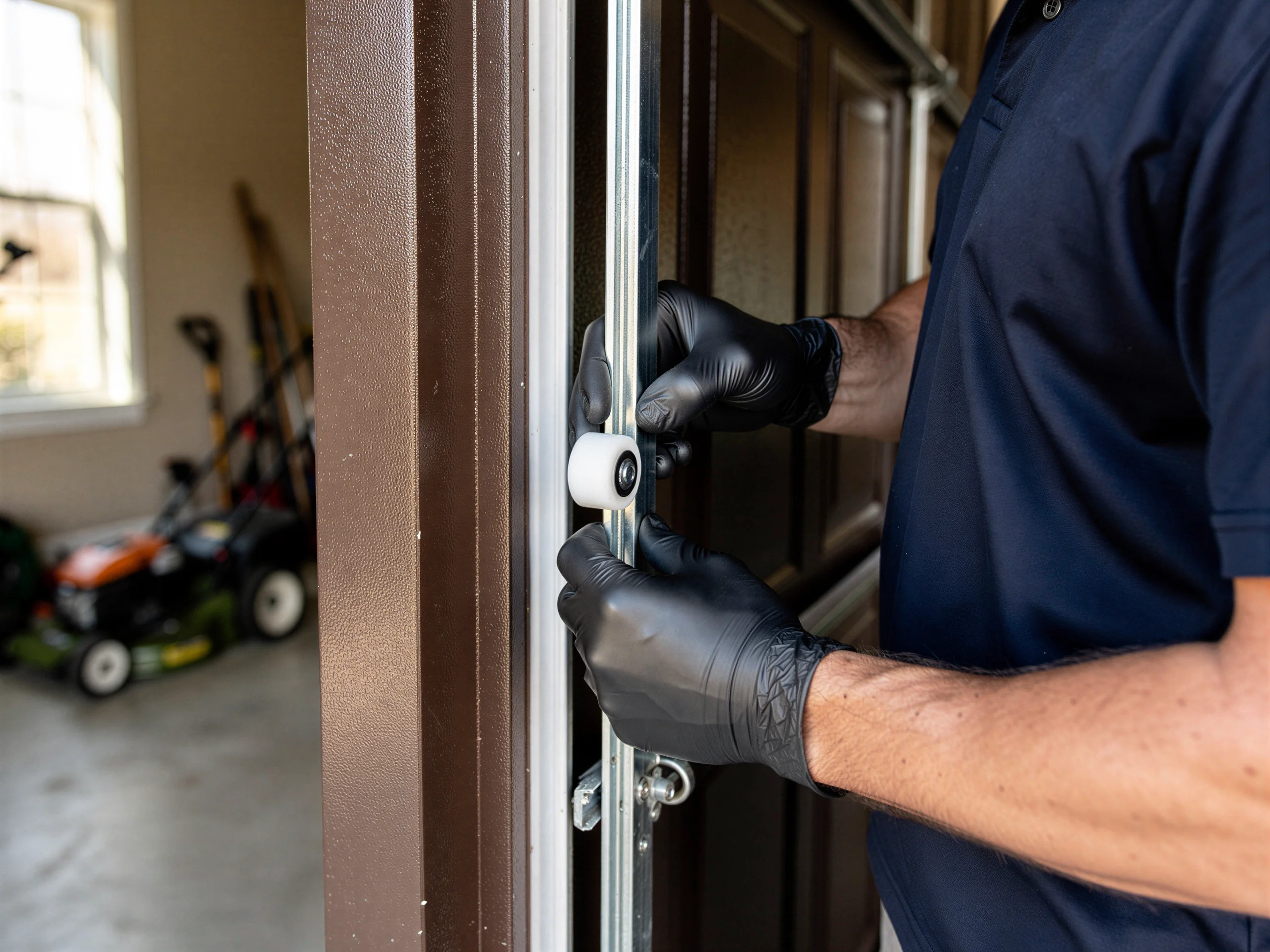
We start by locking the door in place with clamps so it can't drop while the rollers are out, then pull each roller from its bracket, check the bracket itself for elongated holes or rust-through, and set new rollers in with a bead of lubricant made for cold climates rather than general-purpose grease that thickens below freezing.
Hinge wear checks
On a 1952-era door we also check the hinges, since the same decades of steel-on-steel wear that chews up rollers tends to loosen hinge screws and stretch the hinge holes in the panel.
Double-cycle testing
We test the full cycle twice before we call it done, listening for any catch or drag that would point to a track issue we missed on the first pass.
The DIY Question
Swapping the bottom rollers on a door that's down and unpowered is within reach for a careful homeowner with the right pliers and a little patience. What we don't recommend doing yourself is working on the top rollers near a wound torsion spring, or pulling rollers while the door is anywhere but fully down - that's where fingers get caught and springs let go. If your door is a 1952-original with steel rollers and you're not sure what's behind the track, that's worth a call rather than a guess, since replacing a bent track section is a different job than swapping rollers and costs more if it's done after a roller failure has already chewed up the rail.
Talk to a local pro
Garage door service in Bettendorf?
Same-day service with honest, upfront quotes.