Stocked Parts
Walcott's housing stock centers on 1972, which puts it squarely in the 1960s-70s building wave that covers ten towns in this service area, Bettendorf included.
Headroom and bracket spacing
That matters for an opener job because doors from that era were framed for lighter openers than what's sold today - narrower headroom, older bracket spacing, sometimes a wood jamb that won't take a modern mounting plate without an adapter. We don't keep a branch in Walcott.
Loaded before departure
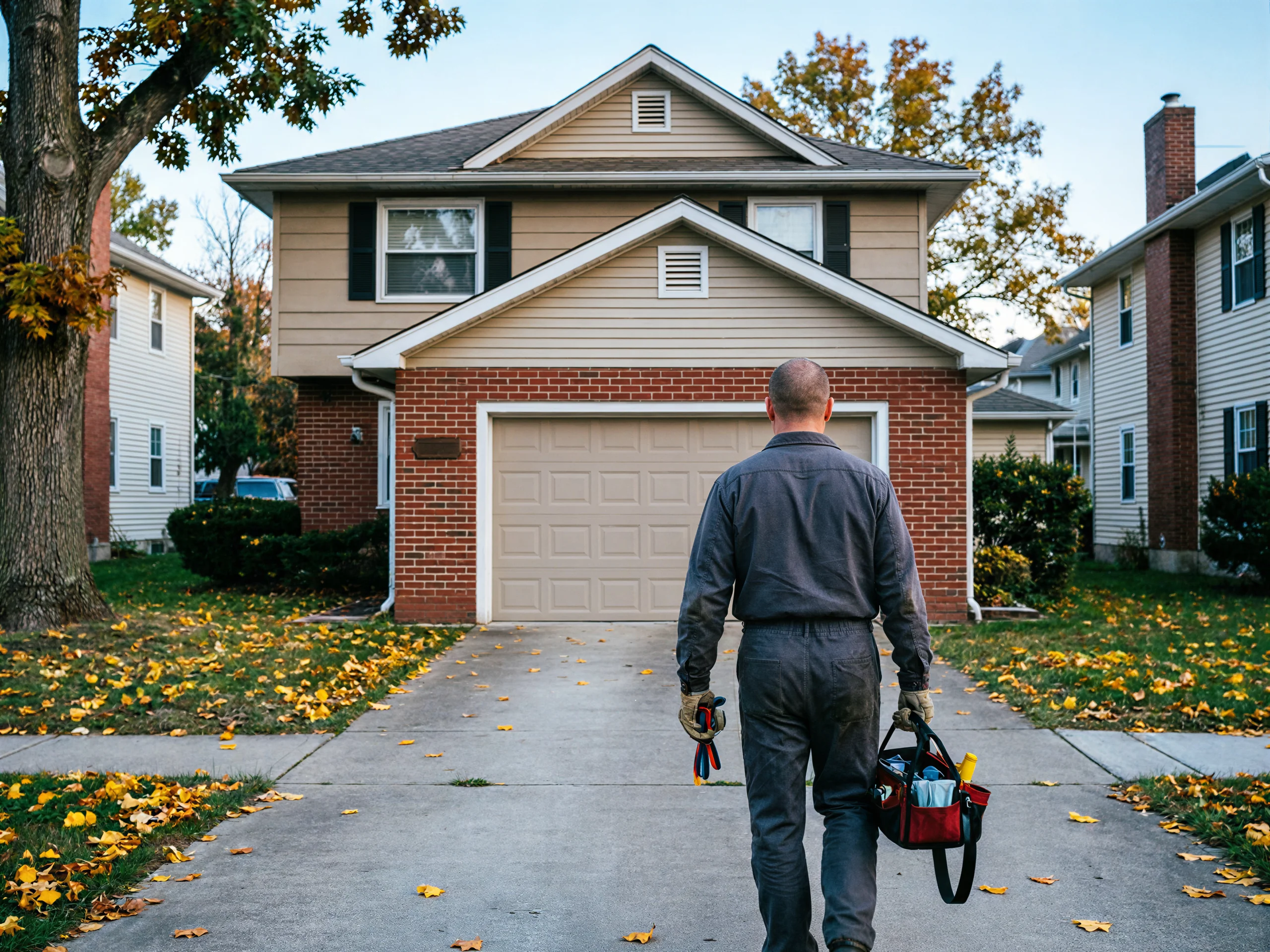
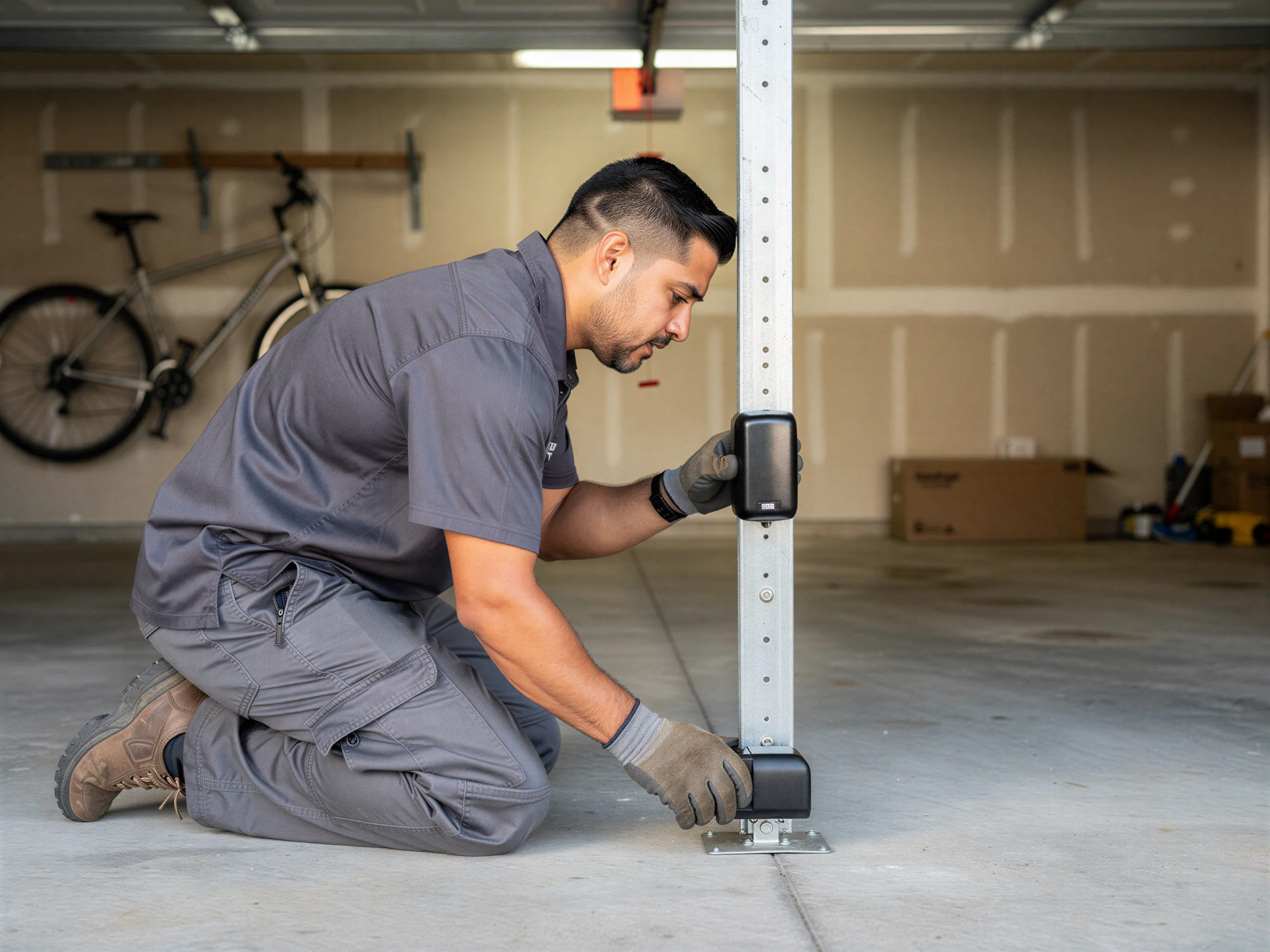
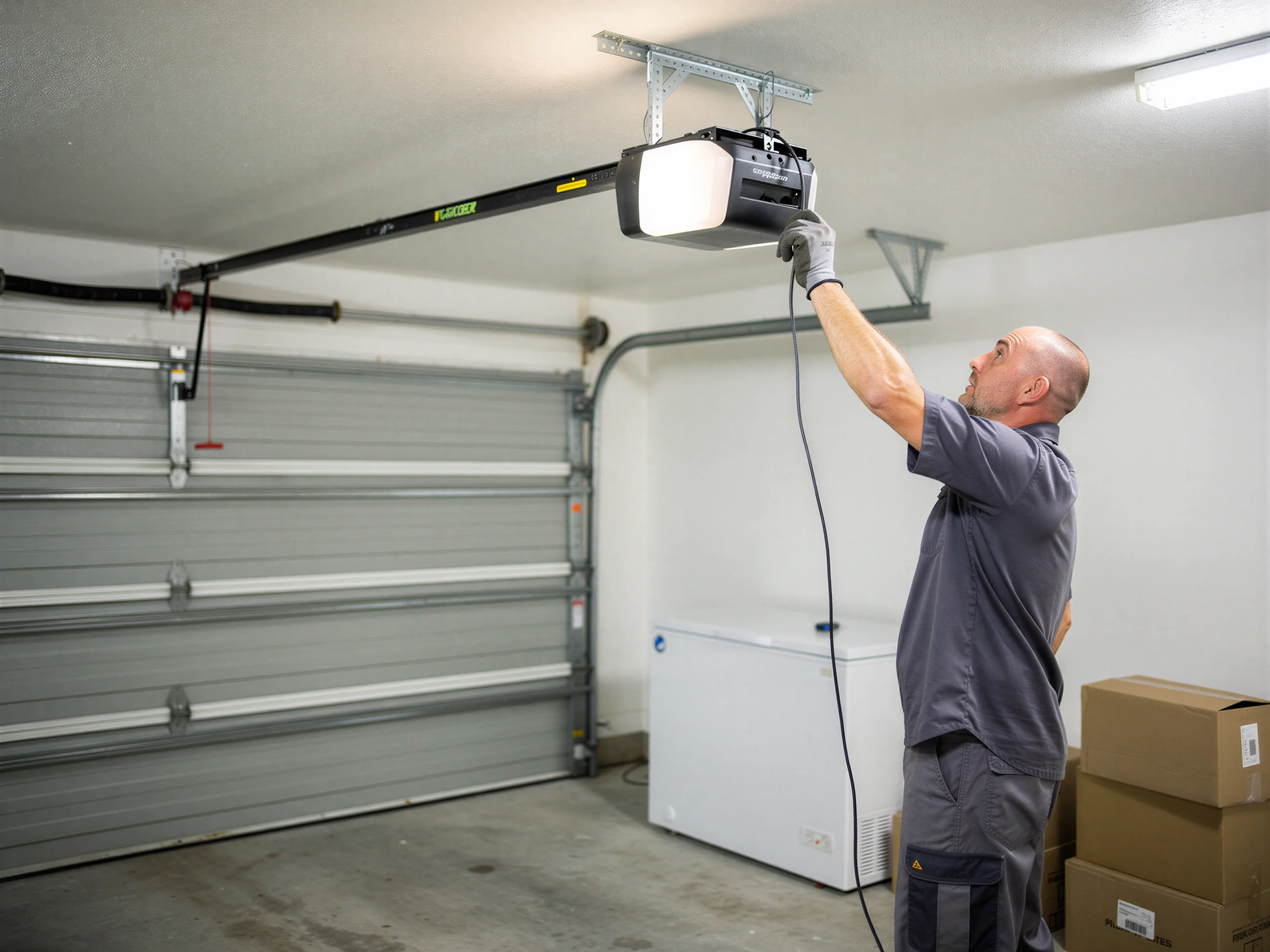
The truck comes from Bettendorf, 16 miles away, so the opener, the rail, the safety sensors, and the mounting hardware all go on the truck before we leave, based on what you tell us about the door on the phone - make, panel material, torsion or extension spring.
Nonstandard bracket setups
If the bracket setup turns out to be nonstandard once we're on site, that can mean a second trip, which is the one honest limitation here: we'd rather tell you that up front than pretend every 1972 jamb takes the same plate.
The Symptom
The opener complaints we hear out of Walcott usually trace back to the house's age rather than bad luck. A door built in 1972 was almost certainly fitted with its original opener at some later date, and by now that unit is well past the gear-and-sprocket stage where parts are worth sourcing.
Intermittent remote behavior
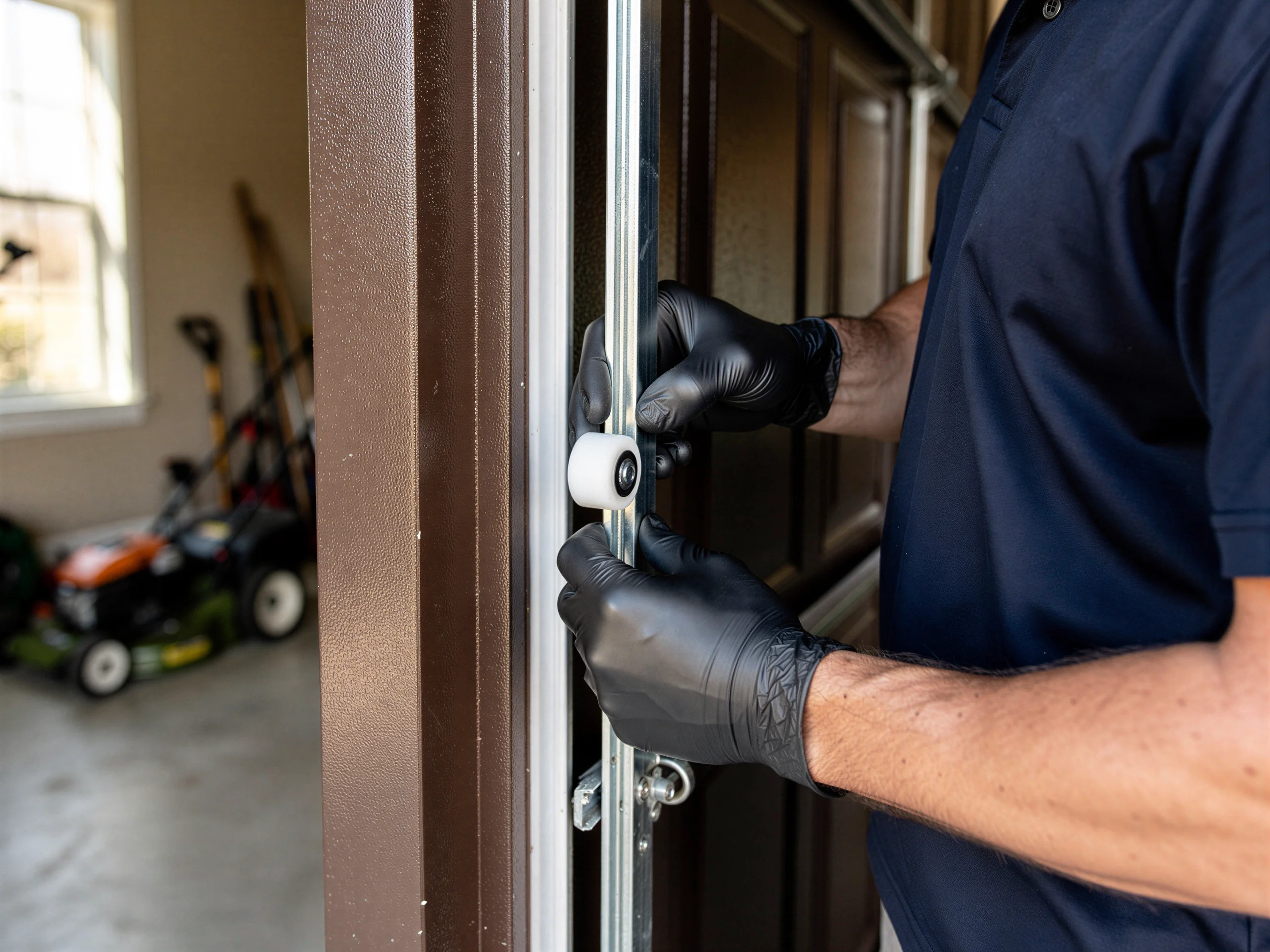
What you notice first is usually the door reversing partway up, or the opener running louder than it used to, or the remote working some days and not others. None of that is really an opener problem on its own - it's 50 years of settling in the track, worn rollers, and a drive gear that was never built to last five decades.
Two-car door pattern
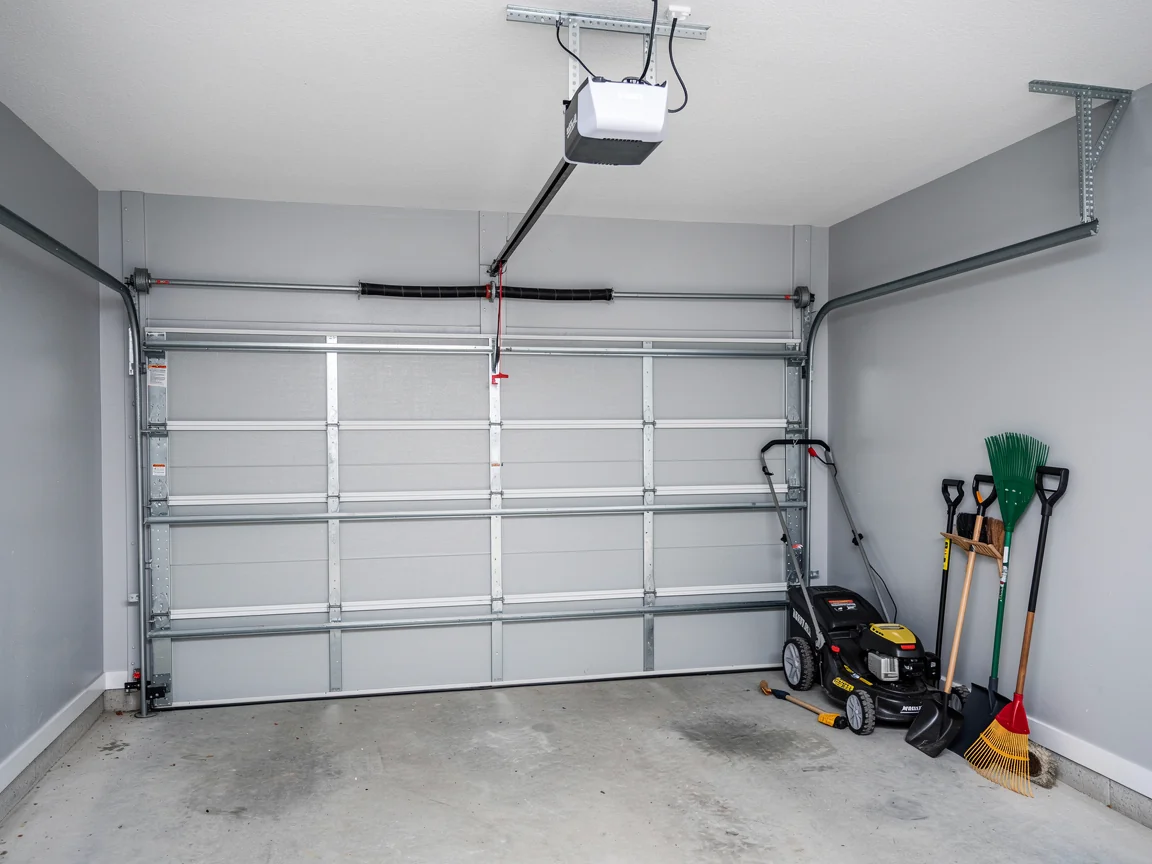
Across the roughly 766 households in Walcott, the pattern repeats: a 2-car door on a 1972-built house, original or near-original hardware, and an opener that's finally quit trying to keep up with a door it was never sized for.
Binding door before quoting
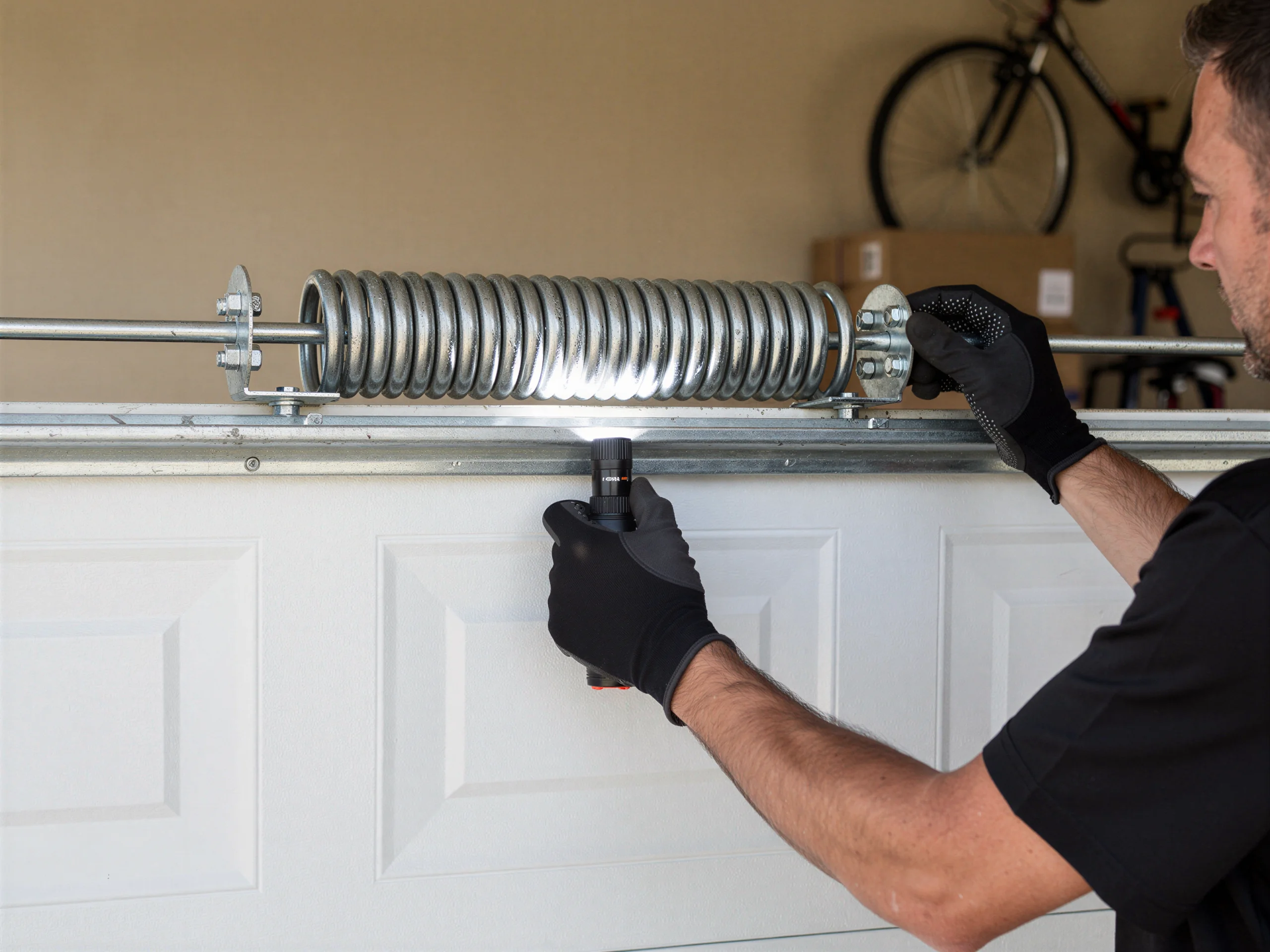
We look at the door itself before we quote an opener, because putting a new drive unit on a door that's binding in the track just moves the failure point, it doesn't fix it.
Booking a Visit
We cover Walcott from Bettendorf, 16 miles out, so a visit here gets scheduled as a route stop rather than a drop-in. That's not a complaint, just how the math works for a town this size - Walcott's 766 households don't support a standing local crew, and we'd rather be honest about that than promise a response time we can't back up every week. When you call, tell us the opener brand if you can read it off the unit, the door size, and whether the issue is the opener or the door itself binding. That lets us load the right drive and bracket kit before the truck leaves Bettendorf, instead of discovering a mismatch on your driveway. We don't claim a local depot or a branch office in Walcott, and we're not going to pretend otherwise just to sound closer. What we can do is bring the parts that fit a 1972-era door on the first trip, which cuts down the odds of a second visit.
The Cost of This Job
We're not going to put a number here that isn't backed by a rate sheet, so this section stays qualitative.
Door drives opener price
What drives the price on an opener install in Walcott is mostly the door it's going on - a 1972-built single door with original hardware is usually a straightforward swap, while a door that's been resized, re-tracked, or fitted with a non-standard bracket over the years takes longer and costs more in labor, not parts.
Consistent regional pricing
Walcott's median household income sits at $82,756, close enough to the rest of the service area that we price the job the same way we would in any of the surrounding towns - by the door and the drive unit, not by the zip code.
Repair-or-replace advice
If your opener failure turns out to be a symptom of a door that's past worth repairing, we'll say so rather than sell you a new opener on a door that needs replacing within the year. That's the limitation worth knowing before you book: sometimes the honest quote is for a door, not an opener.
Time on the Job
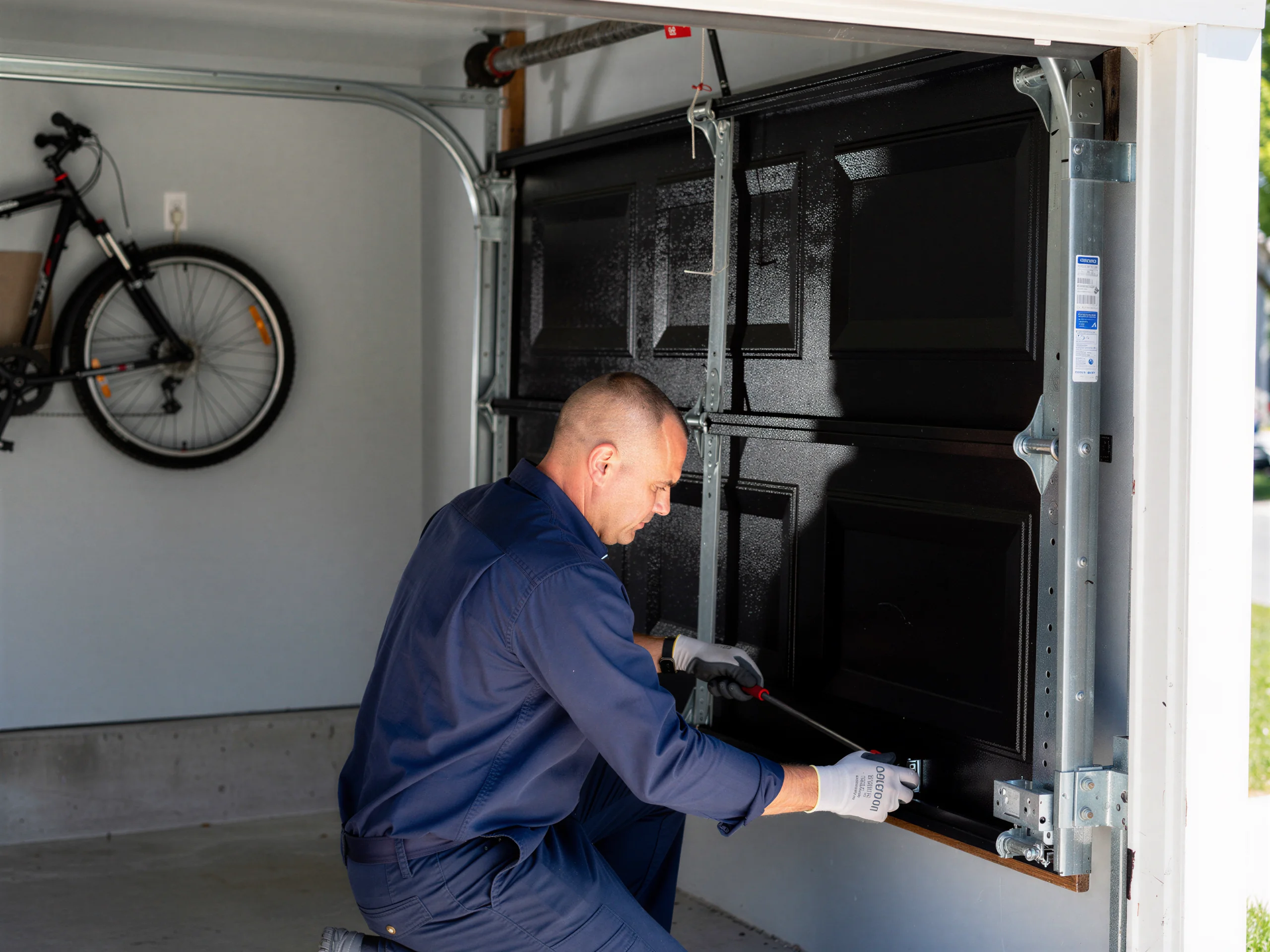
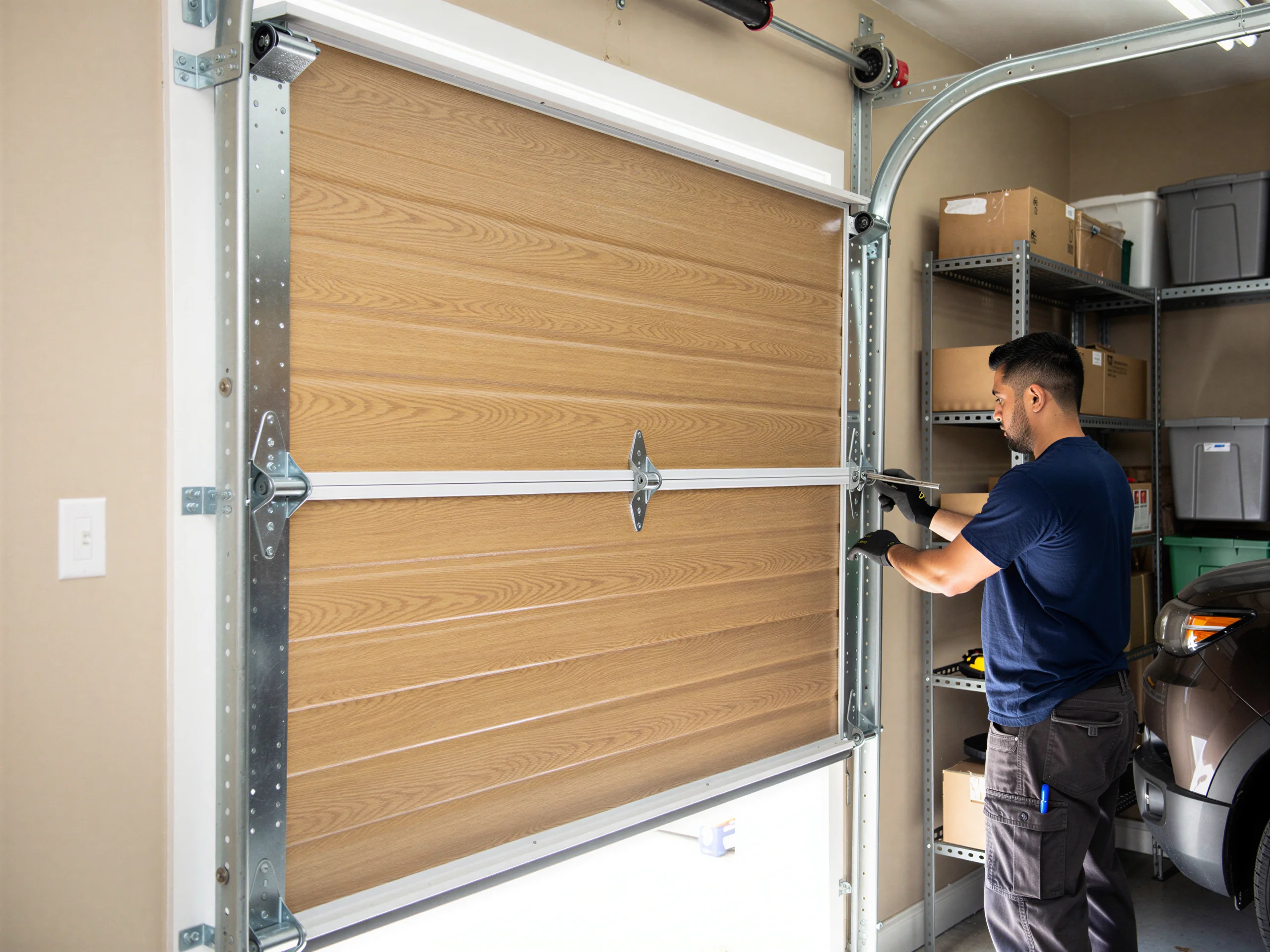
A straightforward opener swap on a single door usually runs a few hours once we're on site - mount the rail, set the travel limits, pair the remotes and the keypad, test the safety reversal. Where it runs long in Walcott specifically is the bracket work: a 1972 jamb sometimes needs a plate cut or shimmed to take a modern mounting arm, and that's not something we can always see from a phone description. Two-door garages or openers paired with a torsion conversion take longer, closer to half a day. Because the truck travels 16 miles from Bettendorf to get here, we build the stop into a route rather than squeezing it between closer jobs, which usually means we're not rushing the bracket fit just to make the next appointment. We'd rather take the extra twenty minutes getting the mount square than have the door tracking wrong six months later.
What Causes It Around Here
This area sits in a cold moderate climate band, and that shows up in opener problems you wouldn't see further south. Cold makes grease stiffen in an aging drive gear, which is already the weak point on a unit installed decades after a 1972-era door went up. It also makes the door itself heavier to lift on a cold morning if the rollers are dry, and an opener that's borderline will quit on the coldest days of the year rather than the mild ones - that's not coincidence, it's the motor working harder against stiffer hardware. Houses in Walcott and the rest of this service area, built mostly across the 1948-2001 range with a median around 1972-73, weren't built with insulated doors as standard, so the opener on an uninsulated door works through more temperature swing than one behind a newer door. None of that means the opener itself is defective. It means the installation has to account for a door that moves differently in January than it does in July, and a drive unit and limit settings picked for that.
Talk to a local pro
Garage door service in Bettendorf?
Same-day service with honest, upfront quotes.