What Causes It Around Here
Start with the number that actually decides whether a broken spring is worth fixing: Le Claire's median household income is $100,404, well above the $84,380 median across the rest of the service area. At that income level, a $250-$400 spring job on a door that's otherwise sound is an easy yes. The math only tips toward full replacement when the opener, track, and panels are all failing at once - not just the spring.
The houses themselves tell you why springs fail here in the first place. Most of Le Claire went up around 1979, a few years newer than the 1973 median across the broader service area, which runs from houses built as early as 1948 up through 2001. A door from that era is usually on its second owner and second opener, but it may still be running the torsion spring it shipped with in '79 or '80 - nobody replaces a spring until it breaks.
The climate band here is cold-moderate, and that matters for spring life more than most people think. Steel loses tensile strength faster through repeated hard freezes and thaws than it does from simple age. A spring rated for ten thousand cycles in a mild climate might not see eight thousand here before a coil snaps, usually on the first bitter morning after a warm spell.
Booking a Visit
There's no Le Claire branch - the crew runs out of Bettendorf, six miles down the road, which is a short enough hop that it doesn't change how we price or schedule the job.
Phone questions before visit
We don't quote a response time for Le Claire specifically because we don't want to promise something tied to traffic or weather that day, but the distance itself isn't the limiting factor. What we ask for on the phone is the same for every call: the door's approximate age, whether it's one spring or two, and whether the door will still open by hand (carefully, with help) or is fully locked down.
Wire size and wind
That tells us which springs to load on the truck before we leave Bettendorf, since torsion spring wire size and wind direction vary enough between builders that guessing wrong means a second trip.
Spring versus opener signs
If you're not sure this is a spring issue versus an opener or track problem, our broader spring repair page for the Bettendorf service area walks through the signs - a door that won't budge, a loud bang from the garage, a cable that's gone slack on one side are all spring symptoms, not opener symptoms.
Stocked Parts
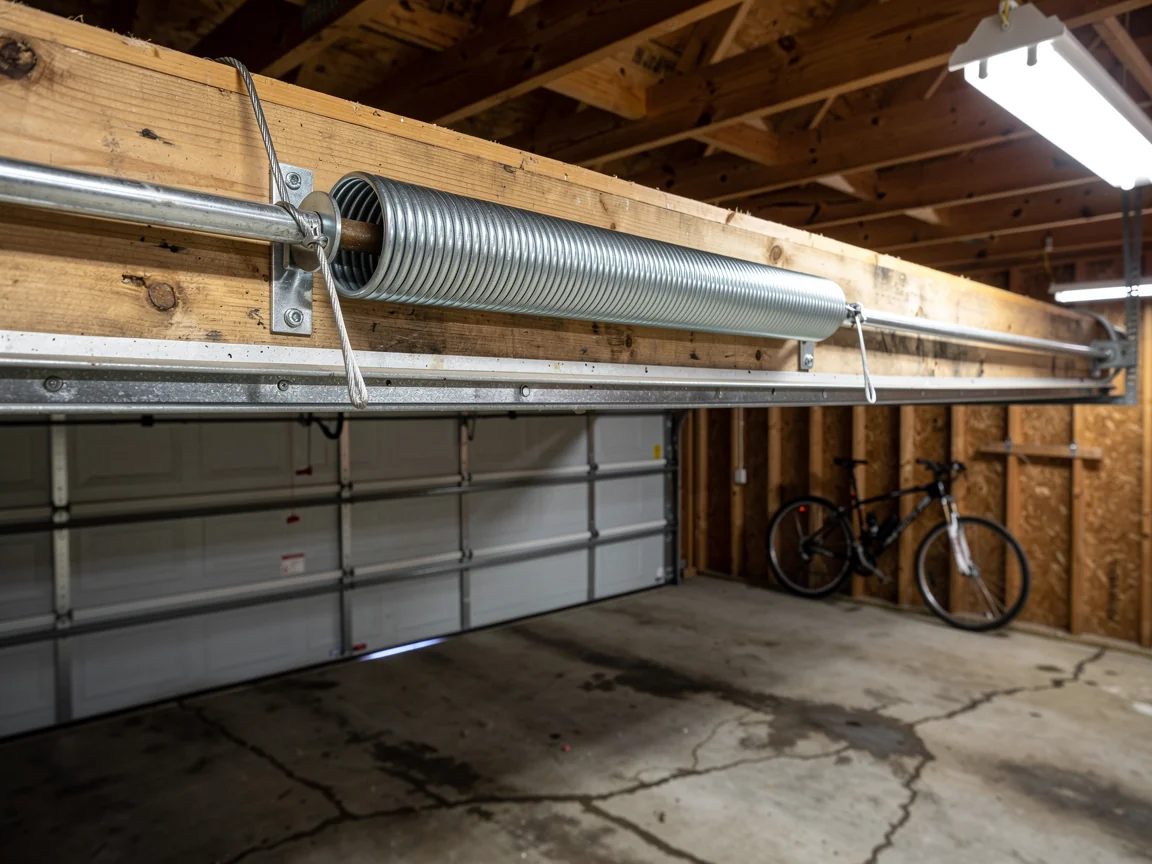
For a town built mostly in the late 1970s and early 1980s, the torsion springs we carry most often are standard residential winds sized for a 7-foot door, which was the common height when Le Claire's housing stock was going up.
Standard-cycle spring stock
Doors from this era rarely have the oversized or high-cycle springs you'd see in anything built after 2000, so parts availability usually isn't the holdup here the way it can be on much older or much newer stock.
Custom door width limits
What we don't stock on the truck is anything custom - a nonstandard door width, a discontinued extension spring from an older build, or hardware for a door that's been modified from its original configuration. Those jobs mean a second visit once the part's ordered.
Standard bearings and drums
It's not common in Le Claire given the housing era, but it happens. We also carry standard end bearings, cables, and drums as a matter of course, because a spring failure on a door this age often takes a bearing or cable with it - the spring doesn't fail in isolation as often as people assume.
The DIY Question
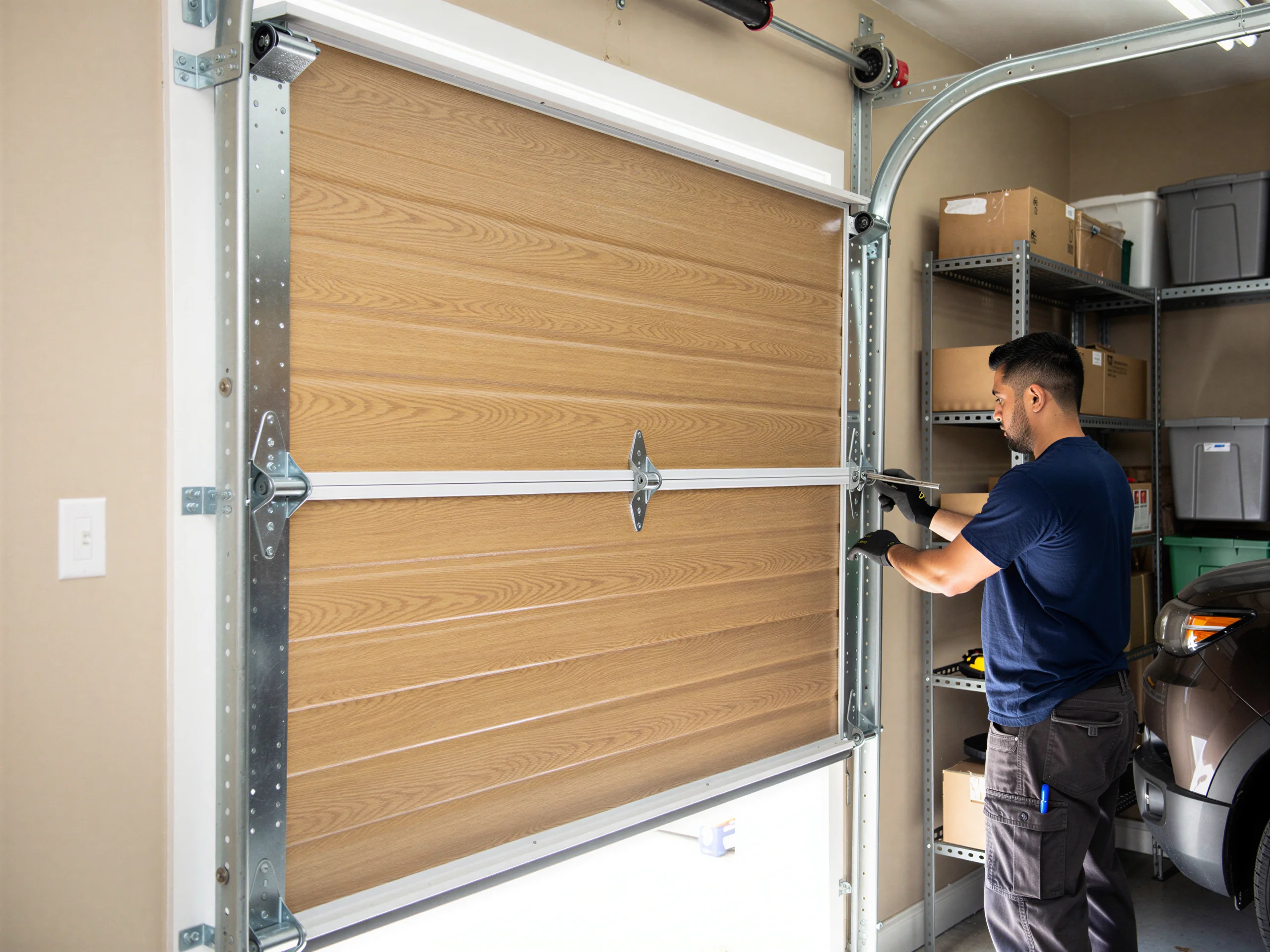
Don't do this one yourself. A wound torsion spring holds enough stored force to break fingers or worse, and the tools that make it safe - winding bars, a secured ladder, a door clamped in place - aren't things most garages have sitting around.
Extension spring caution
Extension springs are a little more forgiving but still not a weekend project if you haven't done it before. What you can safely check yourself before calling: whether the problem is actually the spring or something simpler.
Visible signs of failure
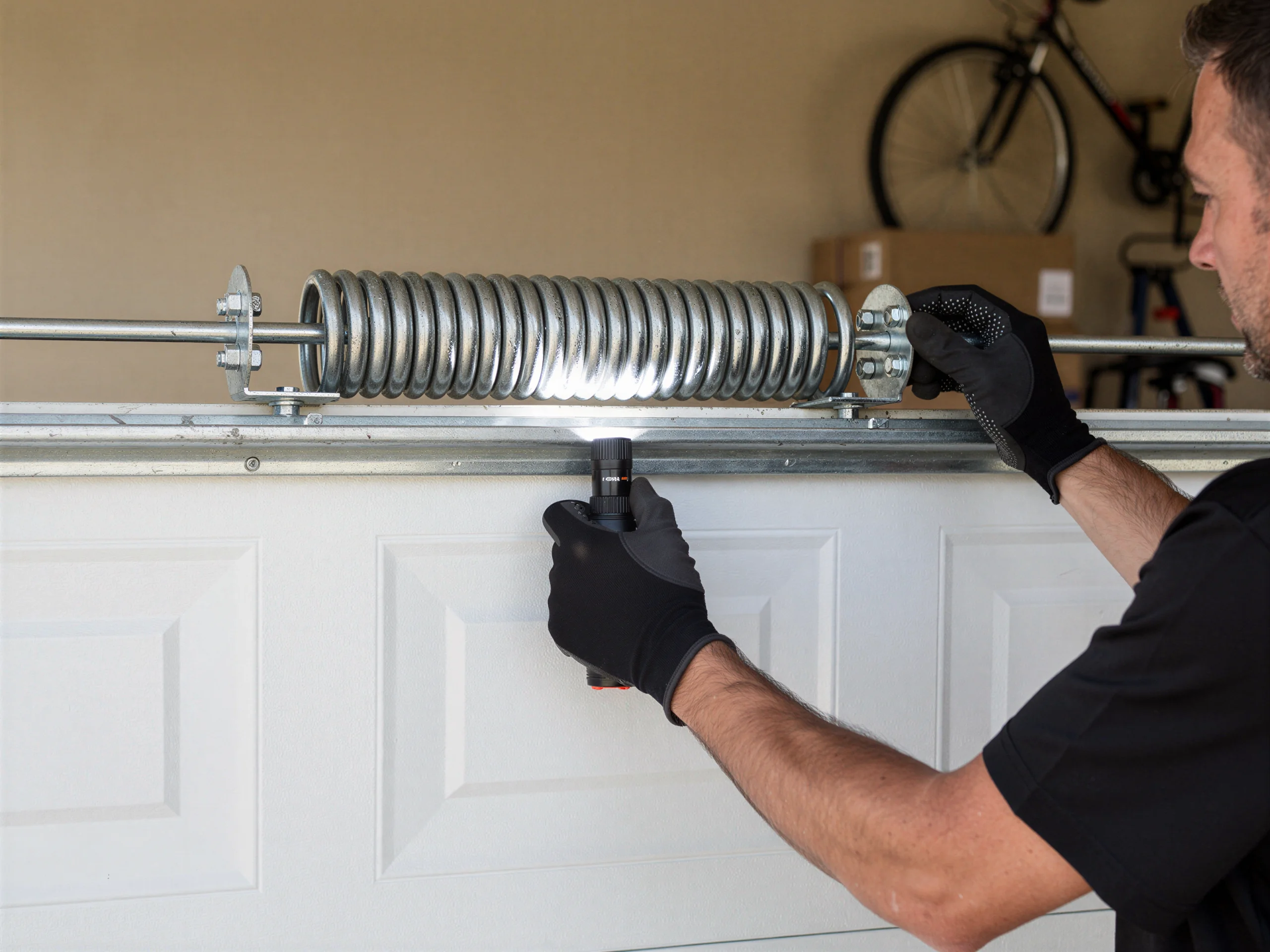
Look for a visibly separated coil (spring is broken), a door that's suddenly much heavier to lift by hand (spring has lost tension but hasn't fully snapped), or a loud bang followed by the door not moving at all (spring broke).
Noise without spring failure
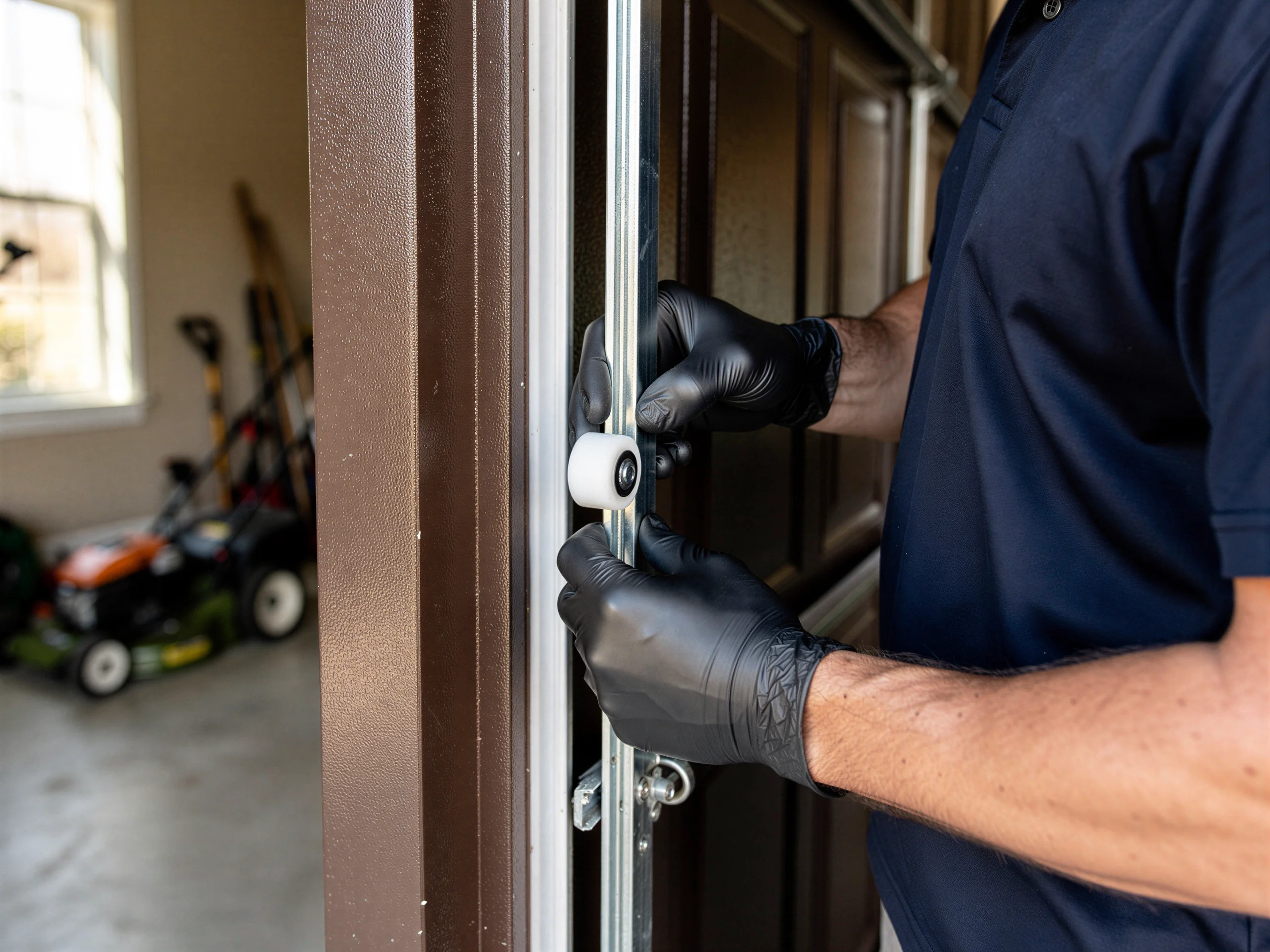
If the door opens fine but makes noise or runs crooked, that's more likely a track or roller issue, not a spring, and it's worth saying so rather than quoting a spring job you don't need.
Talk to a local pro
Garage door service in Bettendorf?
Same-day service with honest, upfront quotes.