
What Causes It Around Here
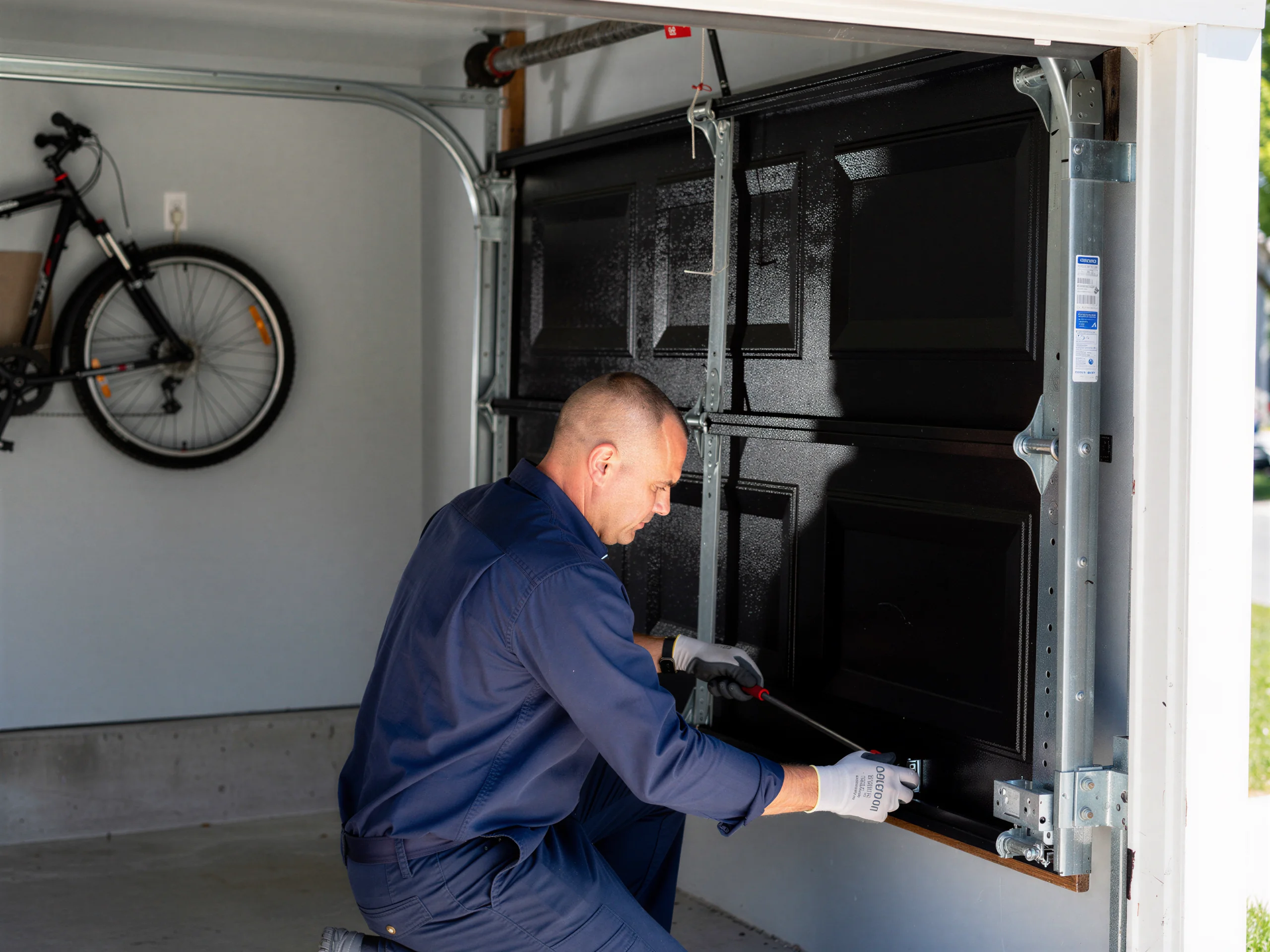
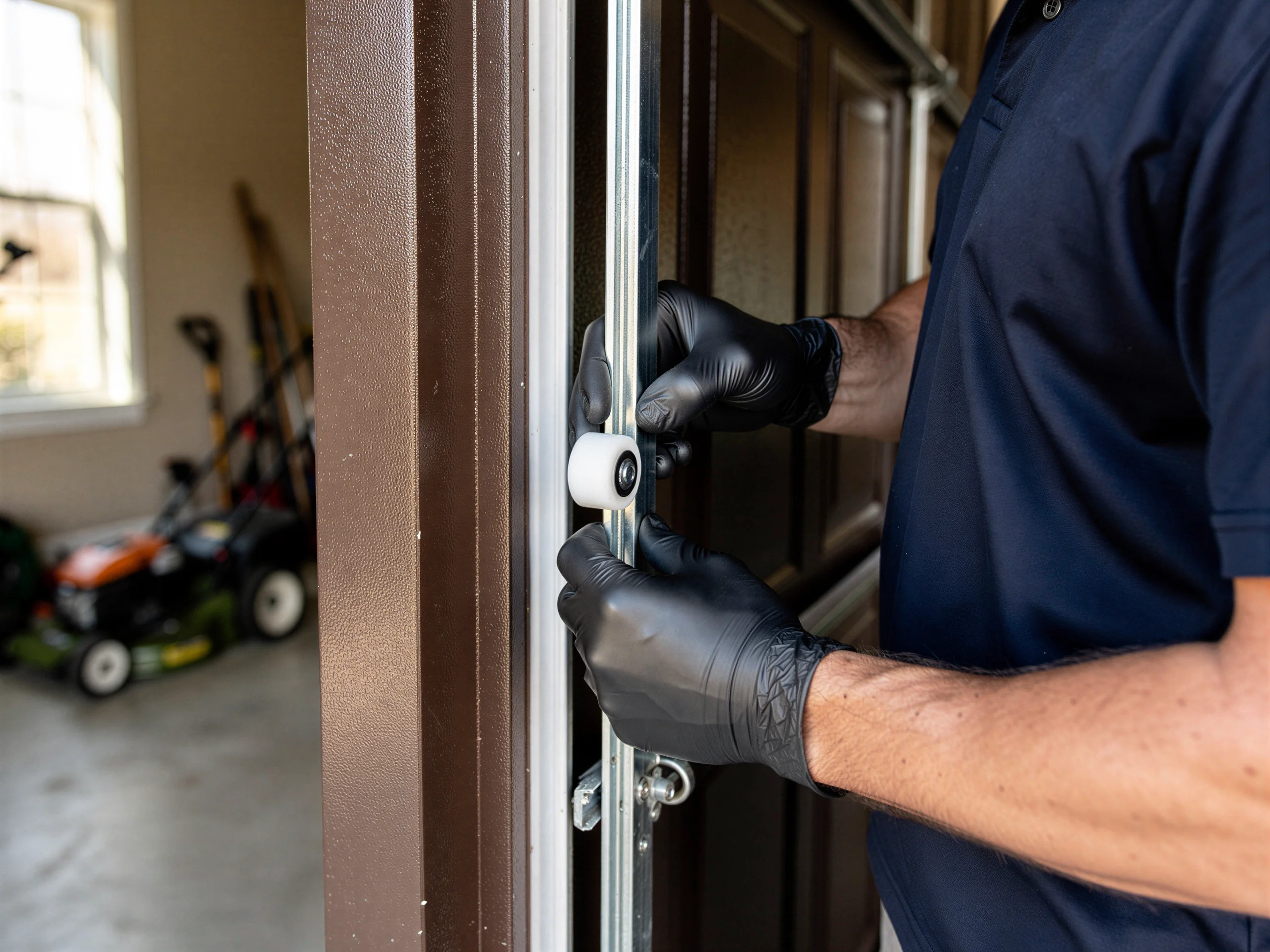
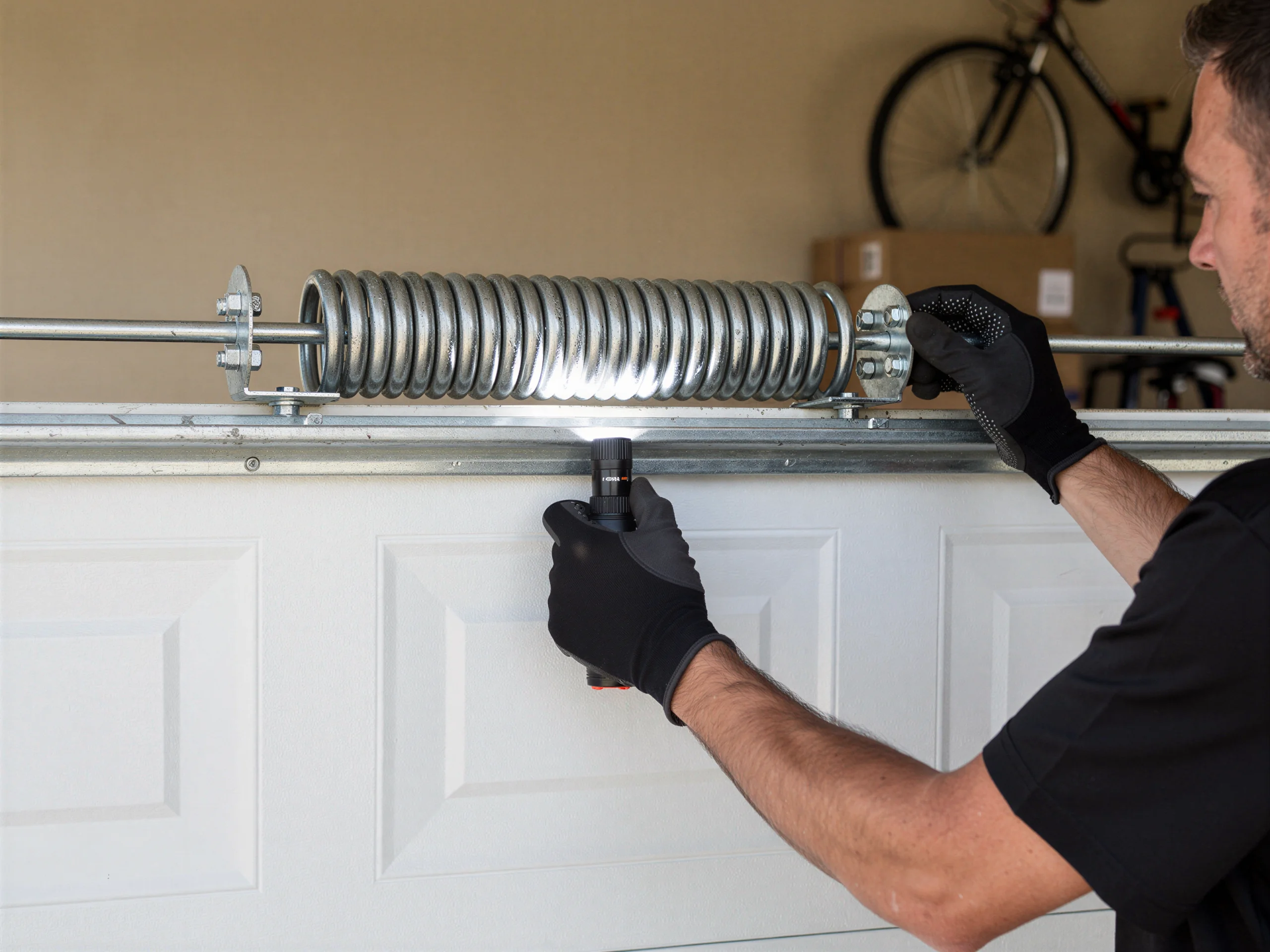
Le Claire's housing stock centers on 1979, a few years newer than much of the wider service area, which puts a lot of these garage doors right in the era of single-layer steel panels hung on extension springs rather than a torsion bar overhead. That's the door you likely have: two long springs stretched along the horizontal tracks on either side, held by a safety cable if someone updated it, sometimes not. These doors are light compared to today's insulated panels, and that's part of the problem - they rattle on the track and the hardware that holds them wears loose over twenty, thirty, forty winters.
The cold is what finishes the job. This area sits in a moderate-cold climate band, and steel contracts hard in a hard freeze. An extension spring that's been stretching and relaxing since the Carter administration doesn't flex the same way metal did when it was new - it fatigues, and it tends to let go on the first genuinely cold morning of the season, not gradually. Rollers in the same vintage are often steel-on-steel, no nylon, so they bind and chip the track edges over time too. None of this is unique to one house. It's the whole subdivision, built in the same few years off the same supplier lists.
Booking a Visit
We run out of Bettendorf, about six miles from Le Claire, so when you call about a door that won't move or a spring that's let go, we're not coming from across the river - it's a short drive.
Stocked for 1979 houses
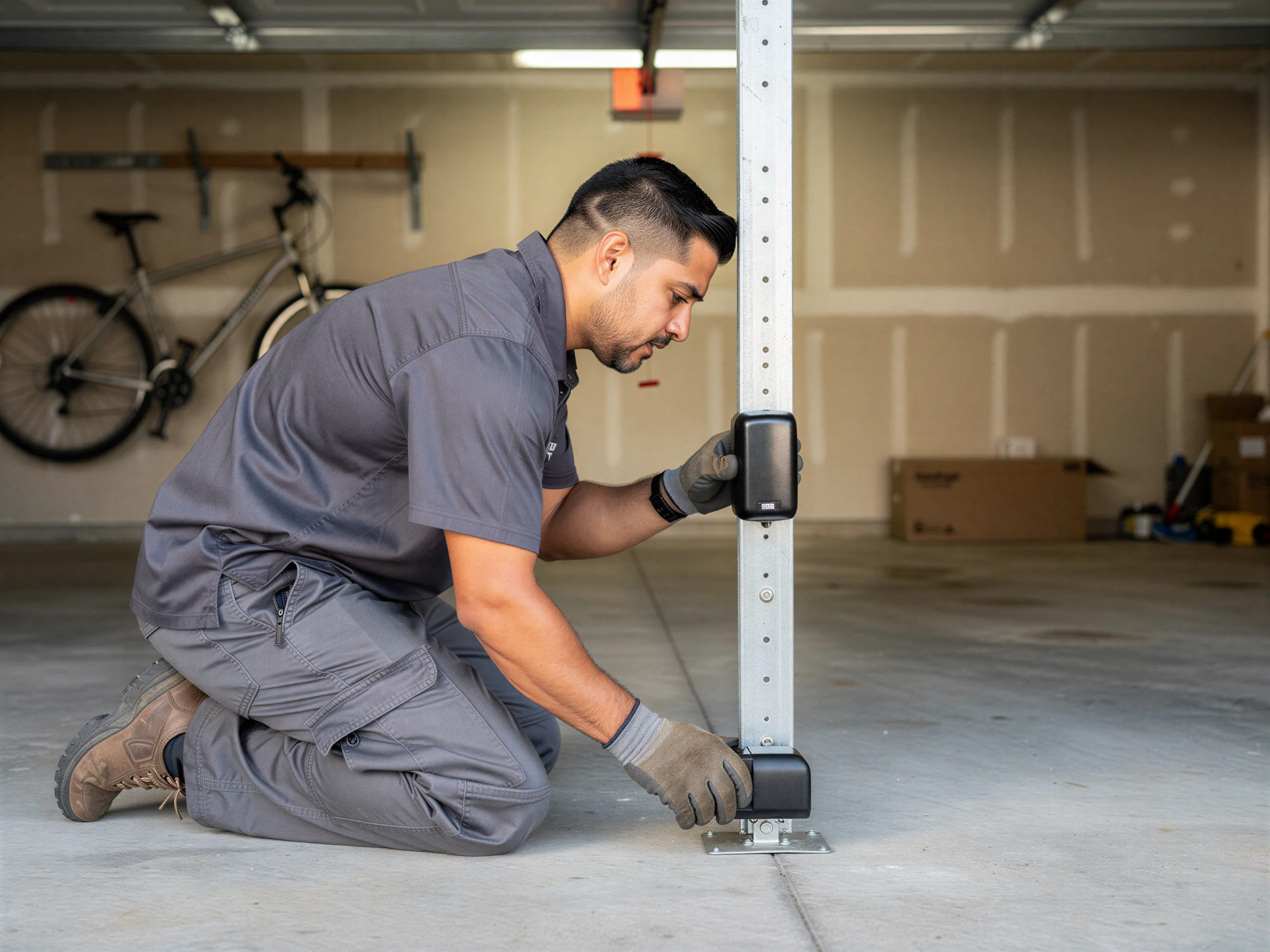
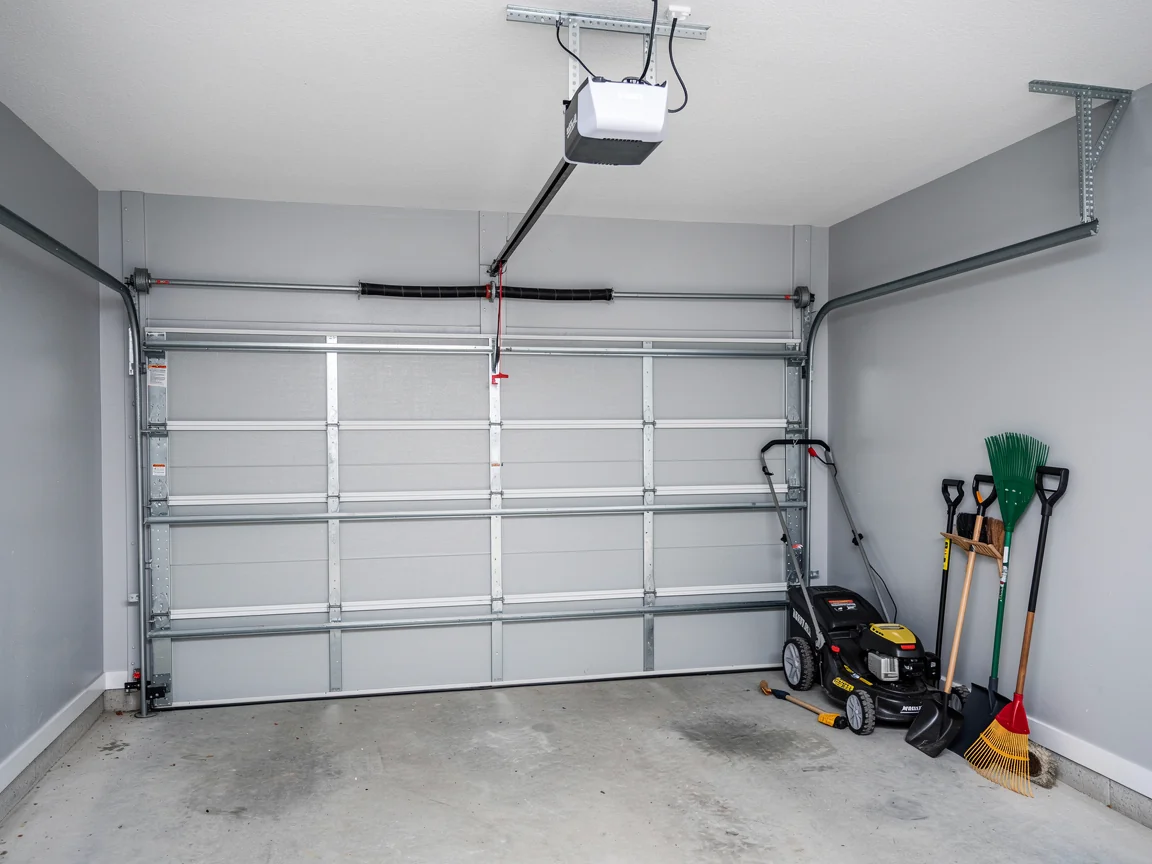
We don't carry a separate crew or depot in Le Claire itself, and we're not going to pretend otherwise. What we do is bring the truck stocked for what we already know is common in houses built around 1979: extension springs, the matching cables, and the pulleys and fittings that go with that hardware, not just torsion parts.
Symptoms to report
Tell us on the phone what the door is doing - won't open, opened and then dropped, opener runs but the door doesn't move - and we'll have a decent guess at what's broken before the truck leaves.
Repeating failure patterns
That matters more here than it sounds, because Le Claire's roughly 1,719 households skew toward a narrower band of build years than some of the surrounding towns, so the failure patterns repeat house to house.
Stocked Parts
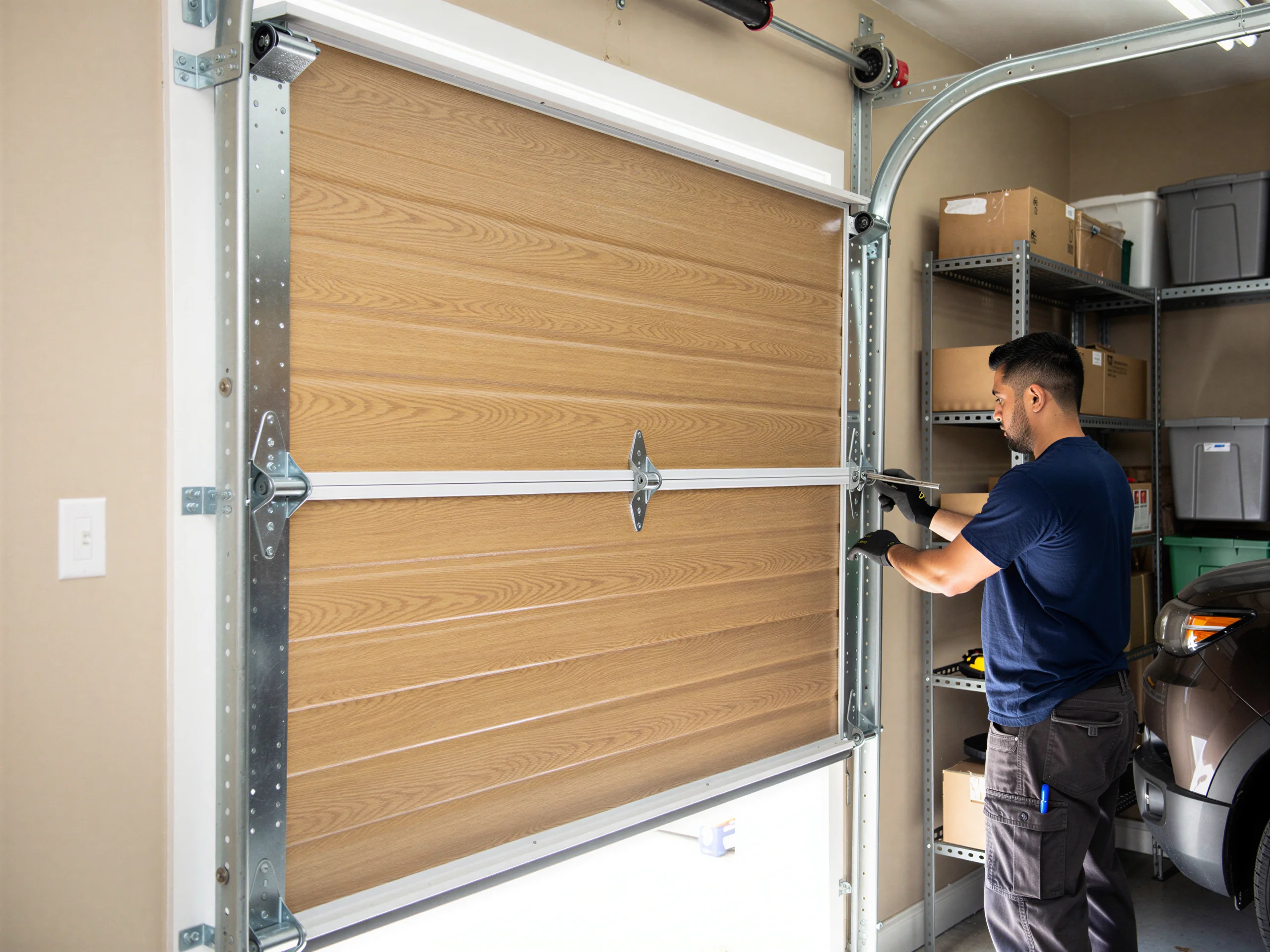
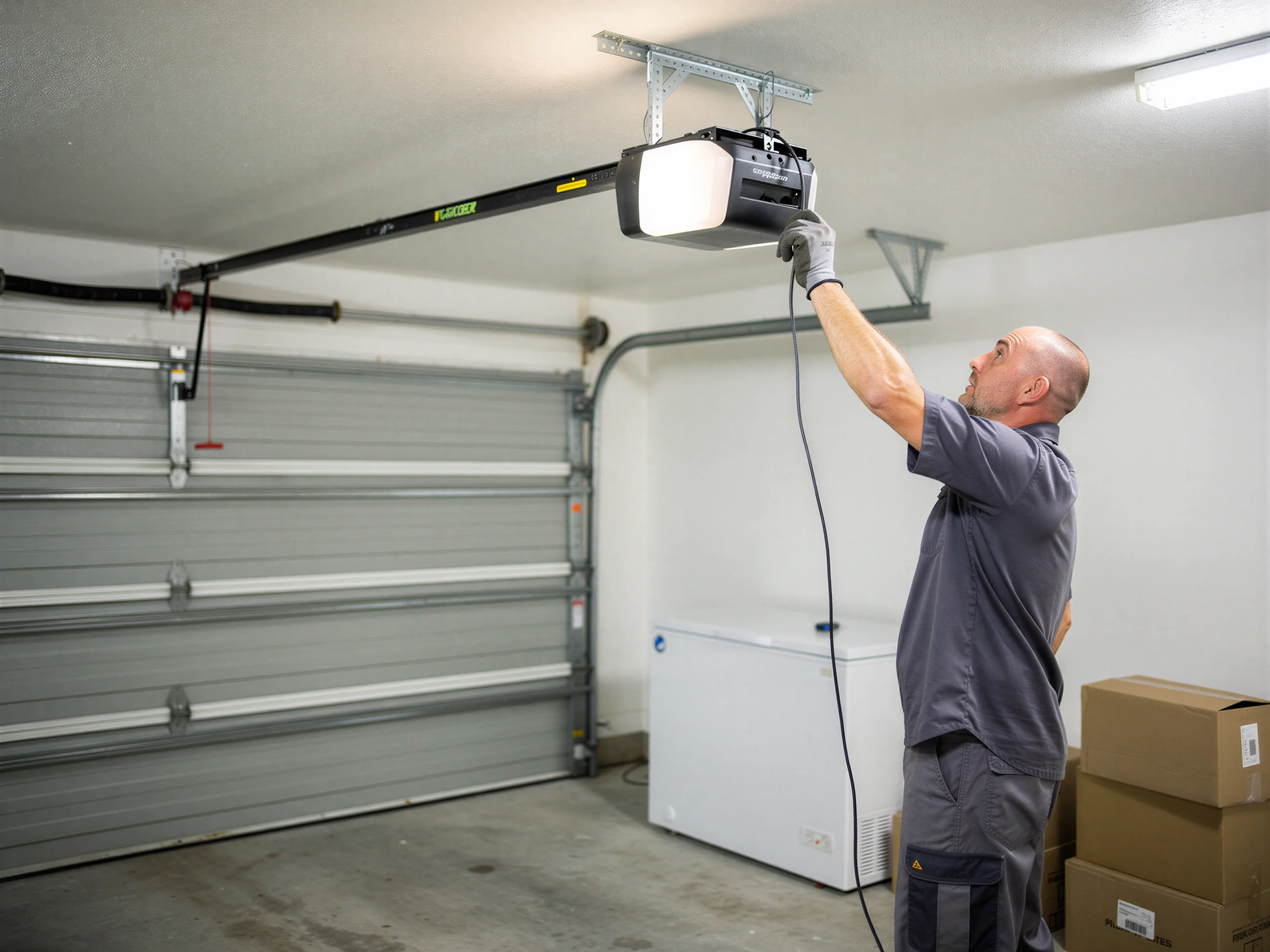
For a door from this era, the parts that fail most are extension springs (we carry the common sizes), lift cables, the pulley and bracket assemblies that extension-spring systems rely on, and openers from the chain-drive generation that was standard in homes built through the late 1970s and into the 1980s. Rollers and hinges we stock as a matter of course since they wear on any door, any year.
What we don't stock on the truck is anything obsolete enough that it's special-order only - certain opener logic boards or oddball track widths from a one-off installer decades back. If your door needs one of those, we'll tell you straight that it's a parts-lead-time job, not a same-visit fix, rather than quote you something we can't deliver.
The DIY Question
An extension spring under tension is not a safe thing to unhook yourself, and on a door from the 1970s-era hardware generation, the safety cables that are supposed to catch a snapped spring are often missing or rusted through - they were optional for a long stretch and not everyone added them later. If a spring's gone, that's a call, not a weekend project.
What you can reasonably check yourself first: whether the opener has power, whether the track has an obvious bend or gap, and whether something's physically blocking the door's path. If the door is heavy, sagging on one side, or the panels are visibly separating at a seam, that's past a repair worth paying for - replacement is usually the honest answer once a door that age starts failing structurally rather than just losing a part.
Talk to a local pro
Garage door service in Bettendorf?
Same-day service with honest, upfront quotes.