Time on the Job
Camanche is small. Roughly 1,942 households, compared to about 11,334 spread across the full service area we cover out of Bettendorf. That difference matters more than it sounds.
Uniform housing patterns
In a town this size, we're not working a dense grid of streets with a dozen different builders and eras mixed together block by block. The housing here runs closer to one pattern, which means the failures we see also run closer to one pattern.
Less varied calls
A bigger town spreads call volume across more housing types, more renovation history, more variation. Camanche doesn't have that spread. When a spring lets go on a Tuesday morning, there's a decent chance the house two doors down has the same door, the same hardware, and the same age of torsion system quietly headed toward the same failure.
Slow months stay normal
That's useful information when we're loading the truck before we even see the job. It also means a slow month here isn't unusual - fewer houses means fewer calls, and that's fine. It's not a sign we're not paying attention to the town, it's just math.
What Causes It Around Here
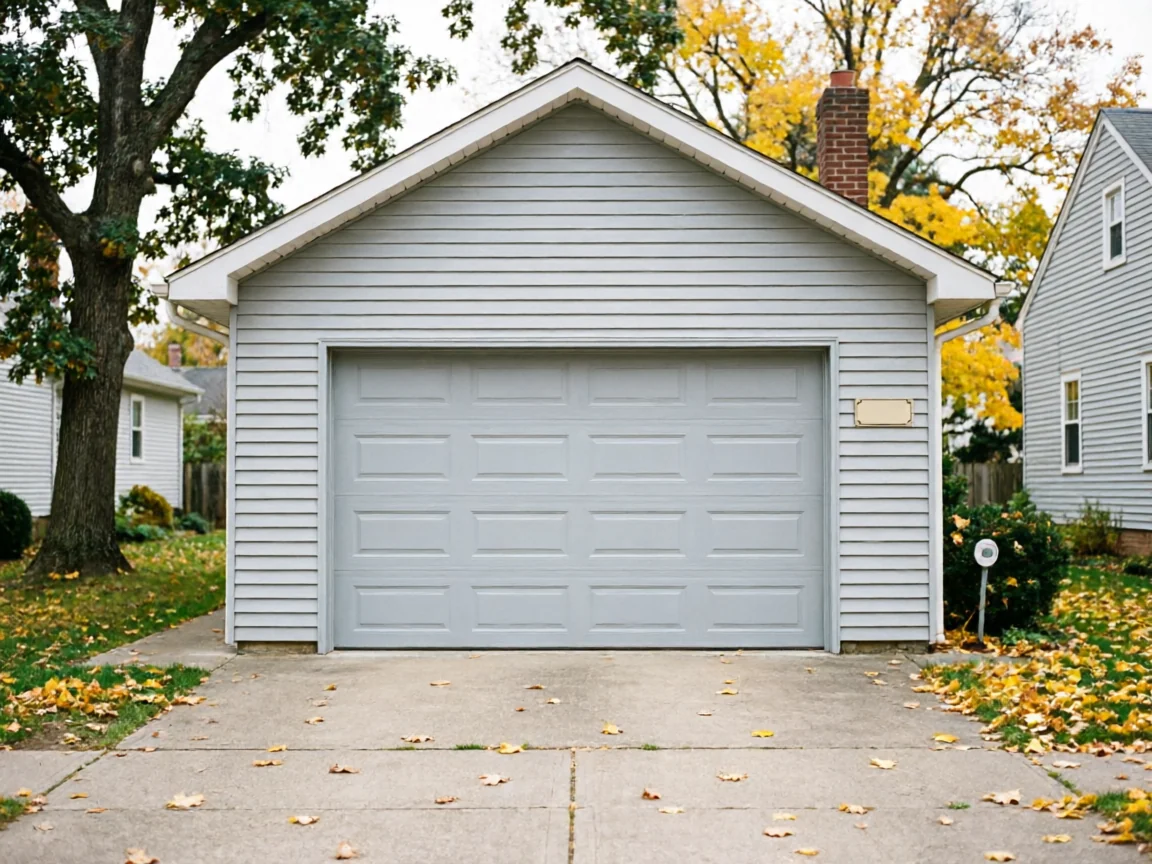
Housing in Camanche runs around 1972 on average, which lines up with the broader 1948 to 2001 range across the towns we cover - this corner of it sits almost exactly in the middle. That means steel panel doors, older torsion or extension spring setups, and track hardware that's had fifty-plus years to loosen, rust, or get bent by a car bumper at some point along the way.
The cold-moderate climate here does its own damage over that span. Temperature swings work on the metal fatigue in a torsion spring the same way they work on anything else that flexes under load thousands of times a year - eventually it just lets go, usually on the coldest morning of the week when the lubricant in the coils has stiffened up. Rollers on original steel tracks wear unevenly over that many winters too, especially on doors that never got re-leveled after the original install.
What we don't see as much of here: modern insulated doors with sealed bearing systems, because the housing stock just isn't that new. If your door was swapped out in the last decade, you're the exception, not the rule, and your failure pattern probably looks different from your neighbor's.
Stocked Parts
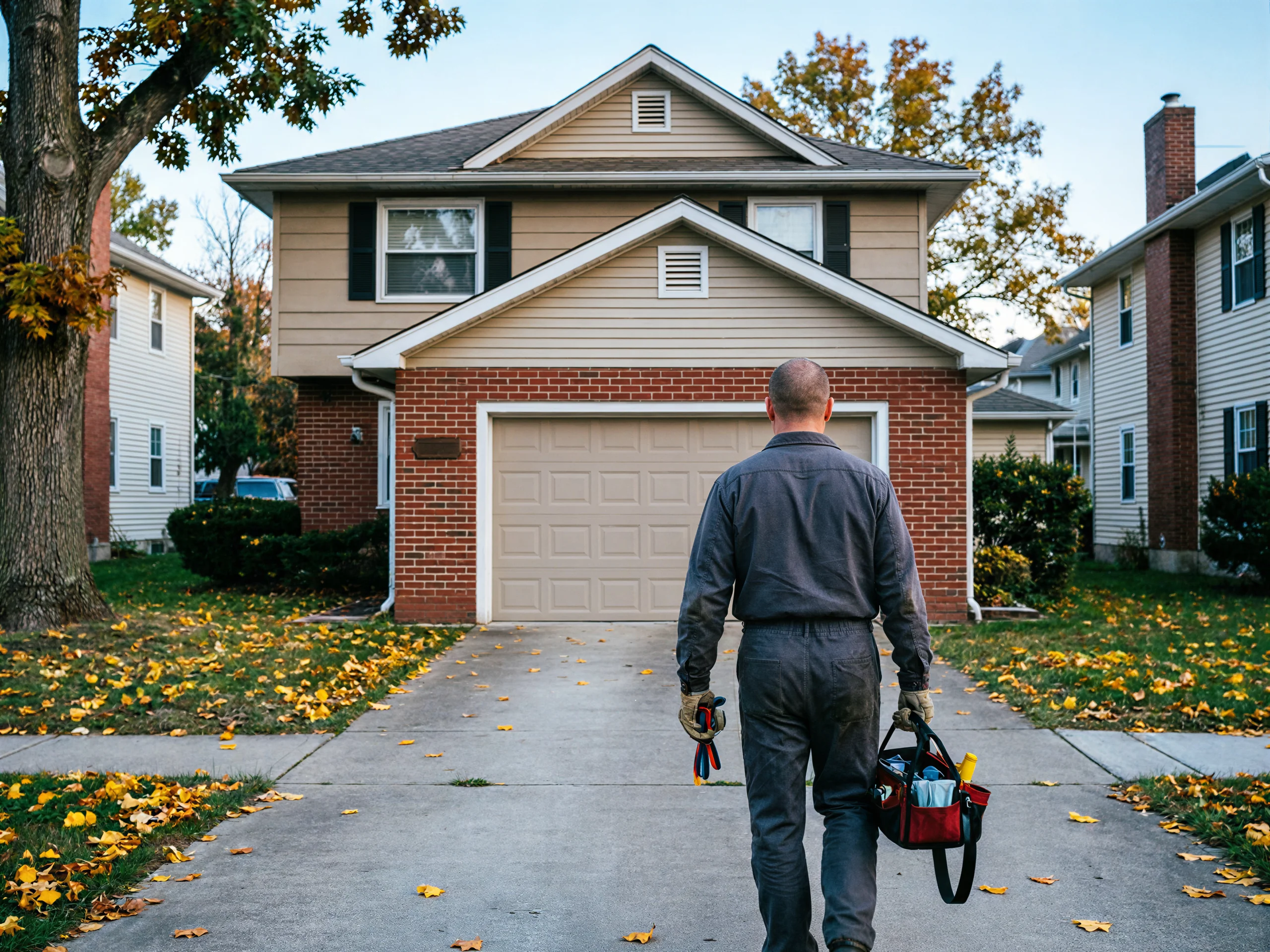
Because the housing here clusters around a narrow build era, the truck carries parts sized for that era first: standard torsion springs in the common wind and wire-gauge combinations that fit doors from the 1960s through the 1980s, extension spring sets for the older lift systems some of these houses never upgraded off of, and rollers and hinges sized for steel panel doors rather than the heavier insulated sections you'd find on newer construction.
The honest limit here: not every spring size or opener gear is something we carry on the shelf. A less common torsion spring, a specific carriage for an older chain-drive opener, or a part for a door that's already been non-factory-modified sometimes means a short order delay rather than a same-visit fix. We'd rather tell you that up front and schedule a return trip than guess at a substitute part that won't hold up.
What the Fix Involves
Most emergency calls here start the same way: the door won't move, or it moved and then dropped. First step is figuring out which - a broken spring versus a snapped cable versus an opener that's lost its grip on the trolley are three different repairs that look identical from a homeowner's side of the door.
Releasing tension safely
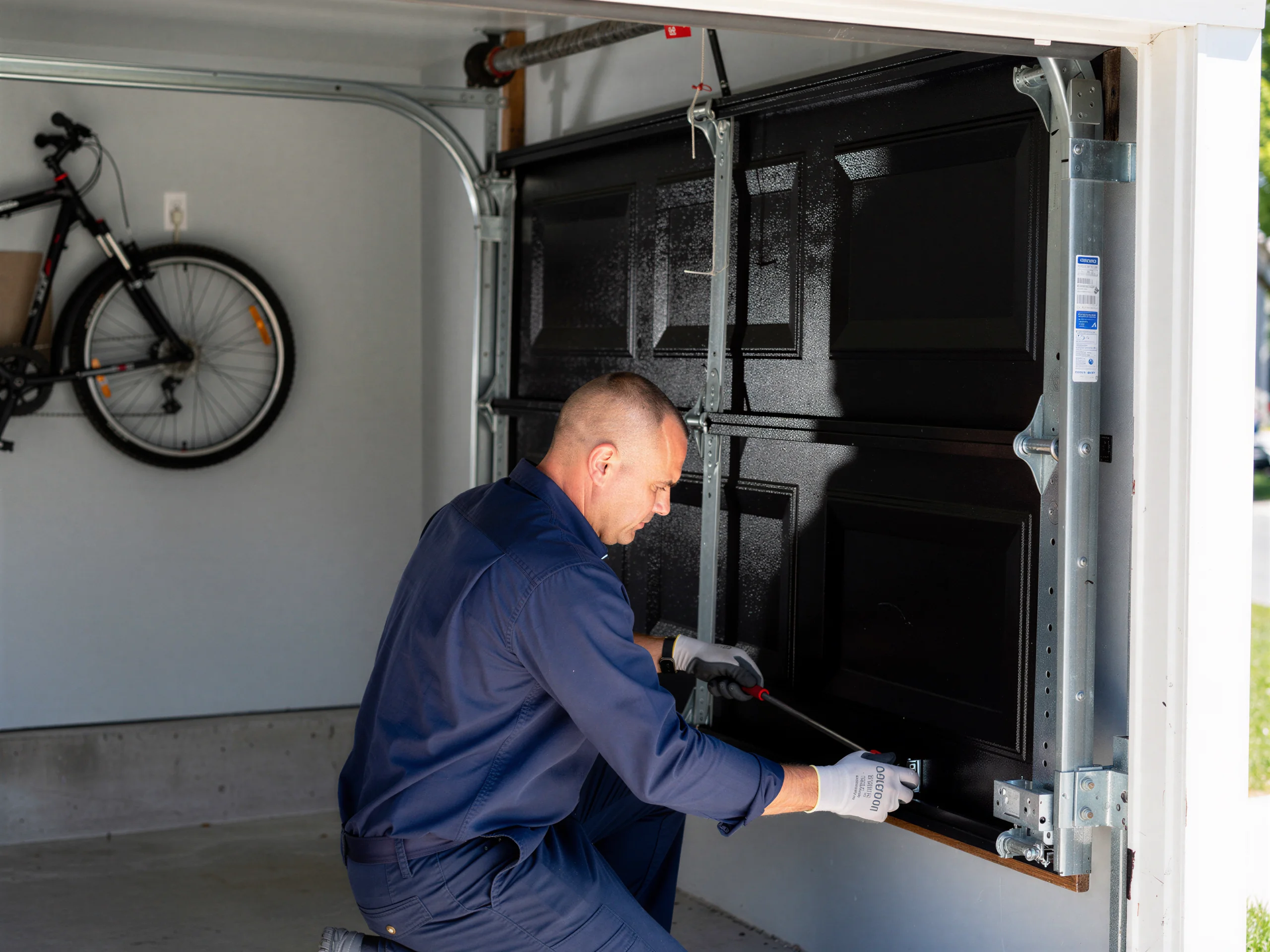
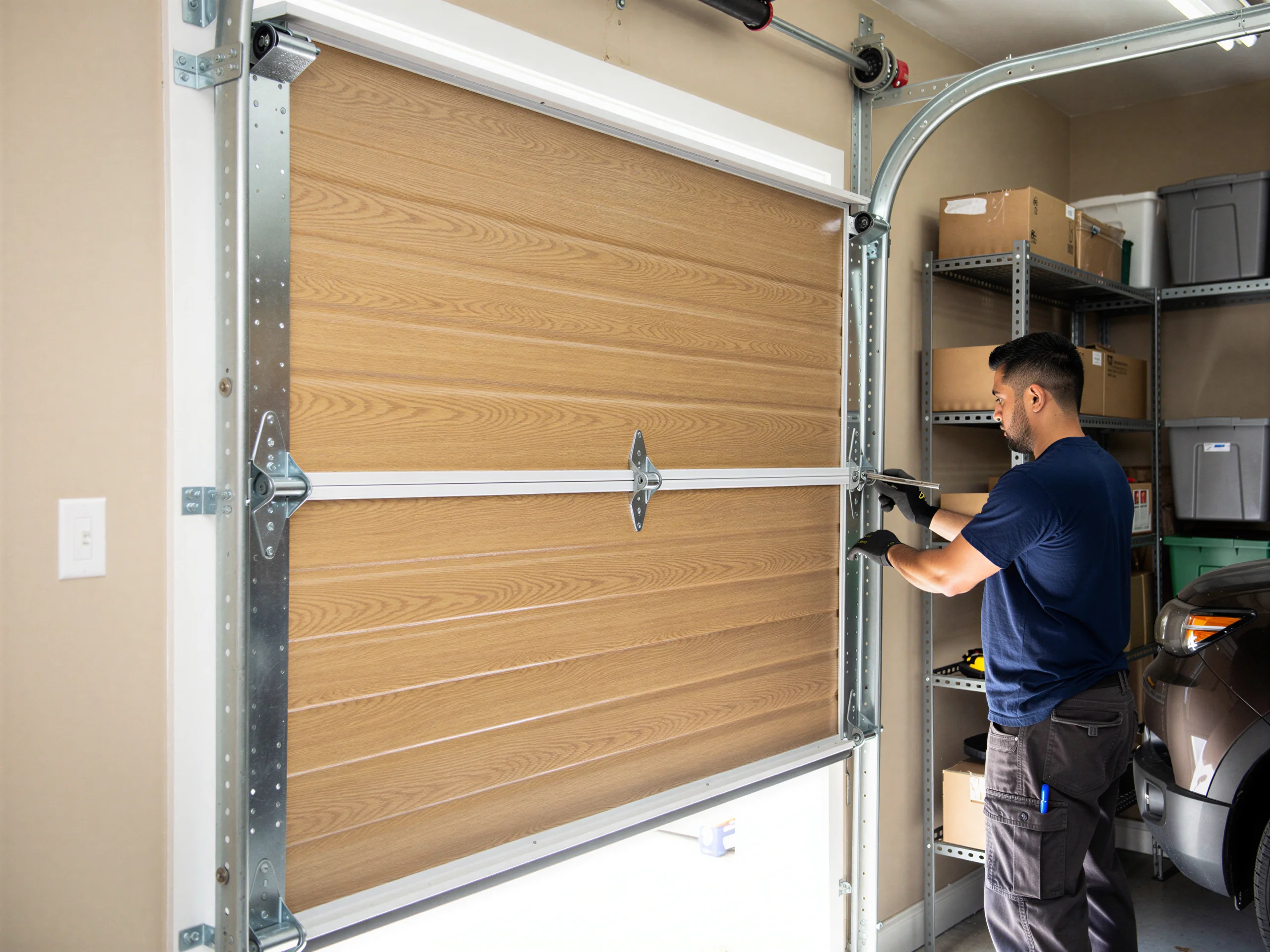
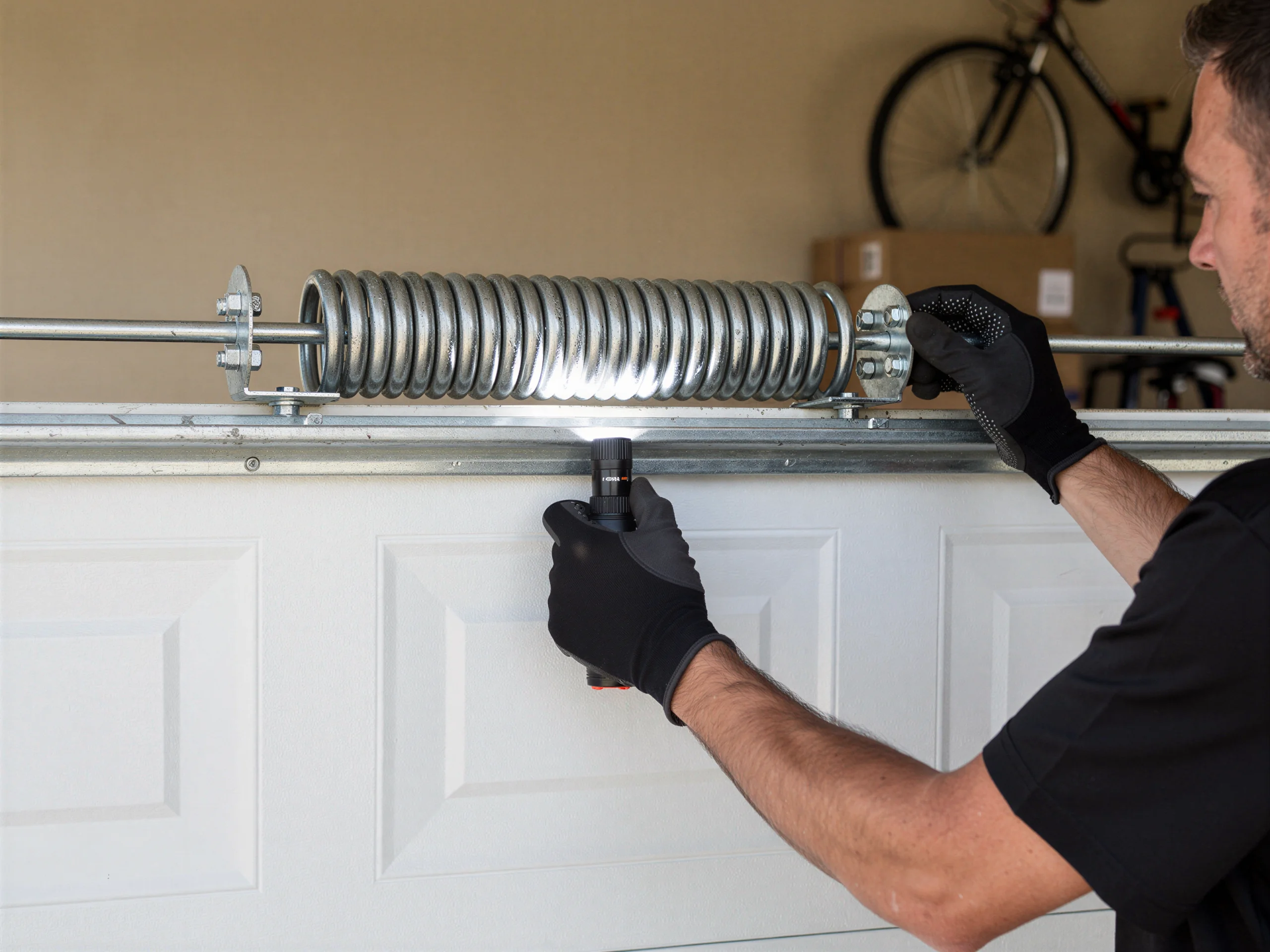
On a spring job, that means releasing tension safely, pulling the broken coil, matching wind direction and wire gauge to the existing hardware (or replacing both springs if the other one is close behind on wear), and reseating the door on the track before testing balance by hand with the opener disconnected.
House-level track checks
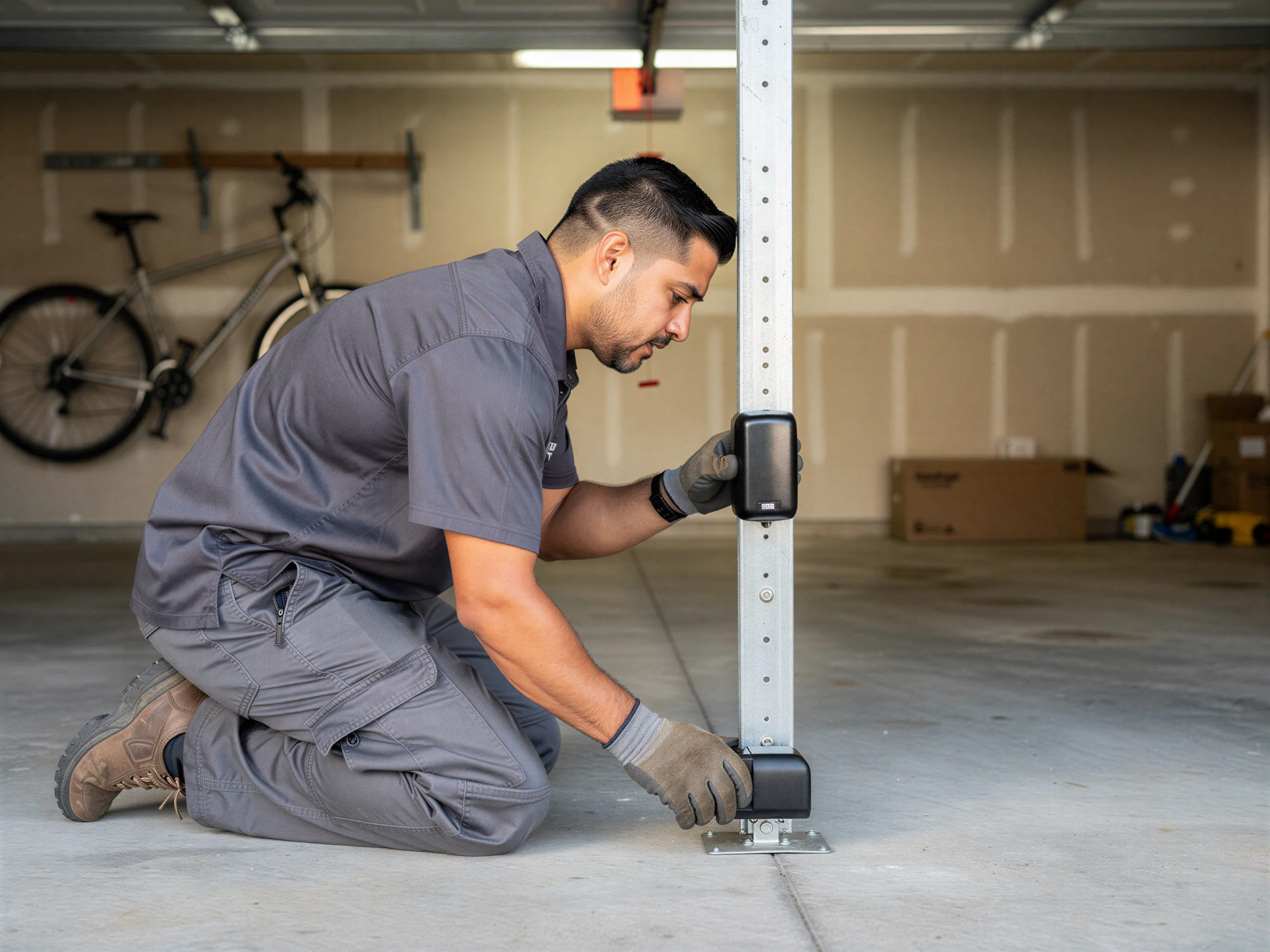
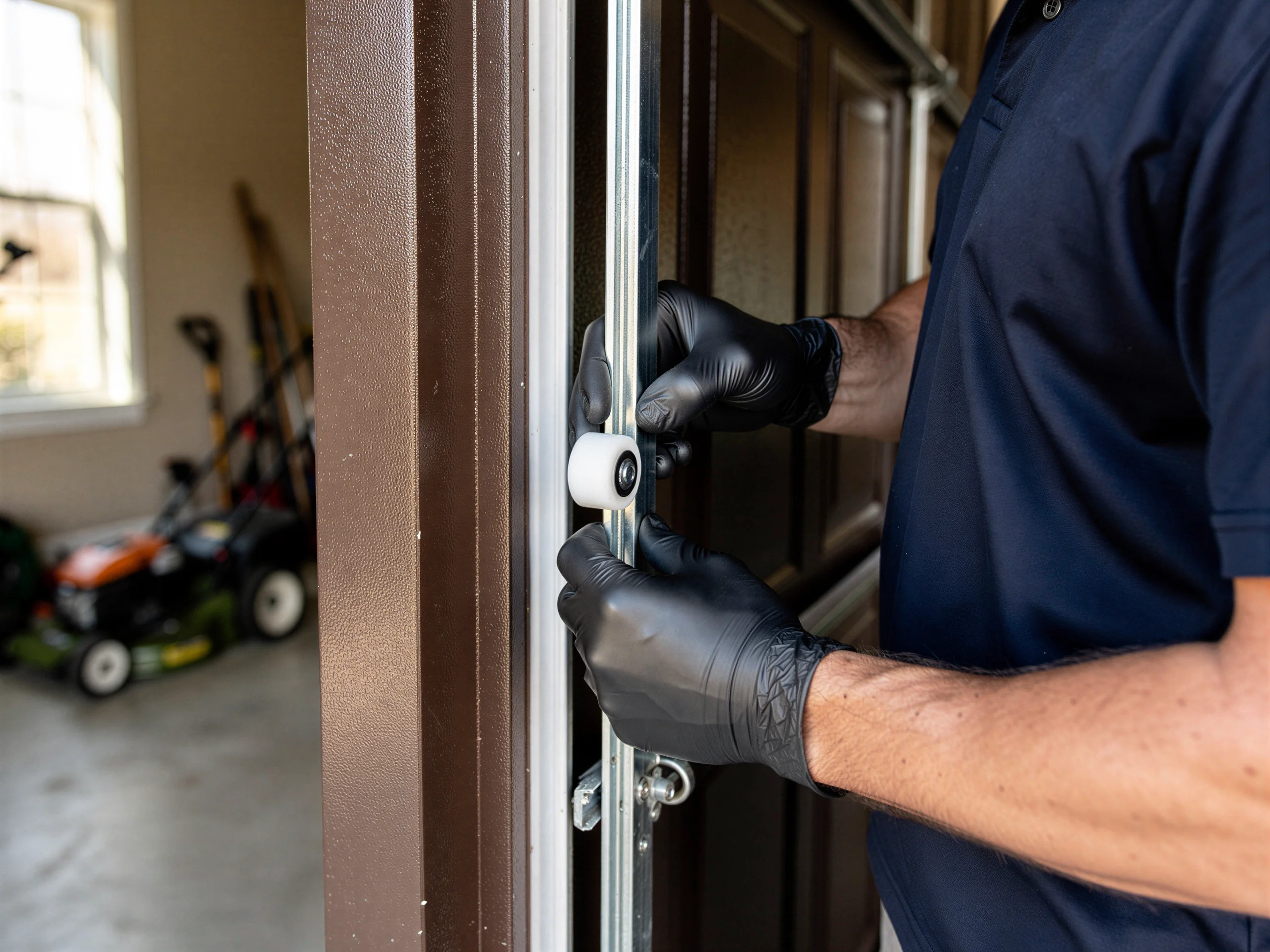
On a track or roller issue, it's usually a matter of checking the track alignment against the level of the house itself, since houses this age have often settled a bit since the original install.
Manual balance testing
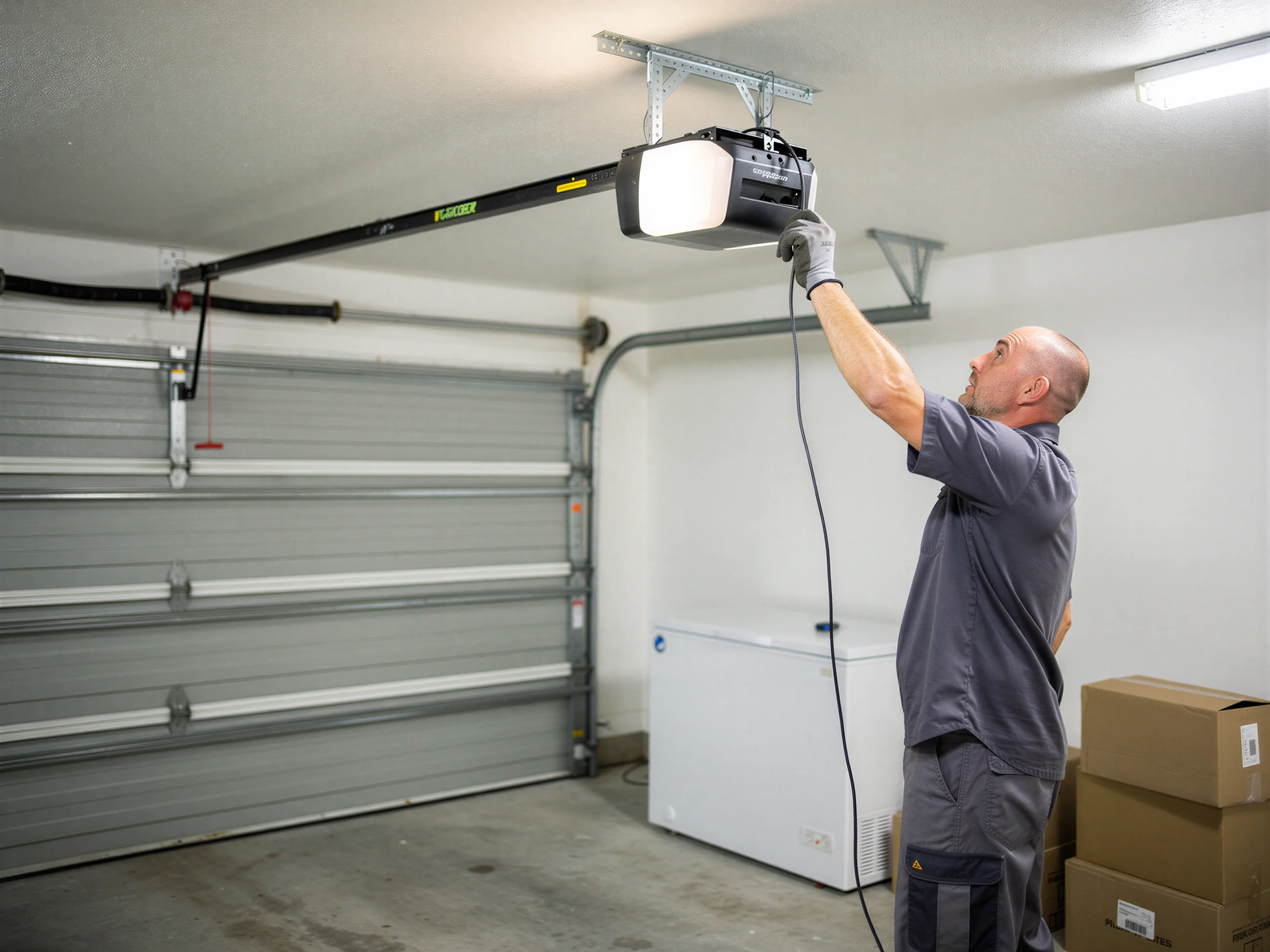
We test the door manually before ever touching the opener switch again. A door that doesn't balance right under its own weight will keep stressing whatever opener gear is attached to it, turning a spring repair into an opener repair within a few months if it's skipped.
The Cost of This Job
We're not going to quote a number here that doesn't hold up once a tech actually sees the door, so we won't guess at one.
Matched pair pricing
What we can tell you is what drives the cost up or down on a job like this: whether it's one spring or a matched pair, whether the cable needs replacing along with it, and whether the track needs realignment or just a spring swap.
Income and repair decisions
Median household income in Camanche runs $68,727, noticeably below the $84,380 median across the wider area we serve. We mention that because it's part of why we'll always walk through the repair-versus-replace decision honestly rather than defaulting to the bigger job.
Long-term replacement math
On a door this age, sometimes a full replacement does make more sense long-term than patching a fifty-year-old track system piece by piece - but that's a call worth making with real numbers in front of you, not a sales pitch.
The DIY Question
A torsion spring under load holds enough stored energy to break a bone or worse if it lets go while you're working on it, and that risk doesn't scale down just because the door is old or the house is modest. If the spring is broken and the door won't move, that's not a weekend project - leave it alone and call it in.
What you can safely check yourself: whether the opener has power, whether the track has an obvious obstruction, and whether the door was manually disengaged from the opener (the red cord) by mistake.
Talk to a local pro
Garage door service in Bettendorf?
Same-day service with honest, upfront quotes.