The DIY Question
A lot of Eldridge homeowners ask whether they can swap an opener themselves, and for a straight unit-for-unit replacement on a door that already tracks true, the answer is often yes if you're comfortable with a drill, a ladder, and reading a wiring diagram twice before you touch anything.
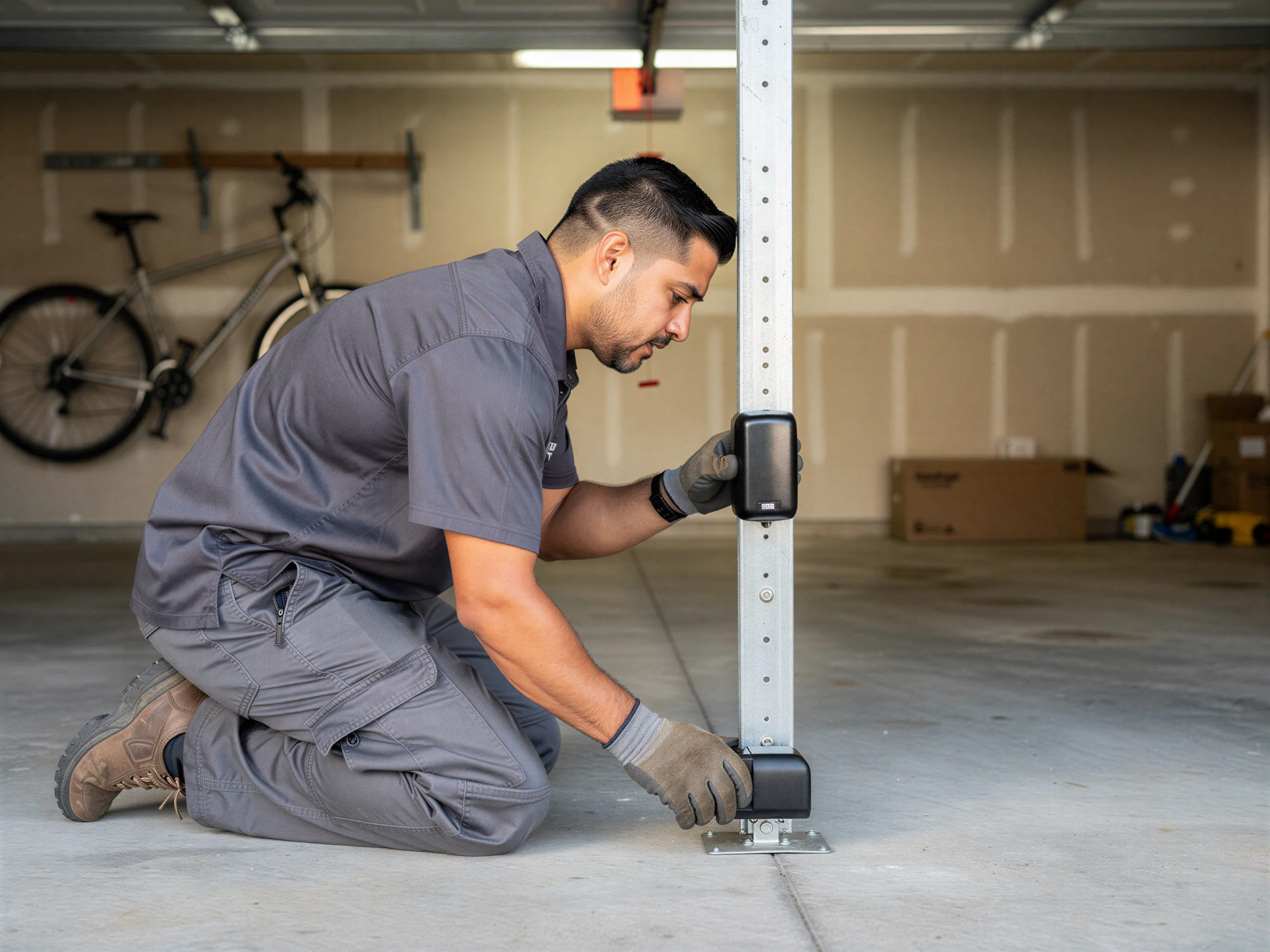
Sensor alignment and force
Where it stops being a weekend job is the safety sensor alignment and the force settings, which matter more on newer doors with lighter-gauge panels than on the heavier older stock.
Opener-only replacement
Since most houses in this pocket of the service area were built around 2001, you're usually dealing with doors and track hardware that are still in reasonable shape, which means the opener is often the only thing that actually needs replacing rather than the whole assembly. That's a simpler job than it is on a 1970s door, but simpler doesn't mean risk-free.
Rail and bracket squareness
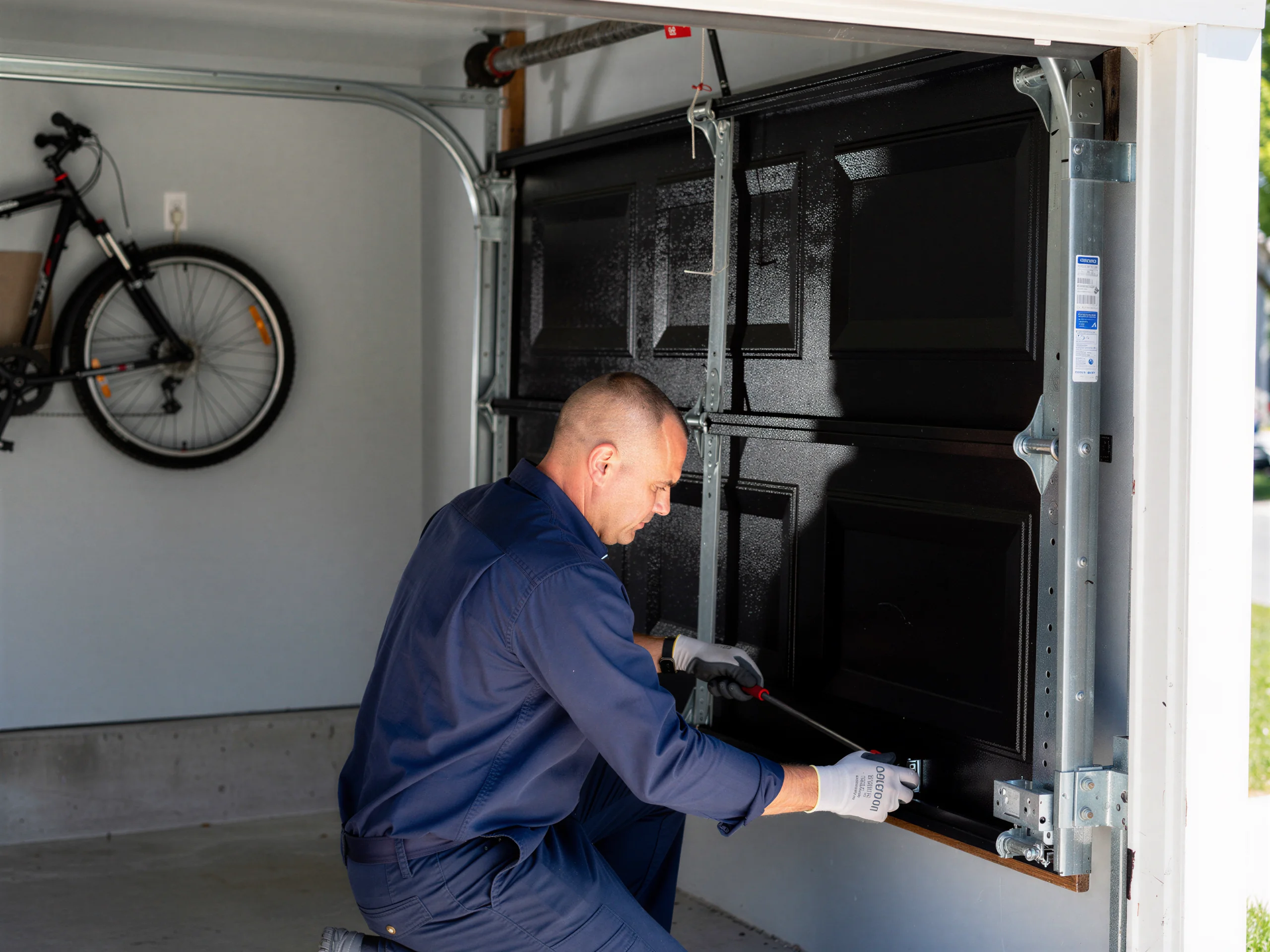
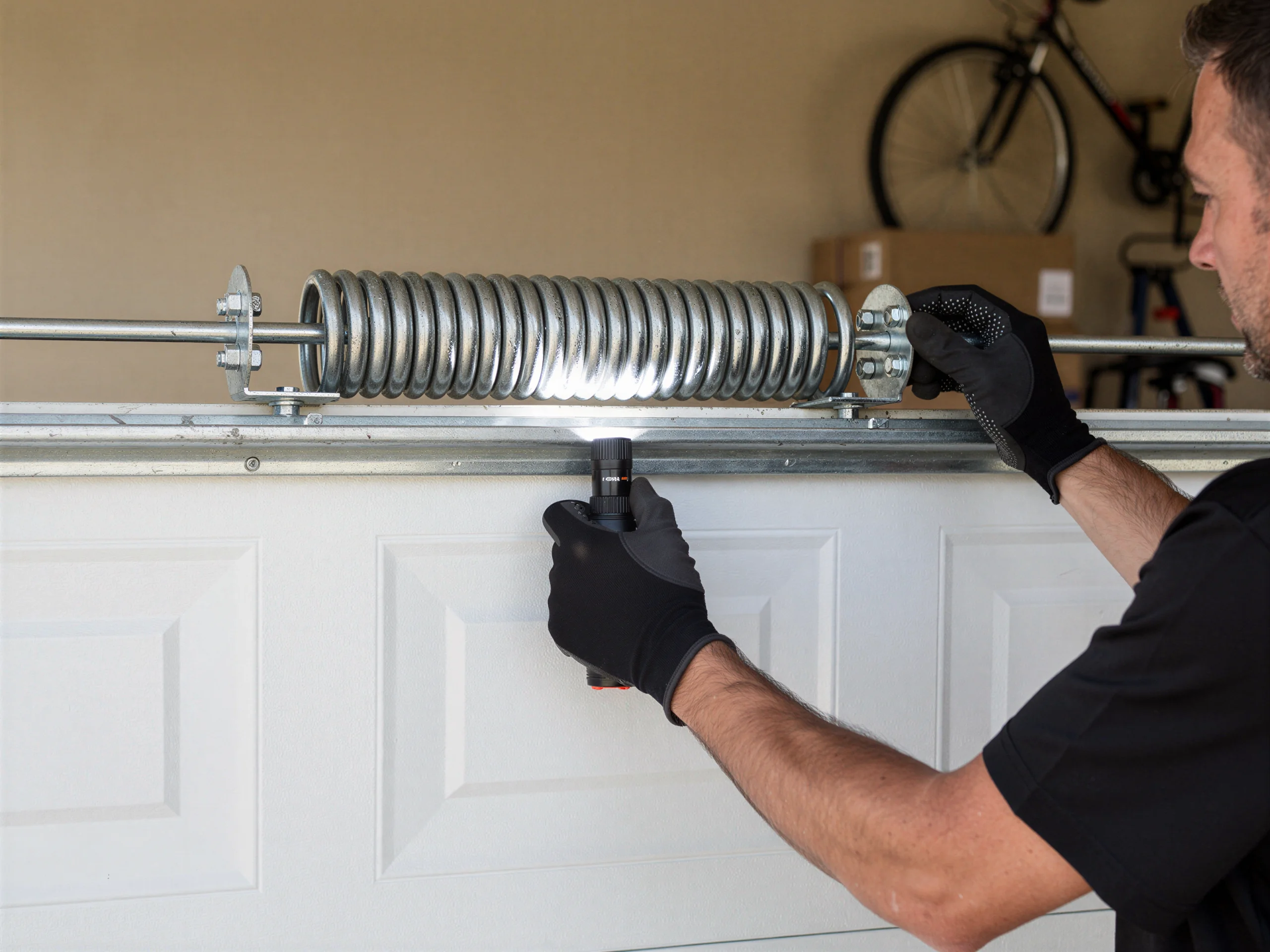
The honest limit here: if your existing rail or mounting bracket is out of square, or the door itself is sagging, installing a new opener on top of that just transfers the problem to new equipment. We'll tell you if that's what's happening instead of just bolting on the unit and leaving.
Booking a Visit
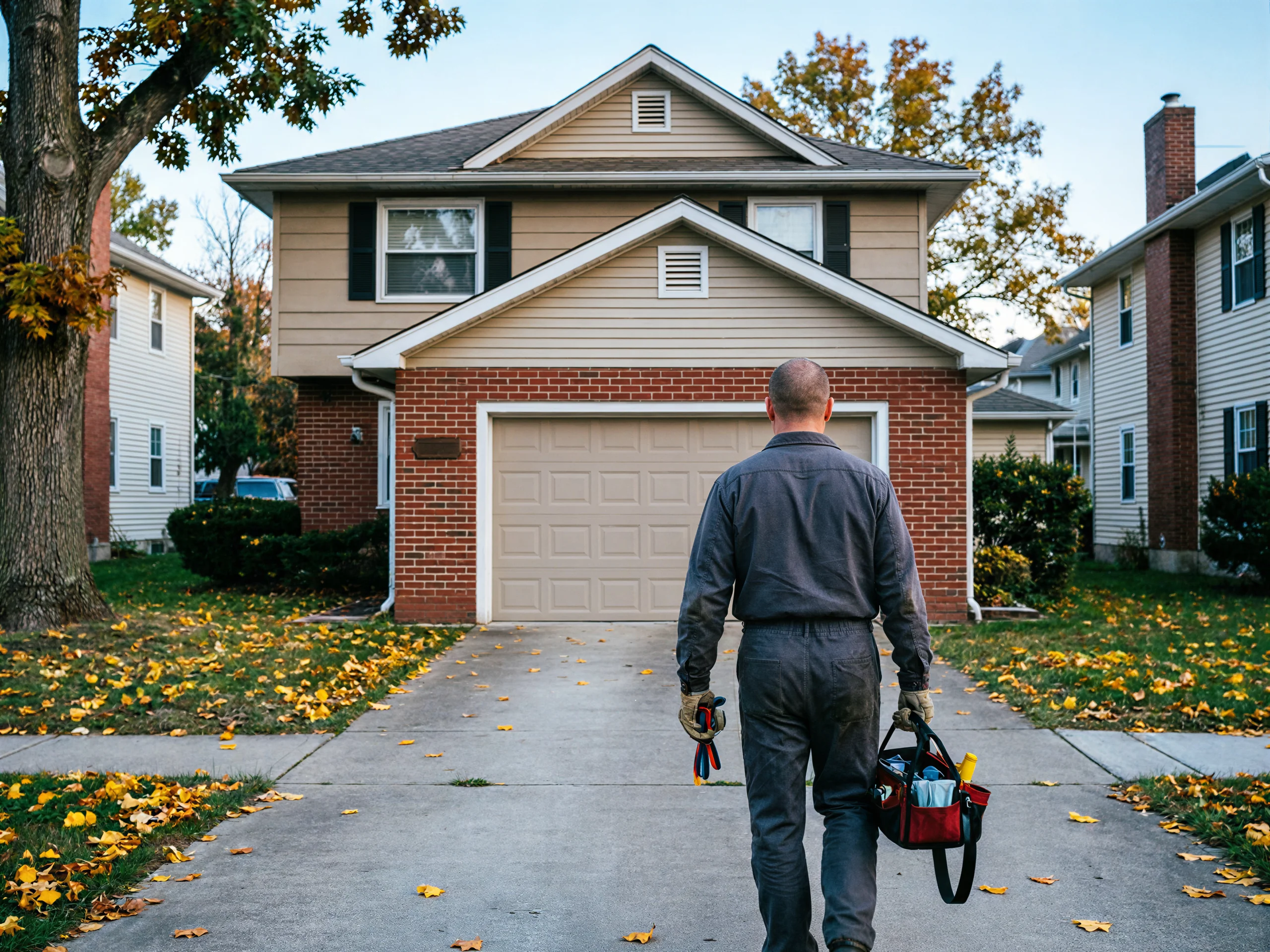
We run out of Bettendorf, about 7 miles south, so a visit to Eldridge gets scheduled as a dedicated trip rather than a drop-in between other calls.
Booking ahead for windows
That's not a complaint, it's just how the route works, and it means booking ahead gets you a tighter window than trying to squeeze in same-day. We don't keep a branch or crew stationed in Eldridge, so every job here starts with that drive, and we plan the day around it rather than pretending otherwise.
Coordinating with contractors
If you're coordinating with a contractor or an electrician for a new build, let us know the timeline early so we can line the opener install up with their schedule instead of making two trips out.
The Symptom
In a neighborhood built mostly around 2001, the opener failures we see out here tend to be electronic rather than mechanical: a logic board that's finally given out after two decades, a remote that won't pair, safety sensors that have drifted out of alignment from a bump or a shelf installed too close to the beam. That's a different failure pattern than the chain-stripped, gear-stripped openers you'd expect on an older door working harder than it should. If your opener runs but won't respond to the wall button, or the light blinks and the door won't move, that's almost always the board or the sensors, not the motor itself, and it's worth checking before assuming you need a full replacement.
The Cost of This Job
We don't have a posted price list here, and giving you a number without seeing the door would be guessing. What we can tell you is that a clean opener swap on a door that's already aligned, which is the more common case on 2001-era construction, is a more contained job than one where we're also correcting track or spring issues. Household income in this part of the service area runs well above the wider area median, and we see that reflected in homeowners opting for mid- to upper-tier openers with battery backup and smartphone control rather than the base unit, but that's a choice, not a requirement.
What the Fix Involves
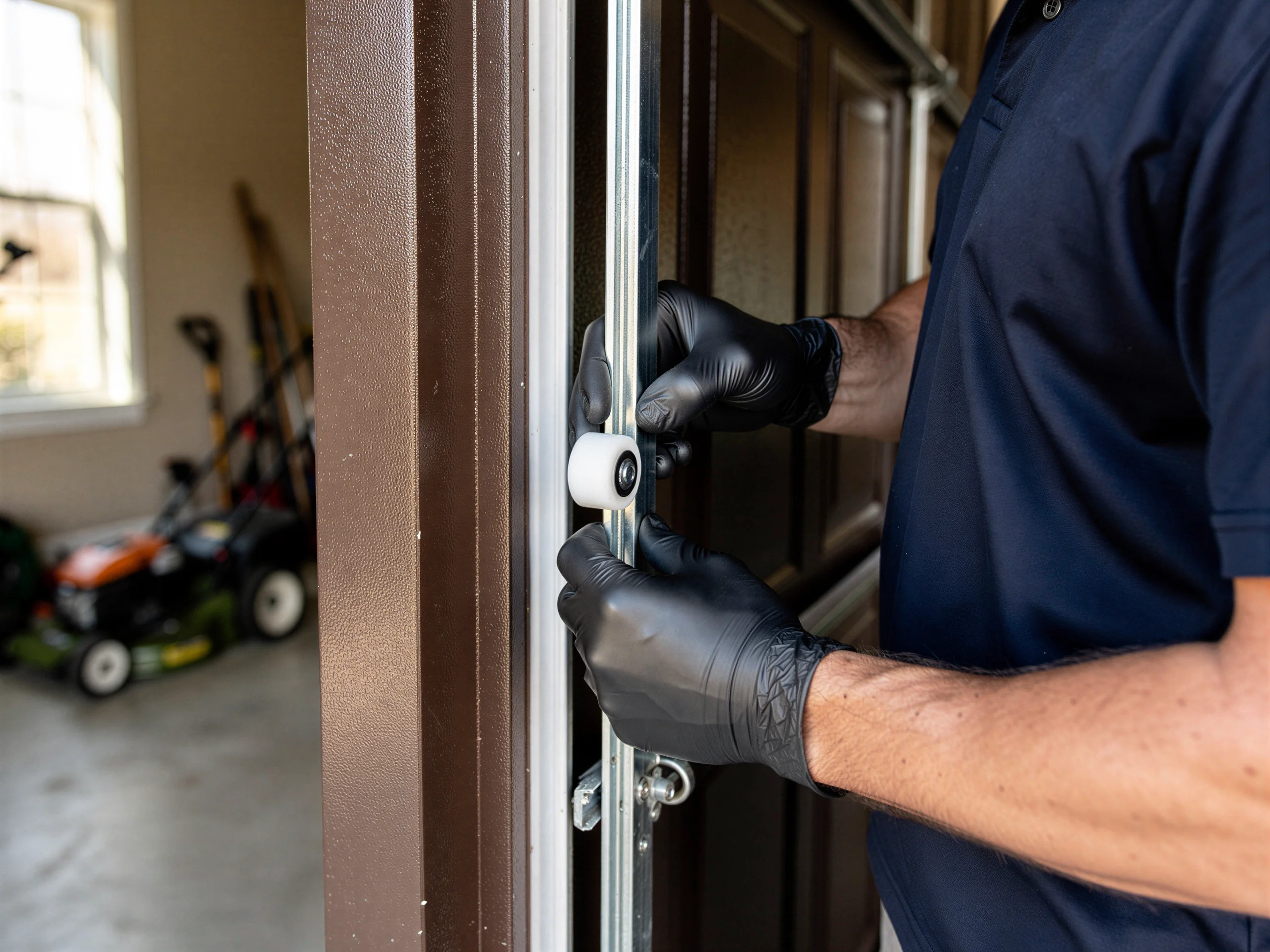
On a 2001-era home, the install usually starts with confirming the existing rail and header bracket are square before anything new goes up, since reusing sound hardware saves you money and reusing bent hardware just hides a problem.
Motor mounting and tensioning
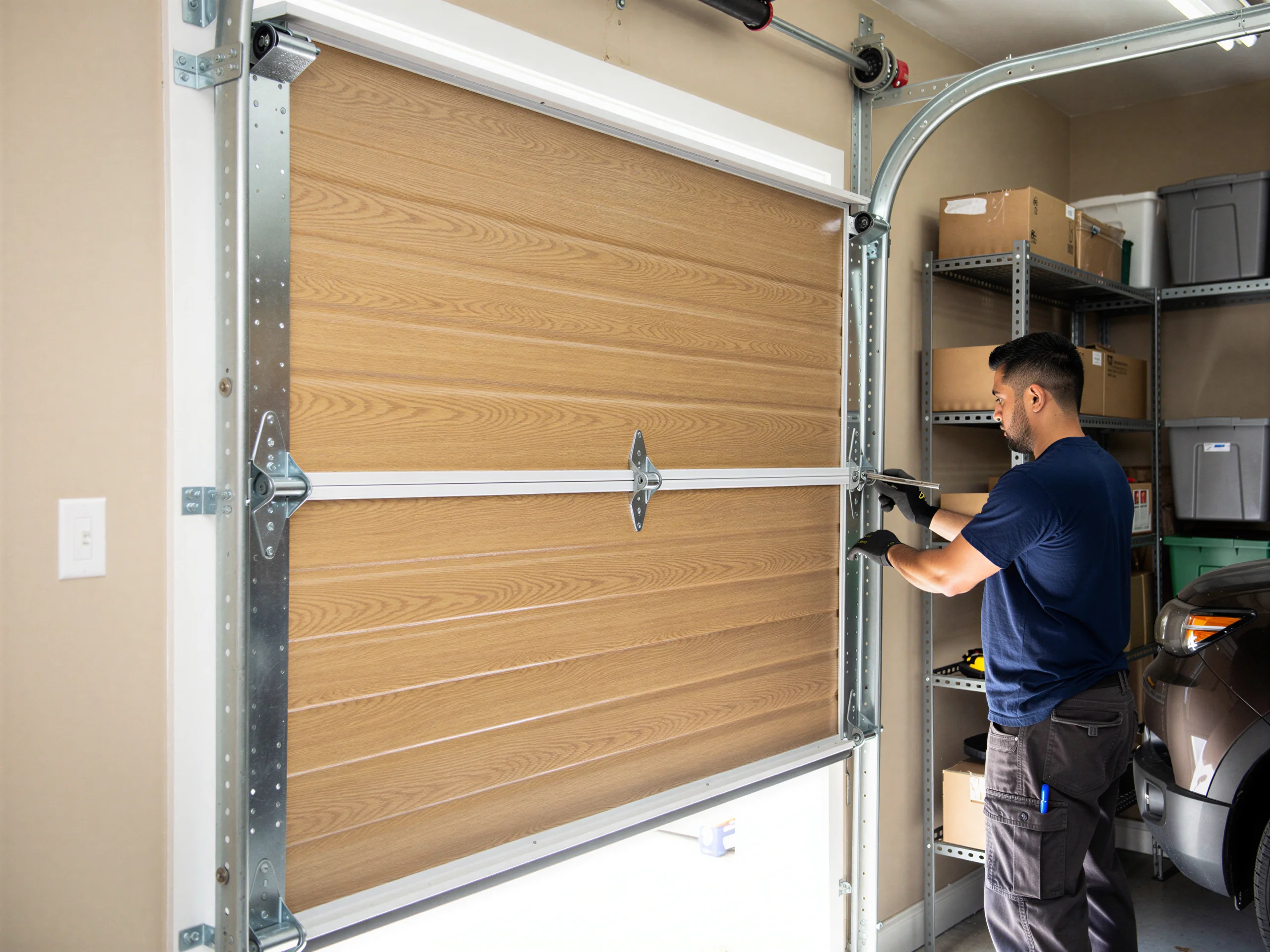
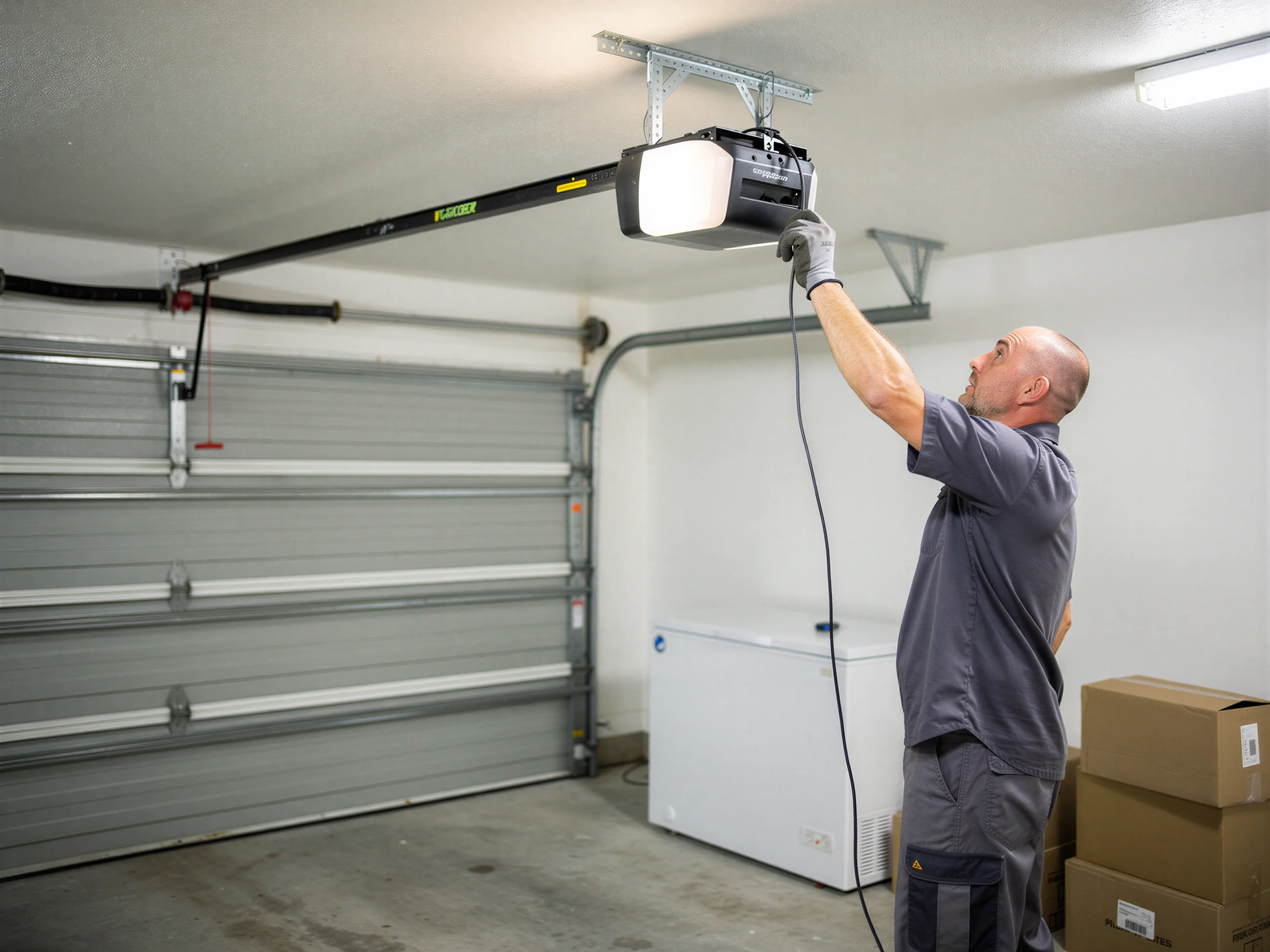
From there it's mounting the new motor unit, running and tensioning the belt or chain, wiring in the wall control and safety sensors, and setting the travel limits and force so the door reverses correctly on contact.
Real obstruction reverse test
We test the auto-reverse with a real obstruction, not just a visual check, before we call the job done. If the garage has a side door or a secondary opener trigger, we wire that in during the same visit rather than treating it as a separate call.
What Causes It Around Here
Housing in this part of the service area skews newer than most of the ten communities we cover, with construction clustering around 2001 rather than the 1960s-70s stock common elsewhere. That means fewer openers failing from decades of mechanical wear and more failing from component age on circuit boards and sensors that simply have a shorter service life than the steel they're bolted to. Cold winters still play a role, since a moderate cold climate means openers work through temperature swings that stress plastic gears and battery backups, but the dominant pattern here is electronic failure on a door that's otherwise holding up fine.
Talk to a local pro
Garage door service in Bettendorf?
Same-day service with honest, upfront quotes.