The DIY Question
A lot of what you can do yourself depends on when the door went in, and Eldridge skews newer than most of the area we cover - median build year here is 2001, versus 1973 across the wider service area.
Vacuuming tracks yourself
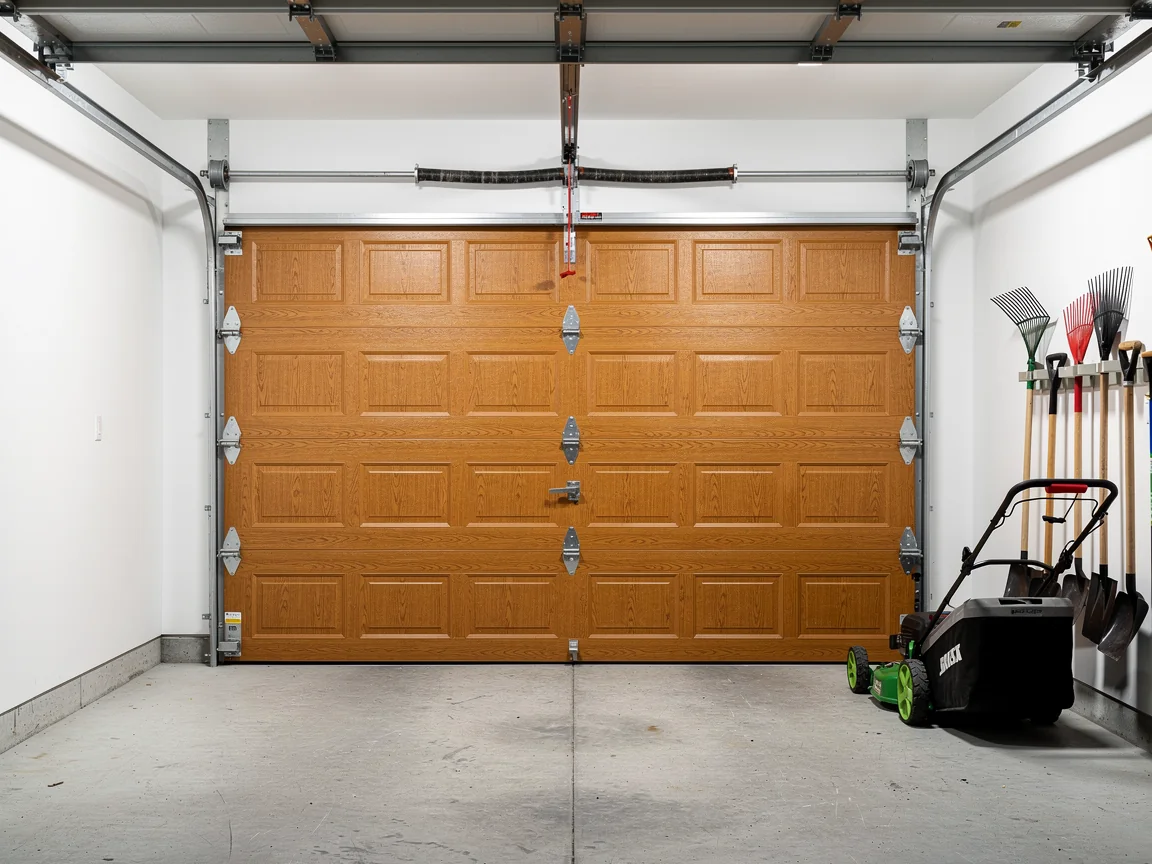
That means most doors in town are still on their original factory springs and openers, not a patchwork of replacement parts from three different decades. You can vacuum the tracks, check the weatherstrip, and tighten loose hardware on the hinges yourself.
Force setting adjustments
What you shouldn't do is adjust spring tension or mess with the opener's force settings - on a door this age, the factory setup is usually still close to right, and an amateur adjustment is more likely to throw it off than fix anything.
Lubricant choice matters
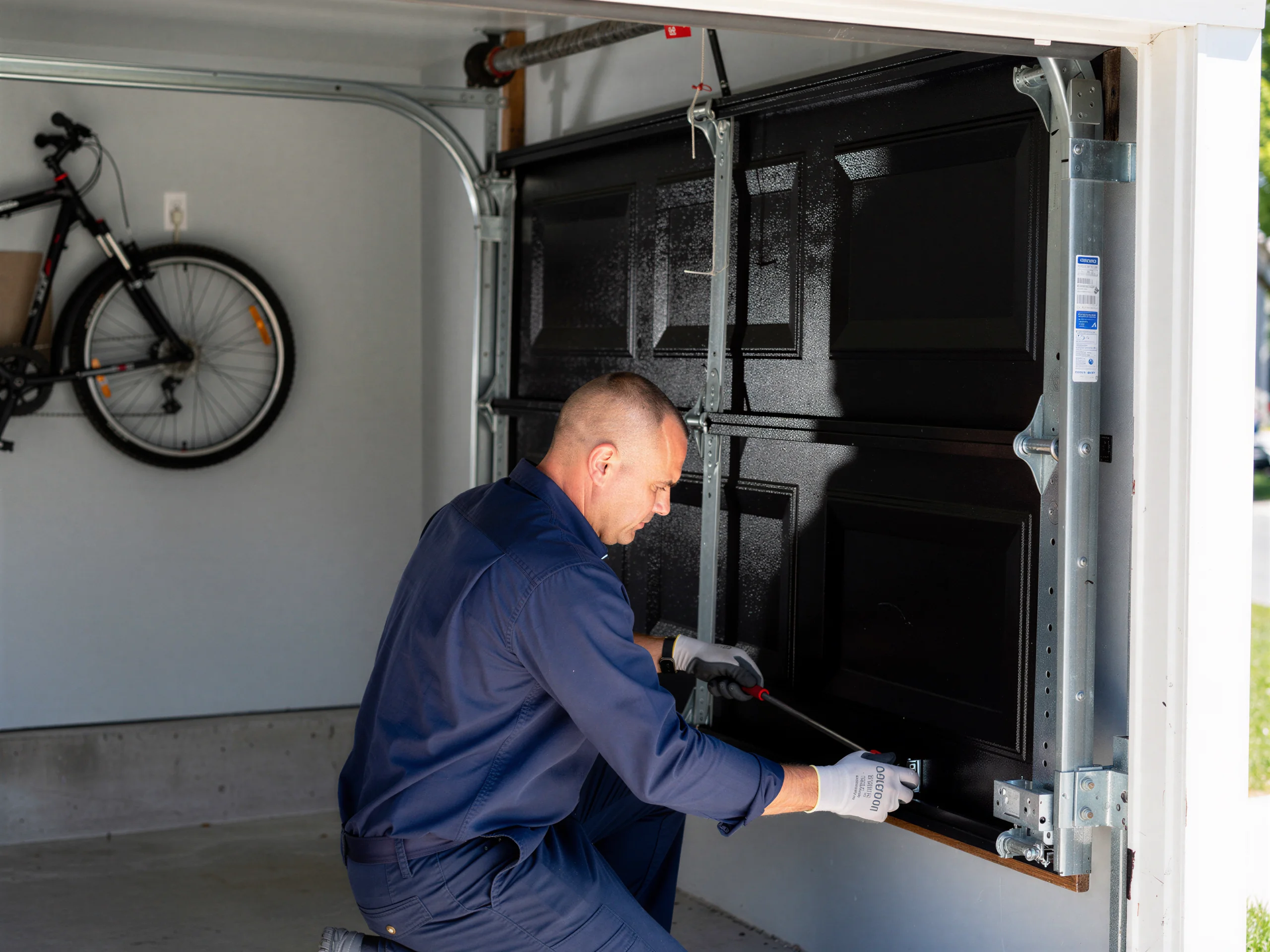
Lubricating the rollers and hinges with a garage-door-specific lubricant (not WD-40, which washes out and attracts grit) is the one DIY task that actually extends the life of newer hardware like this. Past that, if the door is binding, reversing unexpectedly, or making a new noise, that's a call, not a project. A 20-year-old door with original parts still under reasonable wear is worth maintaining carefully rather than guessing at.
Booking a Visit
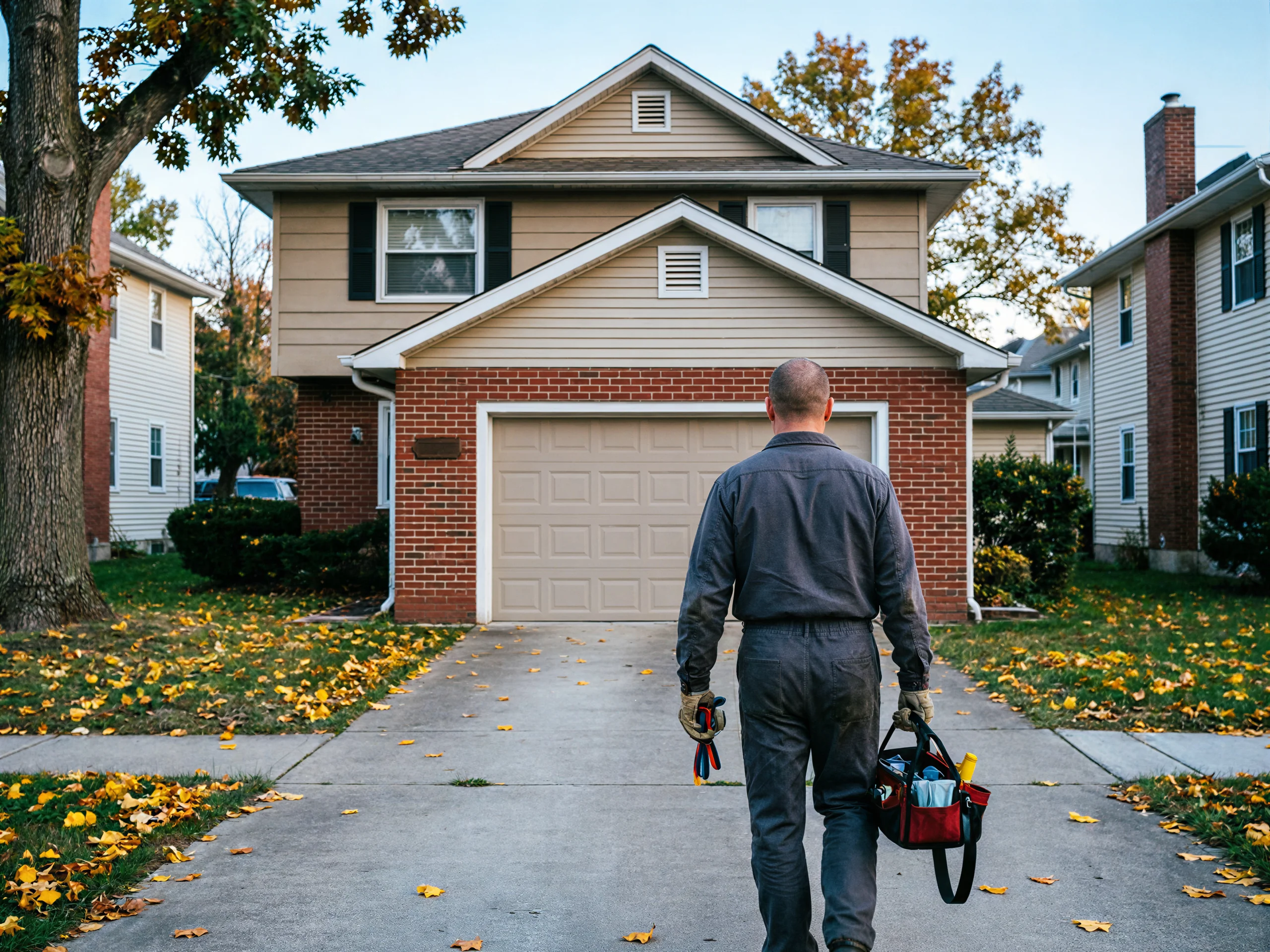
We cover Eldridge from Bettendorf, about 7 miles out, so a visit here gets scheduled as a route stop rather than a same-town drop-in. That's not a problem for routine maintenance - it just means we plan the appointment rather than showing up on short notice. Tell us the door's age and whether it's had any work done since it was installed; on a house built close to 2001, that history matters more than it would on an older place with multiple owners and multiple repairs layered in. If you're not sure of the install year, the permit or builder paperwork from the house sale often has it, and that's genuinely useful information before we get there.
The Symptom
On newer doors like the ones common in Eldridge, the maintenance complaints look different from what we see on 1970s hardware elsewhere in the area.
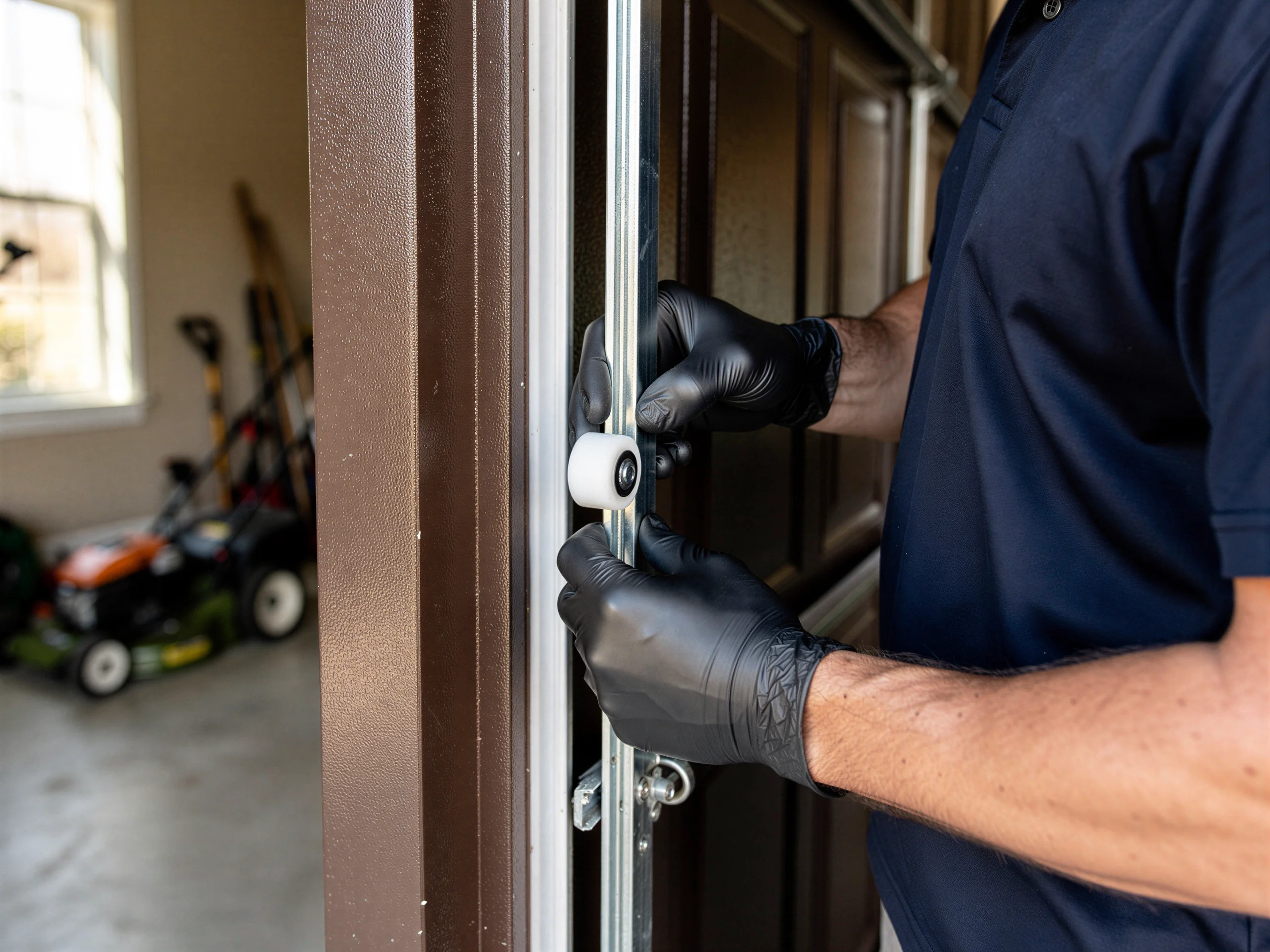
Cracking nylon rollers
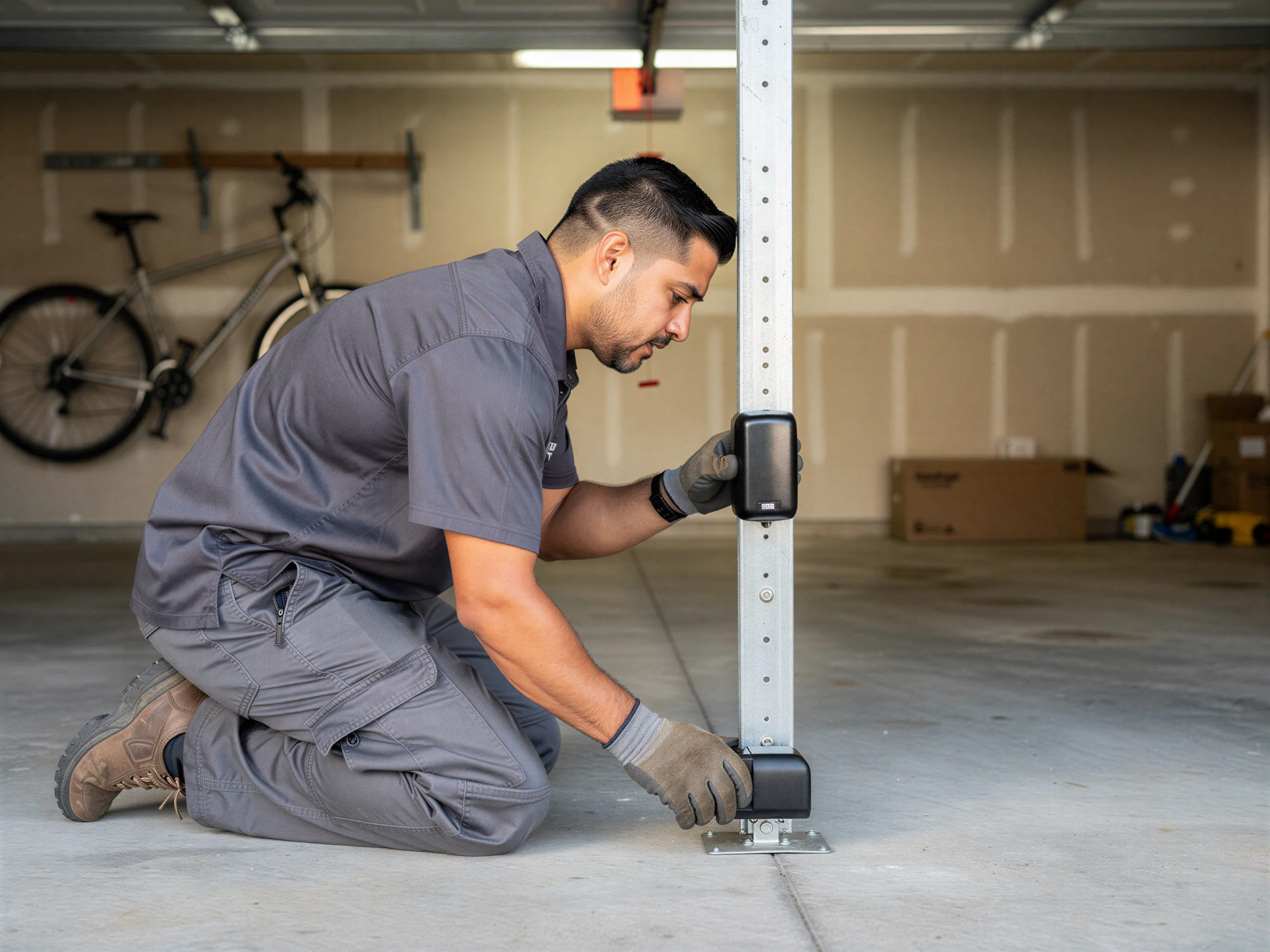
Instead of worn-out galvanized springs or pitted original track, we're usually looking at a nylon roller that's starting to crack, a sensor that's drifted out of alignment, or an opener logic board that needs a reset after a power blip.
Blinking opener light
The door often still closes and opens fine - the symptom is a grinding sound on the way down, a slight shudder at the top of travel, or the opener light blinking in a pattern you don't recognize.
Routine servicing, not replacement
None of that means the door is failing. It means the factory-grade parts that came standard on a build from that era are reaching the point where routine servicing, not replacement, keeps them running quiet and even.
The Cost of This Job
We don't have a posted price for maintenance calls in Eldridge specifically, and we're not going to guess at one here. What we can say is that a standard maintenance visit on a door this age - lubrication, hardware tightening, track alignment check, sensor test, opener inspection - costs less than it would on an older door that needs spring replacement or track straightening worked in at the same time. If something turns up during the visit that needs parts beyond routine service, we'll quote that separately before doing the work, not after.
What the Fix Involves
A maintenance visit on an Eldridge door built around the early 2000s usually starts with a full-cycle test: open and close, watching for binding, uneven travel, or a track that's slightly out of plumb.
Vibration-driven roller cracks
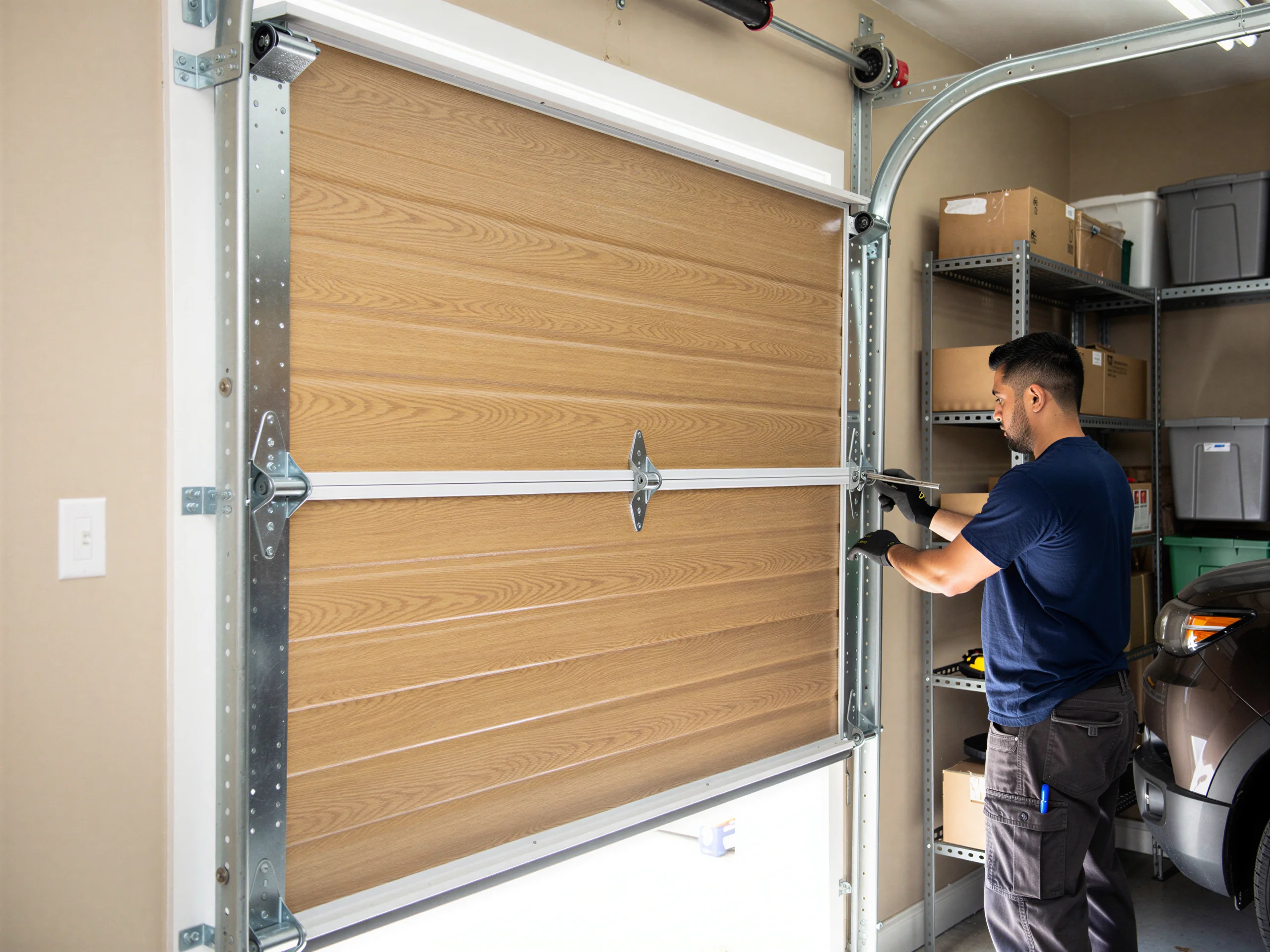
We check roller condition - nylon rollers from that era are durable but do crack with age and vibration - and we test the photo-eye sensors, since misalignment there is one of the most common calls on doors of this vintage.
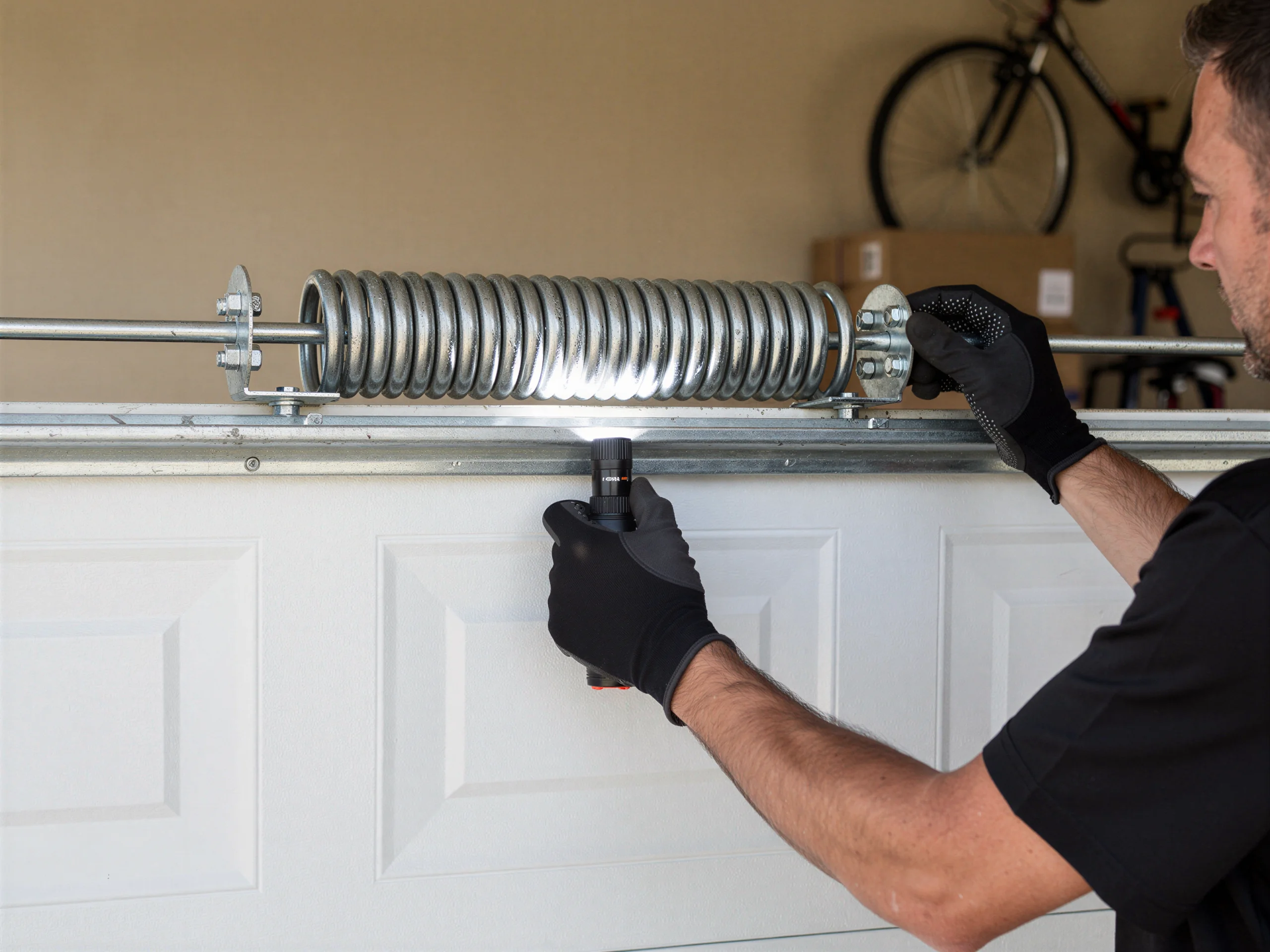
Spring tension checks
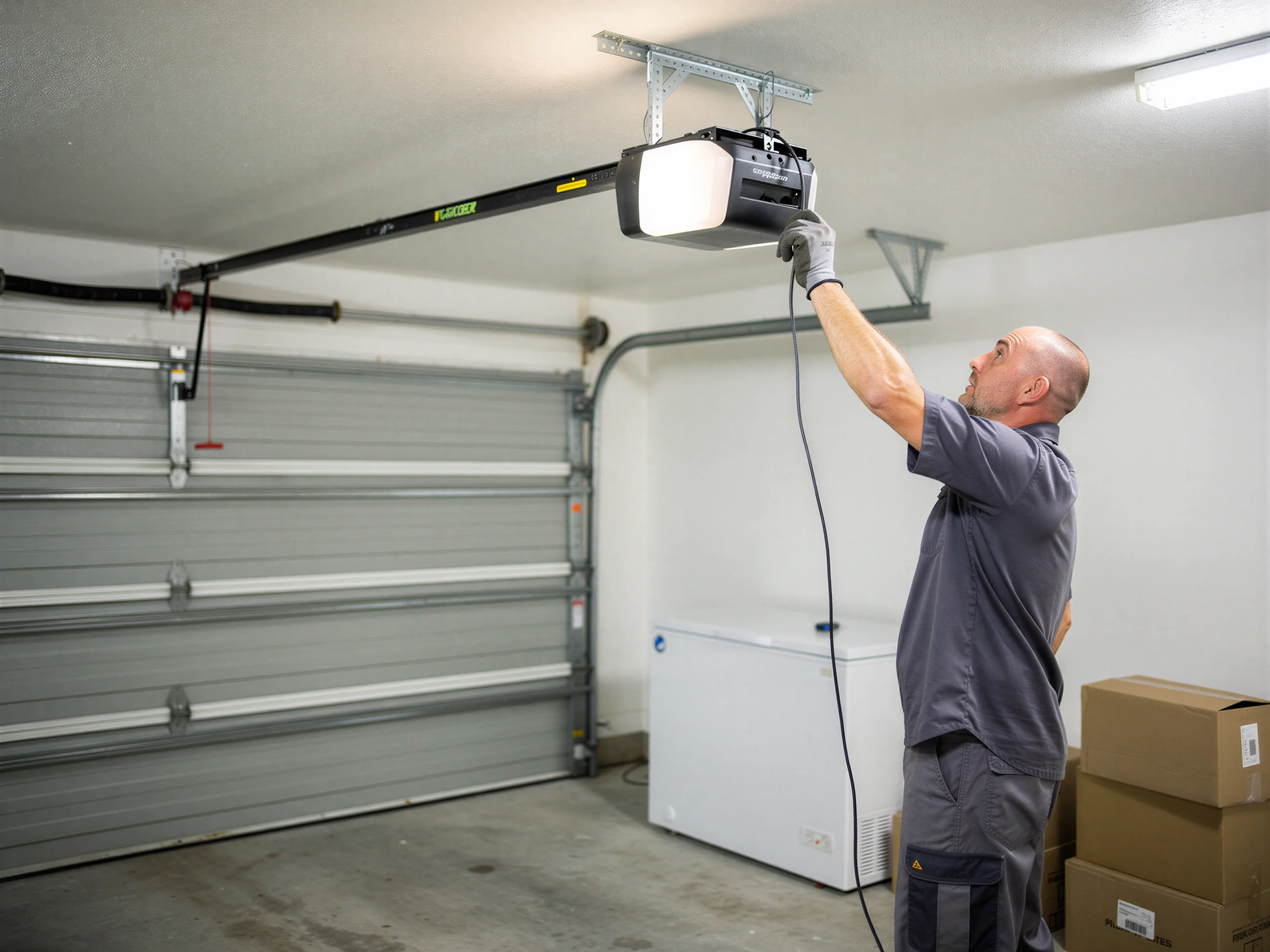
Spring tension gets checked but rarely needs full adjustment on a door this age unless something else has changed, like a heavier insulated panel replacement down the line. We also check the opener's force and travel limits, since a factory setting from 20-plus years ago can drift.
Under-an-hour visits
The whole thing takes under an hour in most cases, and we leave the door back in the condition it should be running in, not a patched-together version of it.
What Causes It Around Here
Eldridge sits in the same cold-moderate climate band as the rest of the area, which means freeze-thaw cycles every winter - and that affects even newer doors. Moisture gets into track hardware and door seams during thaw, then freezes overnight, which is part of why rollers and hinges on a 2001-built door still need periodic lubrication rather than running dry forever. With median household income here at $101,089, a good share of these doors also carry upgraded openers and heavier insulated panels installed after the original build, which adds load the factory spring wasn't necessarily sized for. That combination - cold-cycle moisture plus upgraded hardware on an otherwise original frame - is the main thing we see driving maintenance calls in town, more than straightforward old-age wear.
Talk to a local pro
Garage door service in Bettendorf?
Same-day service with honest, upfront quotes.